
Jean-Baptiste Lully - Ouverture to Persée
Les Talens Lyriques (Ensemble)
Christophe Rousset (Conductor)
Esther Walker on Paul Hindemith.
November 27, 2017. Esther Walker on Paul Hindemith. A couple of weeks ago we missed Hindemith’s birthday: the German composer was born on November 16th of 1895. Most music lovers w can acknowledge his talent but many would also admit that Hindemith is not “their” 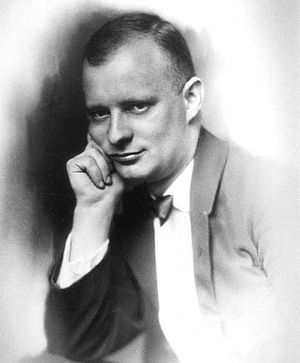 composer, that he’s too distant, dry, cerebral. That’s what the Swiss pianist Esther Walker thought of Hindemith earlier in her career. As she got involved with several of Hindemith’s piano pieces, her attitude changed. Esther put her thoughts on Hidemith’s piano works into a very personal and thought-provoking essay. In it she discusses the rarely-performed Ludus tonalis (we may point to the recordings made by the two Soviet pianists and good friends, Sviatoslav Richter and Anatoly Vedernikov), the Suite “1922” and other pieces; examines the problem of conservative programming, firmly placing the blame on performers (and organizers), rather than composers or listeners; and gives us an insightful overview of Hindemith’s life. Here is an excerpt from the beginning of the essay; you can read the complete piece on Esther’s site. ♫
On Piano Music of Paul Hindemith.
Like many others before me, I too, in my youth and student days, grew into an unconsciously assumed, hardened and prejudiced (pre)conception of Hindemith. But the very few encounters which I had with this composer as a young pianist – whether it was through occasionally playing one of the Kammermusiks (op. 11) or hearing an orchestral work – forced me each time to cast doubt on this picture which I had of Hindemith. But some years ago, when it happened that I had to study four of Hindemith’s works (the Suite “1922”, the Kammermusik No. 1, The Four Temperaments and the Double Bass Sonata) in a relatively short period of time, I was forced to engage with this music in a much more intensive way than before and was really able to jettison my sometimes-unconscious prejudices. My active interest in Hindemith was aroused.
Of course, there are true Hindemith specialists who devote themselves to this composer and who consequently have a deep access to his output and a profound and unprejudiced knowledge of his life and work.
Since I don’t exactly move in these specialist circles, I believe I can say that, unfortunately even today – especially in Latin countries – Hindemith’s music has the reputation, surely somewhat exaggerated, of being the product of an austere, nonsensical and emotionally-impoverished intellectuality, schoolmasterly and accordingly of little artistic worth.
Even Alfred Brendel, one of the great musical personalities of our time, who is so open, interested and intelligent, and who is able to exert a lasting influence on the next generation, refers to Hindemith in his two books Reflections on Music and Music Taken at his Word in only three passing comments, in which there is no mistaking a rather negative attitude to the composer. In an interview at the end of one of the books Hindemith is quoted in just one sentence, and to quote him so cursorily is usually dangerous, since a little later he would often contradict his pithy, sometimes provocative utterances, or at least qualify them. [Please continue reading here].
Read more...Johannes Brahms - Piano Sonata No. 3 in F minor, Op. 5 (Mvt. 2)
Kathy Kim (Piano)
Johannes Brahms - Piano Sonata No. 3 in F minor, Op. 5 (Mvt. 1)
Kathy Kim (Piano)
Wolfgang Amadeus Mozart - Fantasy in c minor K. 475
Kathy Kim (Piano)
P.Kellach Waddle - Vampire Trilogy-- Three Showpieces For Solo Bass : II. " The Visitors From Transylvania Have Arrived": Caprice Fantasque For Solo Bass -- Op. 462 (2013)
P. Kellach Waddle (Double Bass)
Krzysztof Penderecki, 2017
November 20, 2017. Penderecki. Krzysztof Penderecki, one of the best known Polish composers of the 20th century, was born on November 23rd of 1933 in the small town of Dębica in southeastern Poland. The town’s name in Yiddish was Dembitz, and before WWII the majority of the population was Jewish – later, Penderecki would use Jewish music in several compositions. In addition to Polish, 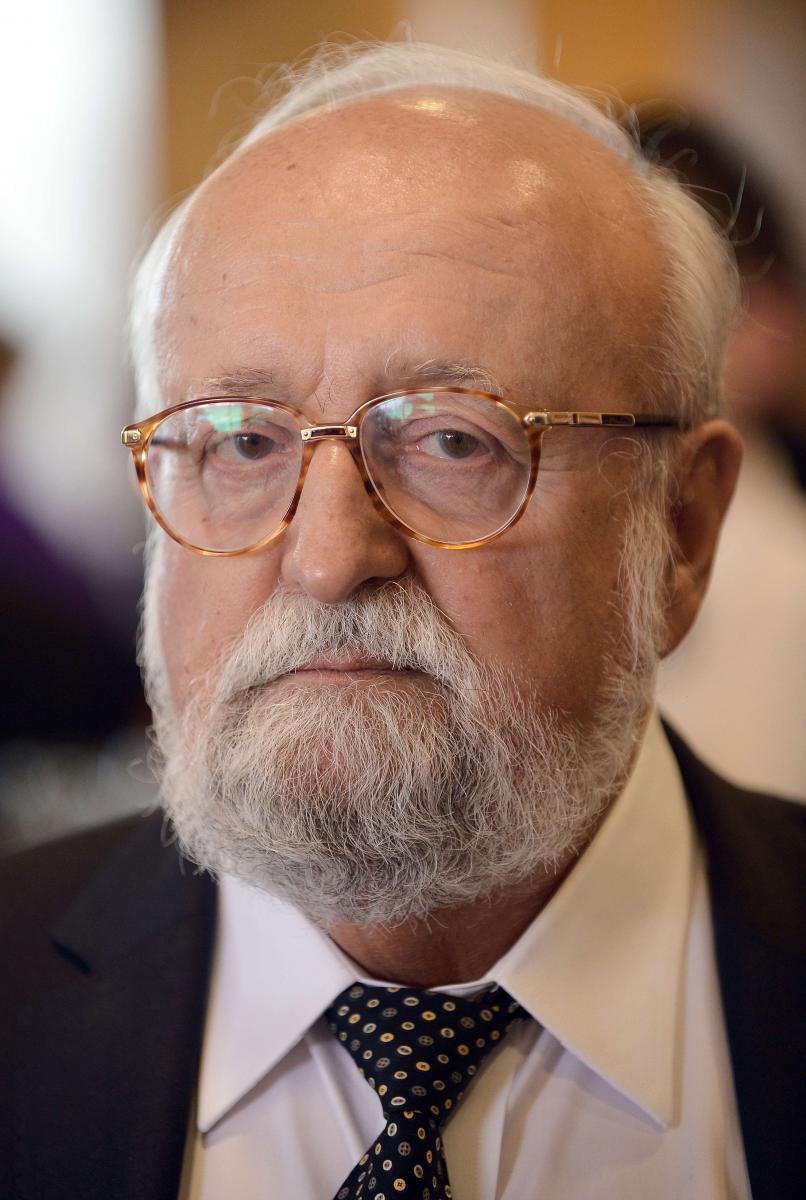 Penderecki’s family had Armenian and German roots. The family wasn’t musical, but, as was customary in educated families of the time, Krzysztof took piano lessons. Somebody presented Krzysztof’s father with a violin, and the boy took a liking to the instrument. In 1951 Penderecki moved to Krakow, attending Jagiellonian University first, and then transferring to the Academy of Music. There he studied the violin for one year, but then switched completely to composition. He graduated in 1958 and one year later received three awards for three compositions he submitted to the young composers’ competition, organized by the Polish Composers’ Union. His Strofy (‘Strophes’) received the first prize, and Emanacje (‘Emanations’) and Psalmy Dawida (‘Psalms of David’) shared the second. All compositions were submitted anonymously, and the jury didn’t know that all winning entries were written by the same composer. Since 1956, when Poland opened up after years of Stalinism, cultural life became less controlled. While still a Communist state, culturally Poland was the freest country in the Soviet bloc. New music could be performed, and music of young composers could be heard in the West. One person who became familiar with Penderecki’s work was Heinrich Strobel, principal of the Music Department of the Südwestrundfunk (SWR) Symphony Orchestra of Baden-Baden, one of the leading new Music ensembles. Strobel, a champion of Pierre Boulez and Karlheinz Stockhausen, became a promoter of the works of Krzysztof Penderecki. In 1960, Penderecki’s popularity in the West lead to an interesting episode. He had just completed a piece he initially called 8’37”, for the exact performing duration of the composition, which he later renamed Threnody to the Victims of Hiroshima.
The piece, scored for 52 string instruments, required unorthodox performing technique, like unusual glissandos, playing on the tailpiece, etc. This, in turn, required unconventional notation, which Penderecki invented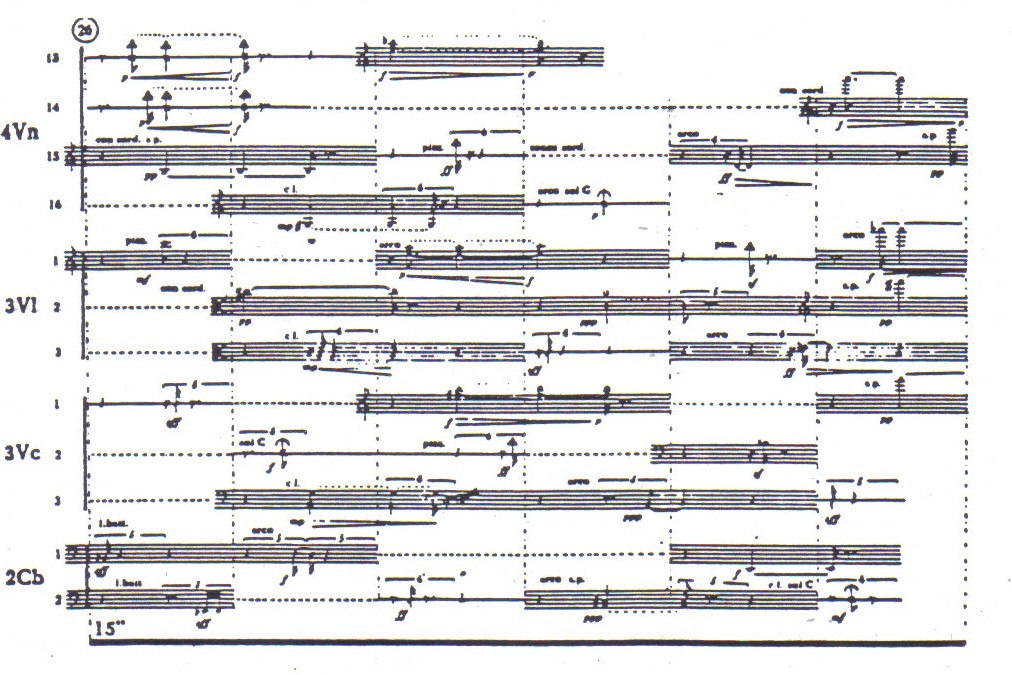 himself. The notation created many problems, as musicians couldn’t figure out what was required of them; Penderecki had to work with the orchestras to explain his intent (you can see a small excerpt on the right). When several European ensembles decided to perform Trenody, Penderecki sent the score to his German publisher. The package never arrived, apparently it got lost in the mail, and Penderecki had to recreate it from memory. Sometime later the score reappeared and was delivered то the addressee. When the two versions were compared, it turned out that they were identical. This provides wonderful proof of the exactness of Penderecki’s intent, the music of necessity of every note despite the seeming chaos of the twelve-tone composition. But the story doesn’t end there. Later, the reason for the score’s long delay was discovered: the custom officials who examined the unusual notation decided that it couldn’t have been music; they suspected that it was a document containing some encoded secret information, probably of military or political significance. Only after a lengthy examination did they discover that this indeed was a music score and sent it to the publisher. Here’s Trenody in the performance by the National Polish Radio Symphony Orchestra, Antoni Wit conducting.
Around 1975 Penderecki’s style, which up to then had been very much modernist, underwent a considerable change and became more melodic, in a neo-romantic way. So different is his music written in the second half of his career that we’ll have to address it separately.
Read more...Antonio Vivaldi - Inverno / Winter Concerto in f Op. 8 RV 297 - Largo
hannah woolmer (Violin)
hannah woolmer (Cello)
hannah woolmer (Harpsichord)
Couperin and Cziffra, 2017
November 13, 2017. Couperin and Cziffra. During the two weeks that we’ve beenpreoccupied with one photograph, we missed several anniversaries that are clearly worth mentioning. 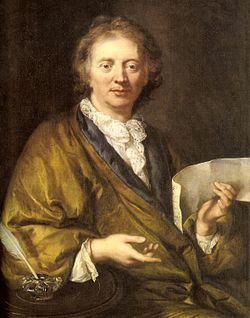 was born on November 10th of 1668 (we’ve written about him a number of times, for example here and here). One of the greatest French composers of the Baroque era, he was especially famous for his harpsichord music. Since the advent of the modern piano, his works are as often performed on this instrument as on the “clavecin,” for which these works were originally written. Here, for example, is Les Barricades Mystérieuses, the title as mysterious as are the barricades in question. It’s the fifth piece in Couperin’s "Ordre 6ème de clavecin." It’s performed by György Cziffra, whose birthday was last week. Cziffra, a piano virtuoso with an unusual biography, was born on November 5th of 1921 into a family of a poor gipsy cabaret performer. His father, a cimbalom player, lived in Paris in the 1910s but was expelled from France as a citizen of an enemy state. György started playing piano at a very early age, imitating his older sister. At the age of five he was already earning money in bars and circuses, playing piano improvisations on melodies suggested by customers. At the age of nine he entered the Franz Liszt Academy of Music in Budapest, becoming their youngest student ever. One of his teachers was the composer Ernst von Dohnányi.
At the age of 12 György was performing across Hungary, and at 16 went on a tour of the Netherlands and Scandinavia. In 1942 Cziffra was conscripted, as Hungary was fighting on Nazi Germany’s side in WWII. He was captured by the Soviet partisans and imprisoned till after the war. He returned to Budapest in 1947 and, penniless, had to earn money playing piano in bars and clubs. 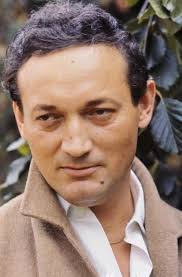 In 1950 he attempted to escape communist Hungary but was captured and imprisoned again. His guards, knowing that he was a pianist, beat his hands and wrists. He was released in 1953. The physical recovery was slow (for the rest of his life he performed with a leather band on his wrist to support ligaments damaged in prison), but two years later he was in good enough form to win the 1955 Franz List competition in Budapest. In 1956, during the Hungarian Uprising, Cziffra escaped to Vienna, where he gave a well-received recital later that year, and then moved to Paris. Cziffra played across Europe and in the US. In 1977 he set up a Cziffra Foundation in Senlis, France, in support of young musicians. Cziffra, with his tremendous technical skills, was acknowledged as a great interpreter of the works of Liszt. Here’s another piece by Couperin, L'Anguille (The eel). And here is Liszt’s Tarantella, from Venezia e Napoli section of Années de pèlerinage. Cziffra, who by the end of his life was suffering of lung cancer, died of a heart attack in Longpont-sur-Orge, outside of Paris, on January 15th of 1994.
A note: another wonderful pianist, the French-born German, Walter Gieseking, was also born on November 5th but 26 years earlier, in 1895.
Read more... « first ‹ previous … 203 204 205 206 207 208 209 210 211 … next › last »
Jean-Baptiste Lully - Persée, Act II, Scene 6
Cyril Auvity (Tenor)
Marie Lenormand (Soprano)