
Alexander Scriabin - Poème No. 1, Op. 32
Ketevan Kartvelishvili (Piano)
michael hanrahan moore - the rocks beneath
michael moore (Orchestra)
michael hanrahan moore - morgana
michael moore (Orchestra)
Prokofiev 2017
April 24, 2017. Prokofiev. Confusion surrounds the birth date of Sergei Prokofiev. One problem is calendar-related: when he was born, Russia was using the old Julian calendar. Prokofiev .jpg "Sergei Prokofiev") himself always thought that he was born on April 11th of 1891. When Russia moved to the Gregorian calendar after the October Revolution, April 11th became April 23rd while, quite confusingly, the anniversary of the revolution itself fell on November 7th. Prokofiev celebrated his birthday on the 23rd, but that’s not what is written in the existing copy of his birth certificate, which says that he was born on April 15th (old style), or April 27th. Last year we celebrated Prokofiev’s 125th anniversary and we wrote about him in some detail. Prokofiev’s life, like the lives of so many Russian artists of that time, can be divided in geographic periods: Russia, America, Europe, the USSR. He was born in the village of Sontsovka, not far from the present-day Donetsk, where his father managed an estate. His mother gave him his first piano lessons. At the age of 11, while in Moscow, he was introduced to Sergei Taneyev , who was quite impressed and asked his friend, composer Reinhold Glière, to give Prokofiev lessons in composition. A year later Prokofiev entered the St-Petersburg conservatory, where his studied with Lyadov and Rimsky-Korsakov.
himself always thought that he was born on April 11th of 1891. When Russia moved to the Gregorian calendar after the October Revolution, April 11th became April 23rd while, quite confusingly, the anniversary of the revolution itself fell on November 7th. Prokofiev celebrated his birthday on the 23rd, but that’s not what is written in the existing copy of his birth certificate, which says that he was born on April 15th (old style), or April 27th. Last year we celebrated Prokofiev’s 125th anniversary and we wrote about him in some detail. Prokofiev’s life, like the lives of so many Russian artists of that time, can be divided in geographic periods: Russia, America, Europe, the USSR. He was born in the village of Sontsovka, not far from the present-day Donetsk, where his father managed an estate. His mother gave him his first piano lessons. At the age of 11, while in Moscow, he was introduced to Sergei Taneyev , who was quite impressed and asked his friend, composer Reinhold Glière, to give Prokofiev lessons in composition. A year later Prokofiev entered the St-Petersburg conservatory, where his studied with Lyadov and Rimsky-Korsakov.
A brilliant pianist and promising composer, he became famous early, even though the more conservative public was scandalized by works like The Scythian Suite. After the Revolution Prokofiev emigrated to the United States, thus starting the second and rather short period of his life. His time in the US was not very happy: as a pianist, he had to compete with the very successful Rachmaninov, and as a composer – with the more famous Stravinsky. He did compose a very successful opera The Love for Three Oranges, but as his career was not progressing, he moved to Europe, thus entering the third phase of his life. Prokofiev lived in Europe from 1922 to 1936, first in Germany and then in Paris. He married a Spanish singer, Lina Lubera, continued composing for Diagilev and mended his ways with Stravinsky, who considered Prokofiev the greatest Russian composer – after himself. Unlike Stravinsky, Prokofiev continued to maintain relationships with Soviet musicians and even wrote music for a Soviet film, Lieutenant Kijé (he reused the music in a very popular suite). He even received a commission from the Mariinsky theater, then recently renamed the Kirov, to create a ballet, Romeo and Juliet. As his links with the Soviet musical establishment grew, he was offered to return to Russia; he accepted in 1936. Why he made this fateful decision, considering the purges and recent condemnation of Shostakovich’s opera Lady Macbeth of the Mtsensk, we’ll never know.
The Soviets promised him a good life and artistic freedom, and initially that’s how it worked. Prokofiev adapted his work according to the political climate, writing songs on patriotic texts and a cantata in 10 movements for the 20th Anniversary of the October Revolution, whose orchestration included a military band and several accordions. (Despite all this the Cantata had to wait its premier till 1966). Then, in 1941 Germany attacked the Soviet Union, and Prokofiev, like all important artists, was evacuated to the eastern parts of the country. Despite the hardship he continued to compose, which to some extent was easier as the musical censorship was relaxed. The three War piano sonatas and most of the opera War and Peace come from that period. And then, as the war ended, “Zhdanovshchina” erupted. While Stalin’s underlings Yezhov and Beria were terrorizing people physically, Andrei Zhdanov, Stalin’s chief ideolog, terrorized the Soviet cultural elite. He started with the writers and the poets in 1946, then moved on to condemnations of theater and film. Then, in 1948 the Politburo of the Communist Party issued a resolution criticizing “formalism” in classical music. We’ll consider the tragic consequences of this resolution another time. Here, from a much happier period, is Prokofiev’s answer to Stravinsky’s The Rite of Spring – his Scythian Suite. Claudio Abbado conducts the Chicago Symphony Orchestra.
Read more...Sergei Prokofiev - The Scythian Suite
Chicago Symphony Orchestra (Orchestra)
Claudio Abbado (Conductor)
Easter 2017
April 17, 2017. Happy Easter! The Eastern Orthodox churches use the Julian calendar; the Western Churches – the Gregorian that we all are accustomed to. Both use arcane methods (phases of the moon come into play) to derive the dates of Easter Sundays. Once in a while these obscure calculations end up with the same date, as it happened this year (we won’t have another one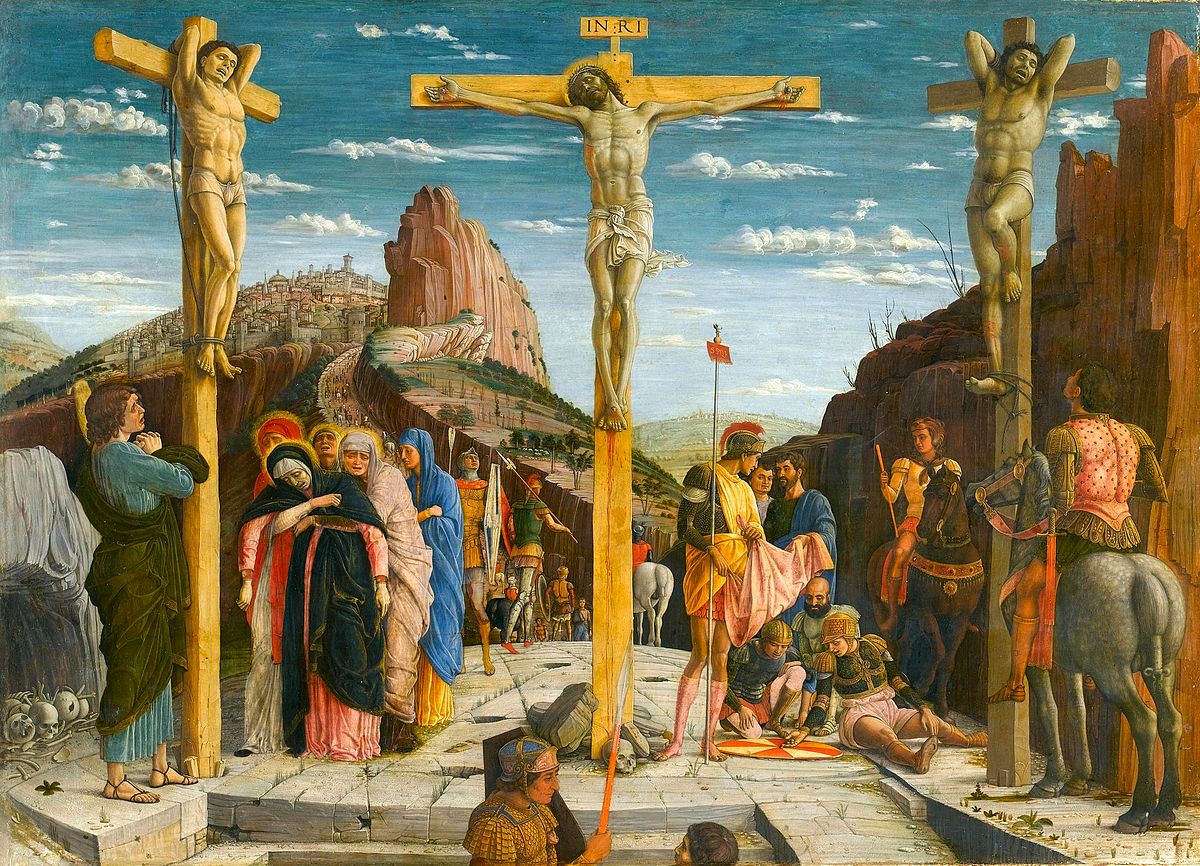 till 2025). In addition, Passover this year started on Monday, April 10th and runs through April 18th, making for an unusually rich holiday period.
The Western tradition of writing music for Easter goes back to the Middle Ages and became especially strong during the Renaissance. In 1585, the great Spanish composer Tomás Luis de Victoria published a set of 18 motets called Tenebrae responsories sung during the Latin services on Thursday, Friday and Saturday of the Holy week.
Here’s one of these motets, O vos omnes (All you who walk by on the road), sung on Saturday. It’s performed by the ensemble Tallis Scholars. About 25 years later, Carlo Gesualdo wrote his own setting of Tenebrae responsories. It’s an amazing vocal piece whose tonal modulations sound startling even today. Here’s Omnes amici mei dereliquerunt me (All my friends have deserted me) for Good Friday. The Taverner Consort is conducted by Andrew Parrott. Both settings above were created for a Catholic service. When Thomas Tallis composed his Lamentations of Jeremiah sometime in the 1570s, England’s Anglican Church had already separated from Rome, although it’s not clear whether Lamentations were composed for the Catholic or Anglican service. In England of the late 16th century the settings of the Lamentations were traditionally performed at the Tenebrae service of the Holy week. Many settings were written – William Byrd for example, created one. Tallis’s is probably the most profound. Here’s the first part, performed by the ensemble Magnificat, Philip Cave conducting.
Johann Sebastian Bach composed some of the greatest music for Easter: two sets of Passions, one, set to the chapters of the Gospel according to St. John, another – St. Matthew. Bach’s obituary mentions five Passions but these two the only ones extant. Bach also wrote Easter Oratorio, the first version of which was completed the same year as the St. Matthew Passion, 1725. Here’s the first part of St. John Passion. Concentus Musicus Wien and Arnold Schoenberg Choir are conducted by Nikolaus Harnoncourt.
The Eastern orthodox church historically lacked the tradition of “composed” music. Different chants, the so-called Znamenny chant being the major one, were used for centuries. These chants go back to the Byzantine service and are written not in notes but special signs . Only at the end of the 19th century did Russian composers turn to the liturgical music, Alexander Gretchaninov and especially Sergei Rachmaninov among them. There are many recordings of the traditional services, but the one created by the choir of the Chevetogne Abbey is especially interesting. They Abbey is dedicated to Christian unity and though it is a Benedictine abbey, it has both Western rite and Eastern rite churches and made recordings of both Eastern and Latin services. Here’s the first part of the Service for Holy Saturday, performed by the Choir of the Abbey of Chevetogne.
Read more...William Bolcom - Violin Sonata No. 2
Kate Carter (Violin)
Louise Chan (Piano)
Maurice Ravel - Sonata for Violin and Piano
Kate Carter (Violin)
Louise Chan (Piano)
Schumann, Eichendorff Liederkreis, Part I, 2017
April 10, 2017. Robert Schumann, Eichendorff Liederkreis, Part I. Today we present the first part of an article about one of the most captivating song cycles in the history of European music, Schumann’s Liederkreis (song cycle) op. 39. Based on the poetry of Joseph Eichendorff, the cycle 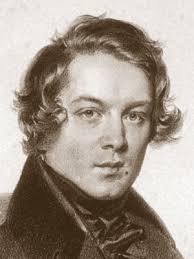 is usually called Eichendorff Liederkreis to distinguish it from another song cycle, op. 24, written on the poems by Heinrich Heine earlier that same year (1840), Schumann’s Year of Song. There are many great recordings of Eichendorff Liederkreis, made both by male (tenors and baritones) and female (soprano and mezzo) singers: Dietrich Fischer-Dieskau made a famous recording, and so did Hermann Prey, also a baritone. The English tenor Ian Bostridge made a wonderful recording, and Peter Schreier, a German tenor. Jessye Norman, a dramatic soprano, was excellent in this cycle, but so was the Dutch lyric soprano Elly Ameling. We decided to illustrate Eichendorff Liederkreis with the recording made by a lesser known but superb Leider singer, the German baritone Christian Gerhaher. Gerold Huber is on the piano. ♫
In his early years as a composer, Robert Schumann composed virtually exclusively for the piano. However, the year of 1840 saw at least the creation of 138 songs. Since then, this abundant creative outpouring has become known as Schumann’s Liederjahr, or “Year of Song.” The sudden shift from piano to vocal music, though, was not purely coincidental. It marked the culmination of his courtship of Clara Wieck, and his long-awaited and hard-won marriage to her.
Schumann and Clara first met in March 1828 at a musical evening in the home of Dr. Ernst Carus. So impressed was Schumann with her skill at the piano, he soon after began taking piano lessons from her teacher and father, Friedrich, during which time he took up residence in the Wieck’s household. In such close proximity, Schumann and Clara soon formed a close bond that would, in time, blossom into a romantic relationship. Friedrich, however, did not think highly of Schumann. Thus, they kept their relationship a secret, and in 1837, on Clara’s 18th birthday, Schumann proposed to her. Clara accepted, yet her father refused to give his consent. However, this did not deter the two young lovers, though it did place a strain on their relationship. Schumann and Clara continued to exchange love letters, and met in secret whenever they could. In a display of tender devotion, Schumann would even wait for hours in a café just to catch a glimpse of Clara as she left one of her concerts. Refusing to be apart, the couple sued Clara’s father. After a lengthy court battle, Clara was finally allowed to marry Schuman without her father’s consent. The wedding took place in 1840.
Liederkreis, op. 39 was one of the song cycles, along with Frauenliebe und -leben and Dichterliebe, composed during the intensive creative episode surrounding Schumann’s marriage to Clara. Based on poetry of Joseph Freiherr von Eichendorff, Schumann himself described the songs as his “most Romantic music ever.” The cycle was begun in May, and thus displays Schumann’s rapid advancement and growing sophistication as a composer of song. Interestingly, for a composer with such an affinity for motivic and thematic unity, opus 39 is one of Schumann’s least unified cycles. No narrative links the songs to together as in Frauenliebe und -leben, nor are there connecting or recurring themes as in the case of that cycle or of Dichterliebe. However, a common thread still weaves its way throughout the songs. All, except for Intermezzo, are explicitly set in nature. Furthermore, a theme of longing and separation permeate many of the songs, with a few evenly grimly touching upon death. Yet, ultimately, the cycle culminates in the blissful “Frühlingsnacht,” in which the poet, quite beyond his own belief, has won the object of his affection, and reveals that the songs of opus 39 were perhaps Schumann’s emotional outlet during the time leading up to Schumann’s marriage to Clara.
Opening the cycle is the lonesome “In der Fremde” (here). In a foreign land, the poet looks longingly towards his homeland. Yet, even there, he knows he would remain a foreigner—his father and mother dead, no one would know him (“Es kennt mich dort keiner mehr”). He longs for the peaceful rest his parents now enjoy (“Wie bald kommt die stille Zeit”), when no one in the strange land shall know him either. An unsettled accompaniment of broken chords forms the foundation of Schumann’s setting. The vocal melody is simple. During the first stanza, it hovers closely above the tonic, reaching only up to the subdominant and each time falling back down, effectively capturing the gloomy thoughts that weigh down upon the poet. The melody, as well as the piano accompaniment, changes, however, during the second stanza. Briefly, the music turns away from F-sharp minor to A major as the poet wistfully turns his thoughts towards his parents. Yet, a grim A-sharp foils the melody’s diatonic descent on the words “da ruhe ich auch” (“I, too, shall rest”), and quite startlingly ushers back in the morbid state of the poet. The final line of the poem (“und Keiner kennt mich mehr hier”), twice stated, is most poignantly rendered in F-sharp major. Yet, the warm and comforting resolution of the major key is entirely thwarted by Schumann’s persistent inclusion of G natural, most affectingly in the closing strains of the voice. The piano then echoes the vocal melody’s last strain during its brief postlude. (Continue reading here).
Read more... « first ‹ previous … 230 231 232 233 234 235 236 237 238 … next › last »
Alexander Scriabin - Etude No. 12 in d-sharp minor Op. 8
Ketevan Kartvelishvili (Piano)