
Wilhelm Friedemann Bach - Duets for 2 Violas no. 2 in G major, F 61
Ryo Terakado (Viola)
François Fernandez (Viola)
Junior Recital. Michaael Oosterhout, Bairtone
03/05/2017 17:00, Vassar College, Thekla Hall
Schumann, Ravel and Quilter
Paul Hinemoth, 2016
November 14, 2016. Paul Hindemith. One of the most important composers of the 20th century, Paul Hindemith was born on November 16th of 1895 in Hanau, near Frankfurt. Paul’s father, a painter, was 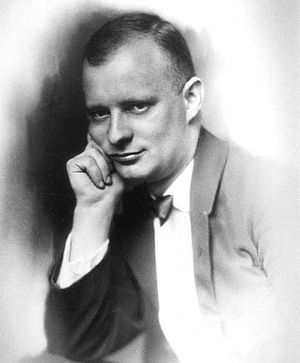 a music lover and insisted that his children study music: Paul played violin, his sister studied the piano and their younger brother – the cello. Some year later they would play in public as the “Frankfurt Children’s Trio,” with their father sometimes accompanying them on the zither. Paul attended the Frankfurt Conservatory, concentrating in violin and later, in 1912, adding classes in composition (his first composition teacher was Arnold Mendelssohn, a great-nephew of Felix Mendelssohn). While at the conservatory, Hindemith wrote his first compositions, which were technically strong, very romantic (just the opposite of what would become his later style) but not terribly inventive. In 1914 he joined the orchestra of the Frankfurt Opera and soon became the concertmaster. Three years into the war he was conscripted; he served mostly in a military band but at the end of the war spent some time in the trenches. He remembered how in March of 1918 he and his fellow musicians were playing Debussy’s String Quartet when it was announced on the radio (sic!) that Debussy had died. When after the war he returned to Frankfurt, he switched from the violin to the viola; he continued playing in the opera orchestra and with the Rebner Quartet.
The period starting around 1920 was very productive one; that was also the time when Hindemith found his voice, dropping romanticism in favor of expressionism. An interesting example is his sexually charged one-act opera, Sancta Susanna (the protagonist, a nun, gives in to her erotic fantasies; Satan seems to be very active). The performance created a scandal; it is said that in Hamburg, attendees were required to pledge, in writing, to not cause a disturbance. Here it is, in its entirety – Susanna is just 25 minutes long. The American soprano Helen Donath, who had worked mostly in Germany, is Susanna; The Berlin Radio Symphony Orchestra is conducted by Gerd Albrecht.
We are used to thinking of Hindemith as a cerebral composer of complex, contrapuntal music. Many compositions from the early 1920s are very different: very expressive, even wild. Grove Music Dictionary gives us a wonderful quote from Hindemith. Regarding the performance of the last movement of his piano Suite 1922, he says: “Disregard what you learnt in your piano lessons. Don’t spend too much time considering whether to strike D# with the fourth or the sixth finger. Play this piece in a very wild manner, but always keep it very strict rhythmically, like a machine. Look on the piano here as an interesting kind of percussion instrument and treat accordingly.” Here’s Suite 1922 in the excellent performance by a Swiss pianist Esther Walker. Ms. Walker is a big proponent of Hindemith’s music and is currently in a process of recording complete piano works of the composer.
Starting around 1923, Hindemith’s style underwent a significant change as he entered his Neo-classical phase, sometimes called the New Objectivity. He also married Gertrud Rottenburg, the daughter of the Jewish conductor of the Frankfurt opera, Ludwig Rottenberg. How this affected Hindemith’s artistic and person life we’ll consider another time.
Read more...Maurice Ravel - Gaspard de la Nuit - Ondine
Vladimir Oppenheim (Piano)
Paul Hindemith - Suite 1922
Esther Walker (Piano)
Paul Hindemith - Sancta Susanna
Helen Donath (Soprano)
Berlin Radio Symphony Orchestra (Orchestra)
Gerd Albrecht (Conductor)
michael hanrahan moore - short little interlude
michael moore (Orchestra)
Couperin 2016
November 7, 2016. Couperin le Grand. François Couperin, one of the most important French composers of the end of the 17th – early 18th century, was born on November 10th of 1668. He’s one of the three 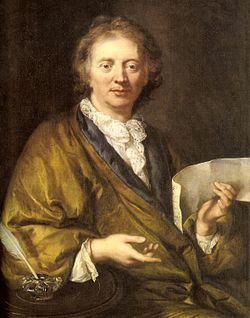 great composers who defined the French Baroque, born 32 years after Jean-Baptiste Lully and 15 years ahead of Jean-Philippe Rameau. Couperin came from a famous musical family: his uncle, Louis Couperin, was a noted composer and the organist at the church of St-Gervais in central Paris. After Louis’s death, François’s father Charles assumed the post. François’s father died in in 1679; the young François was so promising and obviously talented that the church agreed to hire him as the organist on his 18th birthday. In the interim, François played there often and was practically a full-time organist at St-Gervais even before his official appointment. At the age of 20 François married a girl from a wealthy bourgeois family; her connections helped him to acquire the royal privilege to print and sell his music. A year later Couperin published a collection of organ works, but it was his fame as an organist that brought him to the attention of the court. In 1693, at the age of 25, he received a fabulous appointment as the organist to the court of Louis XIV. Around that time, he wrote a set of trio sonatas, which were later incorporated into a larger selection published under the title of Les nations. The sonatas were clearly modelled after asimilar set of trio sonatas by Arcangelo Corelli, who was Couperin’s favorite composer. As Couperin himself related later on in a preface to the publication, he indulged in a bit of subterfuge in order to promote his work. Knowing that the French were still enamored with all things Italian while looking down at local composers, he concocted a story about an Italian origin of the first sonata. He even made up an Italianate name of the “composer” by rearranging letters of his own name. The sonata was received very favorably, which encouraged Couperin to continue composing.
In addition to the position of the Royal organist, Couperin was appointed the harpsichordist to the court. He also continued to work at the church of St-Gervais. He had many students, most from noble families. And still he found time to compose. In 1713 he published the first book of harpsichord pieces; eventually he would publish three more. In 1715 Louis XIV died and was succeed by the regency, as Louis XV, the future king, was too young to rule. Couperin retained his position at the court and continued with all his commitments and composing. By his contemporaries he was considered probably the greatest composer of his generation, and clearly the best composer for the harpsichord. Couperin became less productive in the last years of his life as his health was failing him. He died on September 11th of 1733. Couperin wrote in many genres: instrumental chamber music, music for the organ, some vocal music, but he excelled above all at composing for the harpsichord.
<Couperin inspired many composers, none more than Richard Strauss, who wrote not one but two symphonic pieces after Couperin’s harpsichord pieces. Let’s listen to several of the originals and then the Divertimento by Richard Strauss. First, the three pieces by Couperin: La Visionnaire, performed by Blandine Rannou, Musétes de Choisi et de Taverni, performed by Lionel Party, and Le tic-toc-choc, ou Les maillotins, played by Jory Vinocur. And here’s how Strauss adapted them for the orchestra. The Tokyo Metropolitan Symphony Orchestra is conducted by Hirogi Wakasugi.
Read more...Richard Strauss - Divertimento, op. 86
Tokyo Metropolitan Symphony Orchestra (Orchestra)
Hiroshi Wakasugi (Conductor)
Wilhelm Friedemann Bach - Duets for 2 Violas no. 3 in G minor, F 62
Ryo Terakado (Viola)
François Fernandez (Viola)