
Maurice Ravel - Piano Trio in a minor
Lysander Trio (Trio)
Lili Boulanger - D'un matin de printemps
Lysander Trio (Trio)
Hector Berlioz - Morte di Didone, from Les Troyens
Susanne Graham (Mezzo-soprano)
Orchestre Révolutionnaire et Romantique (Orchestra)
John Eliot Gardiner (Conductor)
Berlioz, Les Troyens, 2016
December 5, 2016. Berlioz, Les Troyens. Several wonderful composers were born this week: Francesco Geminiani, on this day in 1687 in Lucca, a somewhat minor but still interesting Baroque composer and violinist; Henryk Górecki, on December 6th of 1933 – a leading Polish 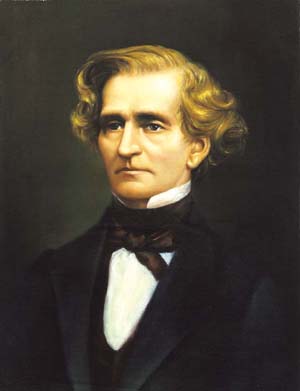 modernist (and, surprisingly, commercially successful) composer; Bernardo Pasquini, December 7th of 1637 in Tuscany, an important opera and keyboard composer of the Alessandro Scarlatti and Antonio Corelli generation. And then, also on December 7th but of 1863, another Italian – Pietro Mascagni of the Cavalleria Rusticana fame. The following day, December 8th, is the birthday of the Finnish national composer, Jean Sibelius; he was born in 1865. Also on the same day but in 1890, a leading Czech composer of the early 20th century was born – Bohuslav Martinu, who used a neoclassical idiom and, sometimes, jazz, as in his whimsical La Revue de Cuisine. Also on the same day was born a wonderful Soviet composer Mieczysław (Moisey) Weinberg. Weinberg was born in Warsaw, fled to the Soviet Union at the outbreak of WWII (his family stayed behind and perished during the Holocaust), and eventually became “the third great Soviet composer,” after Shostakovich and Prokofiev, except that he remained practically unknown to the public: his work was banned during the Stalin time, in 1953 he was arrested during the anti-Jewish campaign and survived only because Stalin died several months later. Even though Weinberg was “rehabilitated” by the Soviets, performances of his music were rare. During the last 10 years, his opera The Passenger gained prominence after being staged in several major theaters, including the Lyric Opera. Also this week (and what a week!), two more birthdays on the 10th of December: César Franck, born in 1822, and one of the greatest composers of the 20th century, Olivier Messiaen, in 1908.
But the composer we really wanted to talk about, notwithstanding the immense talent we just listed above, is Hector Berlioz, born on December 11th of 1803. And the reason is not that he’s one of the greatest composers of all time (which of course he is) but that the Lyric Opera of Chicago is currently staging his monumental opera, Les Troyens. It is long, about 3 hours and 40 minutes of music (plus intermissions that push the performance closer to 5 hours altogether), it is intense – no recitatives, no frilly entr'actes, just continuous orchestral and vocal music. And despite it consisting of two separate parts and five acts, the libretto is surprisingly coherent, unlike some of Wagner’s undertakings. Berlioz wrote the libretto himself, after Virgil’s poem Aeneid. The first part, called The Taking of Troy, which starts in Troy after the apparent departure of the Greeks, describes Cassandra’s futile attempts to warn the Trojans of the looming dangers. The Trojans, relieved that the war is over, do not believe her till it’s too late: the infamous giant horse, which the Greeks left as a “gift,” is full of soldiers. They pillage and murder; Trojan women commit suicide rather than falling into slavery, while the ghost of Hector convinces Aeneas, who’s ready to fight to the end, to leave the fallen city and build a new Troy, which of course is Rome. The second part takes place in Carthage, ruled by Queen Dido. Aeneas and his cohorts, after being lost at sea, find refuge there. The chaste queen, who still mourns her husband, eventually falls in love with Aeneas, and though they lead an idyllic life, it’s clear that Aeneas must leave, as he has a mission – to build the new Troy. The ghost of Hector, this time accompanied by the dead Cassandra and King Priam, remind him of that mission, and, reluctantly, Aeneas gathers his men and sets sail for Italy. Dido is furious that Aeneas abandoned her. She burns all the gifts she received from Aeneas, prophesizes that a general from Carthage will take revenge on Rome (as Hannibal did, to an extent), and then stabs herself to death.
In the Chicago production Susanne Graham was superb as Dido. Here she is in the Morte de Didonne scene. This 2003 Paris recording features Orchestre Révolutionnaire et Romantique, John Eliot Gardiner conducting. And here is the famous Chasse royale et orage (The Royal hunt and the storm) purely orchestral ballet scene, performed by the Royal Opera House orchestra, Sir Colin Davis conducting.
Read more...Hector Berlioz - Chasse royale et orage, from Les Troyens
Orchestra of the Royal Opera House (Orchestra)
Colin Davis (Conductor)
Lauryn Brown - A Quiet Love
Lauryn Brown (Piano)
Jean-Baptiste Lully, 2016
November 28, 2016. Lully, Part I. Jean-Baptiste Lully was born on this day in 1632 in Florence, Tuscany. His family was of modest means and not musical. Giovanni Battista, as he was called in those days, probably studied 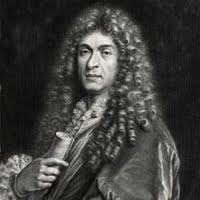 music with local friars. Then his life changed overnight. How it happened that Roger de Lorraine, the chevalier de Guise, picked a 14-year old boy to become a tutor in Italian for his niece, we don’t know. What we do know is that the niece was none other than Anne-Marie-Louise d’Orléans, known as the “Grande Mademoiselle,” the eldest daughter of Gaston, the Duke of Orléans, a brother of Louis XIII and, therefore, the niece of King Louis XIV. The Grande Mademoiselle, then 19, was living in the Palais des Tuileries, and it was in the palace that Jean-Baptiste completed his musical education. One wonders whether Lully had any knowledge of Italian music before he was brought to France; it seems likely that he became familiar with it later on, when he was already employed by the court. In addition to music, Jean-Baptiste was taught to dance, and, apparently was very good at that – at least that was the capacity in which he started at the Royal court. The Second Fronde (the Fronde of the Nobles) compromised the position of the Grande Mademoiselle, and in 1653 she was forced to leave Paris. Soon after, Jean-Baptiste returned to the city and was brought to the court as a dancer in a Ballet royal de la nuit, a sumptuous production which called for a large number of performers. (The 14-year old King, who loved to dance, performed as Apollo – it was his debut). The performance went well and Lully was accepted to the corp. As Lully was already dabbling in composition, he was appointed a “composer of instrumental music,” but his duties were to combine dancing and composing, with an emphasis on dancing. Jean-Baptiste was so good at it that he got noticed by the King.
Soon he became the King’s favorite – first as a dancer and, later, as a composer. Back then, the traditions of French court music were rather unusual, at least by our standards. For example, several composers were supposed to create a single ballet. The ballets were complex affairs, not just with dances but also with different vocal parts and instrumental interludes. Some composers were considered to be especially good in writing vocal music, while others were famous as instrumentalists (the young Lully was known for his dance music). For example, Ballet de la Nuit, mentioned above, was written by at least three people. It wasn’t till 1656 that Lully would have a chance to create a complete ballet of his own, L'Amour malade; that happened partly because of the influence of the Italian musicians in the entourage of the King’s chief advisor, Cardinal Mazarin, himself an Italian. L'Amour malade, a vast production with mimes, dancers (Lully being one of them) and singers, was a huge success. From that point on, he was considered the greatest ballet composer in France. That would become his main preoccupation for the next several years: he would write ballets for the court and even add ballet scenes to operas of other composers. A rather scandalous story happened when the famous Italian opera composer, Francesco Cavalli, came to town with his fine opera, Ercole amante. Lully decided to add several ballet pieces to it. The entire production became a six-hour affair; the king, the queen and the court danced to the ballet music, which received all the praise, while the rest of the opera was panned. Cavalli left Paris soon after.
Here are several excerpts from an early ballet by Lully called Ballet des Plaisirs. It was composed in 1655; Lully danced several roles in the production. Aradia Baroque Ensemble, a Canadian group, is conducted by Kevin Mallon.
Read more...Jean-Baptiste Lully - Scenes from Ballet Des Plaisirs
Aradia Baroque Ensemble (Ensemble)
Kevin Mallon (Conductor)
Bob Blom - Soul Provider
Bob Blom (Saxophone)
Moshe Zorman - Yemenite Fantasy
Lysander Trio (Trio)