
Queen Christina – Part I, 2016
May 30, 2016. Queen Christina – Part I. The 17th century was a time of great art and its glorious patrons, and Rome was the center of it all – art, music, riches, and patronage. We’ve written about one of the major figures of the time - Cardinal Pietro Ottoboni, but Queen Christina of Sweden, the benefactress of Giacomo Carissimi, Alessandro Stradella, Bernardo Pasquini, Arcangelo Corelli, Alessandro Scarlatti and so many others, was the one who set the example for all the 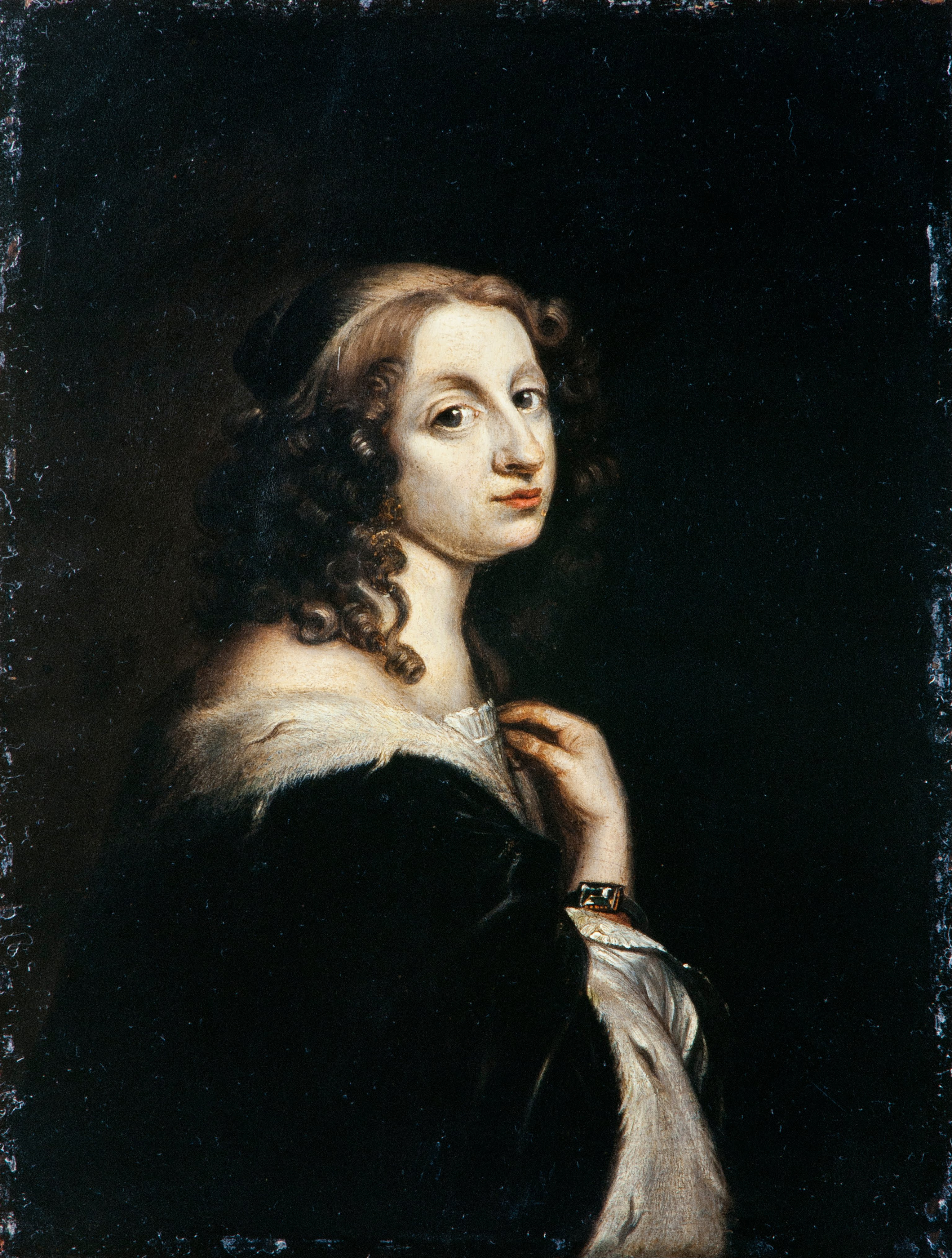 powerful men that followed in her steps as major patrons of arts. Christina was an extraordinary person, unconventional in every possible way: socially, religiously, sexually, and artistically. She was born on December 18th of 1626 in Stockholm to Gustav II Adolf, King of Sweden. Her father, a great military leader who ably commanded the Swedish army during the Thirty Year War, made sure that she would inherit the throne in case of his death and that she was given extensive tutoring, ordinarily provided only to princes. In 1632 Gustav II was killed in battle and at the age of six Christina became Queen regnant. She eagerly continued her studies, learning Latin and Greek (eventually she learned eight more languages, including French and Italian, both of which she knew perfectly, German, Arabic and even Hebrew). She studied for10 hours a day and seemed to enjoy it. Philosophy and religion were her favorite subjects, and also history and mathematics. “She was not like a female,” was the judgment of one of her courtiers. Intellectually curious, the young Christina invited scholars and philosophers to the court; one of the visitors was a Portuguese rabbi and kabbalist, Menasseh ben Israel. With her guests, she discussed astronomy, theology and natural sciences. She even invited the celebrated French philosopher René Descartes, who came to Stockholm in 1649. They would meet every day, at 5 o’clock in the morning and talk for hours. The tasking schedule and drafty rooms affected Decartes’ health, four months later he caught a cold and died. Christina, who loved the theater (Pierre Corneille’s plays especially) was an amateur actress, and ordered to set one of the palace halls as a theater. In 1648 she invited the famous Flemish painter Jacob Jordaens to create 35 paintings for one of her castles. Around that time, she became one of the biggest collectors of art in Europe. Even though she was yet to get involved with music, these rather costly activities presaged her life as a major patron of arts later on, in Rome.
At the age of nine Christina, after reading the biography of the English Queen Elisabeth, decided that she will not marry. She wrote about “distaste for marriage” in her unfinished autobiography. At the age of 23 she made an official announcement, and asked that her cousin Charles be appointed heir to the throne. For a Queen, she lived a very unusual life: studied all the time, slept just three - four hours a day, and often wore men’s clothes and shoes “for convenience (later in her life in Rome, though, she would wear dresses with such décolleté that even the Pope rebuked her). At the time, her closest friend was her lady-in-waiting, Ebba Sparre, with whom she was probably intimate. In 1651, totally exhausted, she suffered what probably was a nervous breakdown. Her French doctor banned all studies and ordered entertainment instead. Surprisingly, Christina took his advice to heart and abandoning her ascetic lifestyle.
While Sweden was Protestant, since an early age Christina had been interested in Catholicism. One of her confidants was Antonio Macedo, a Portuguese Jesuit. She developed plans to convert. Her unwillingness to marry and Catholicism were clearly conflicting with her position as Queen. In June of 1654 she abdicated in favor of her cousin, Charles Gustav. Few days later she left the country, first to Hamburg, then Antwerp and eventually Rome.
Read more...Franz Liszt, Venezia e Napoli.
May 20, 2016. Franz Liszt, Venezia e Napoli. Today we’ll publish an article on Liszt’s Venezia e Napoli, a revision of the earlier set by the same name, which was published as a supplement to the Deuxième année: Italie. We’ll illustrate Gondoliera with a performance by the young Korean-American pianist Woobin Park, Canzone – by a 1985 recording made by the great Jorge Bolet, when he was 71, and Tarantella – with a performance by another young pianist, the American Heidi Hau. ♫
The cities of Venice and Naples must have made a particular impression upon Franz Liszt 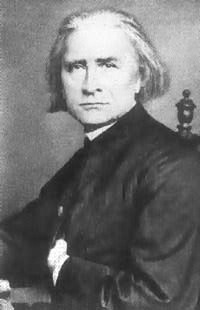 during his travels with Marie d’Agoult, for, beside the several pieces that would ultimately become the travelogue of his journeys through Italy in the second volume of Années de pèlerinage, he also composed in 1840 a further four pieces named after them—Venezia e Napoli. Like Années de perinage, Venezia e Napoli likewise underwent a significant process of revision once Liszt was in Weimar. Of the original four pieces, only the last two were kept: the Andante placido, which became Gondoliera; and the Tarantelles Napolitaines, which was simply renamed Tarantella. Liszt then inserted a doleful Canzone between these two pieces, creating the triptych now known today. It was published as a supplement to Deuxième Année in 1861.
Liszt based Gondoliera (here), or “Gondolier’s song,” on a well-known melody (“La biondina in gondoletta”) composed by Giovanni Battista Peruchini, an Italian composer born in 1784. Unlike the original version, the 1859 revision opens with an extended introduction in the key of F-sharp minor. Undulating eighth notes in compound meter begin quietly in the bass and slowly rise towards the tonic. In the treble, glistening arpeggios instantly conjure the imagery of a peaceful Venetian canal. Eventually gaining an F-sharp major chord, the music pauses before the commencement of the melody. Marked sempre dolcissimo, the melody, in its first statement, sings out in the rich middle register of the piano above a tonic pedal suggested by the eighth notes still present in the bass. Two more statements follow, each separated by a brief fantasia in Liszt’s usual florid style. Only the latter half of the melody is present in the second statement, but is otherwise only slightly changed. The eighth notes of the bass, however, have now become sixteenths, imbuing the music with an increasing energy. The final statement, on the other hand, is greatly embellished. The melody, still essentially unaltered, now appears against a glimmering accompaniment of trills and broken chords, as if the gondola has suddenly emerged from between two buildings and brilliant sunlight now reflects off the surrounding waters. The melody is repeated again, now below the accompanimental arpeggios, and with its penultimate measure trailing off into a final passage of filigree. From there, the lengthy coda turns the melody somewhat wistful, as its strains are broken up and the minor key creeps back into the tonal fabric. On a stunningly beautiful passage in which full-voice chords move about a fixed F-sharp and A-sharp, the music fades away, like the empty gondola slowly receding from its former passenger. (Read more here).
Read more...Franz Liszt - Canzone, from Venezia e Napoli
Jorge Bolet (Piano)
Franz Liszt - Tarantella, from Venezia e Napoli
Heidi Hau (Piano)
Camille Saint-Saëns - Introduction and Rondo Capriccioso, Op. 28
Ania Filochowska (Violin)
Kuang-Hao Huang (Piano)
Frédéric Chopin - Nocturne in c-sharp minor Op. Posth.
Ania Filochowska (Violin)
Kuang-Hao Huang (Piano)
Frédéric Chopin - Nocturne Op. 9 No. 2, E flat major
Ania Filochowska (Violin)
Kuang-Hao Huang (Piano)
Claude Debussy - Sonata for Violin and Piano
Ania Filochowska (Violin)
Kuang-Hao Huang (Piano)
Johannes Brahms - Scherzo for Violin and Piano in c minor, WoO posth. 2 (from F.A.E. Sonata)
Ania Filochowska (Violin)
Kuang-Hao Huang (Piano)
Denis Levaillant - Coucou Hibou !
Nicolas Horvath (Piano)