
Gabriel Fauré - Cello Sonata No. 2, Op. 117 (Andante)
Carol Comune (Piano)
Adam Lohr-Pearson (Cello)
Bergen Symphony Orchestra with Gregg Michalak, pianist
01/21/2017 19:30, Fort Lee High School
Piano Concerto in G minor, Op. 25
Mendelssohn
Four Klavierstücke, op. 119 by Brahms, 2016
June 27, 2016. Four Klavierstücke, op. 119 by Brahms. Below is an article by Joseph DuBose about the last set Johannes Brahms ever wrote for piano solo. We illustrate it with performances by Alon Goldstein and Matthew Graybil. ♫
The 4 Klavierstücke, op. 119 is the last of Brahms’s compositions for his own instrument. While it is true that the 51 Übungen were published later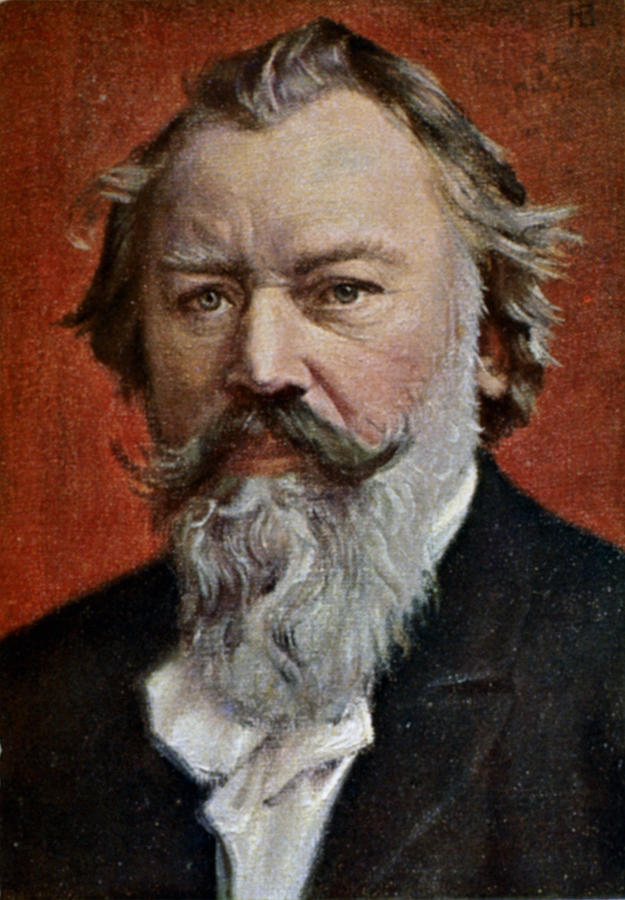 , these exercises were nevertheless compiled over several years from works already written. In the wake of the E-flat minor Intermezzo that closed the op. 118, the current collection opens with two similarly introspective minor key intermezzi. The first, in B minor, passes by with resigned melancholy and a cool detachment that aptly follows such a heart-wrenching expression of emotion. The following E minor Intermezzo, on the other hand, builds out of a nervous energy, and by its conclusion begins to turn towards a brighter mood. The C major Intermezzo that follows abounds with rhythmic energy, and quite fittingly sets the stage from the robust and dynamic E-flat major Rhapsodie. An appropriate end for Brahms’s solo piano music, the Rhapsodie abounds with the virile energy of the early Rhapsodies while also looking back at times to the op. 10 Ballades.
The B minor Intermezzo (here) makes the most direct use of the descending thirds motif since the Caprice in D minor that opened op. 116. Whereas in the Caprice the thirds were used to great effect both melodically and contrapuntally, the effect here is entirely harmonic. As the thirds descend, the tones overlap resulting in beautiful, impressionistic chords of the ninth and eleventh that place the music in a twilit area between the keys of B minor and D major. Atop these luscious harmonies, a melancholy tune more suggestive of D major until its final cadence, floats across the hazy harmonic landscape. While this principal melody comes to a close on a definitive half cadence in B minor, a firm assertion of the tonic is avoided by the immediate appearance of a secondary theme unmistakably in the key of D major. This new theme struggles to give voice to the inner turmoil of the piece, as it builds fervently over chromatically rising harmonies into a forte that inevitably melts away over dominant seventh chords obscured by two chromatic lines moving in contrary motion. The melody starts again, though now altered, and builds more quickly into a more fulfilling climax on the dominant, reinforced by rippling triplets in the bass. A moment of resignation is then reached as the music begins to die away with poignant sighs that fall from the upper register into the bass. Like a fog rolling in, obscuring everything within its reach, the descending thirds return in a four measure transition that brings about a slightly embellished reprise of the opening. A brief coda, built on the plaintive sighs heard earlier, begins to reaffirm the D major tonality. However, just prior to the expected cadence it gives way to a final chain of thirds that spans across all the tones of a thirteenth chord before resolving into a final B minor chord (continue reading here).
Read more...The brothers Marcello, 2016
June 20, 2016. The brothers Marcello. Benedetto Marcello was born on June 24th of 1686 in Venice. Of a noble family, he was a younger brother of Alessandro, also a composer. Benedetto followed in Alessandro’s steps, becoming a member of the Grand Council of Venice at the 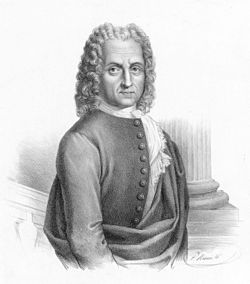 age of 20. Their father wanted Marcello to study law and Benedetto obliged. In 1711 he became a member of the Council of Forty, the government of Venice. In 1730 he was sent as a governor to Pula, Istria, then a territory of the Venetian Republic, now part of Croatia. Eight years later he returned to Italy, in rather poor health, and was hired by the city of Brescia as chief financial officer. He died a year later, in 1739, of tuberculosis.
Benedetto studied music from an early age; among his teachers was Francesco Gasparini, a well-known composer and teacher (Johann Sebastian Bach was familiar with Gasparini’s compositions). Though a prolific composer, he never held a musical appointment, which put him in a different category compared to professional musicians: in Italy there was a clear social separation between “maestri” and “dilettanti.” That didn’t stop him from being one of the most influential composers of his time. One of Benedetto’s major works was the setting of psalms he called “Estro-poetico armonico.” It was published in eight volumes between 1724 and 1726. Here’s one of the psalms, Mentre io tutta ripongo in Dio, a setting for four voices. It’s performed by the ensemble Cantus Cölln, Konrad Junghänel conducting and playing the lute. In 1731, when he was in Pula, he wrote an oratorio Il piano e il riso delle quattro stagioni dell'anno (Lamentation and Joy of the Four Seasons of the Year). Here’s a Symphony from the oratorio. It’s performed by I Virtuosi delle Muse under the direction of Stefano Molardi.
Some sources say that Alessandro Marcello was born on February 1st, 1673, others have his birthday almost four years earlier, on August 24th, 1669. The latter is more likely, co nsidering that he was admitted to the Grand Council of Venice in 1690: it’s much more probable that he became a member at the age of 21 rather than 17. Highly educated and a man of varied interests, he served as ambassador, was a prolific writer, for a short time indulged in painting and was a talented composer. Alessandro was a member of the prestigious Accademia degli Animosi, the Venetian branch of the Roman Accademia degli Arcadi. He also collected musical instruments, which are now exhibited in Rome, in the National museum of musical instruments. Alessandro wrote a number of cantatas, and also an Oboe concerto, which is often attributed to his brother Benedetto. Johann Sebastian Bach liked it so much that he transcribed it for the harpsichord; in the catalogue of Bach’s works it has number BWV 974. Here’s the original, from Alessandro Marcello. The soloist is Paolo Grazzi, Andrea Marcon is leading the Venice Baroque Orchestra.
Alessandro Marcello - Oboe concerto in d minor
The Venice Baroque Orchestra (Ensemble)
Andrea Marcon (Conductor)
Benedetto Marcello - Symphony, from Il piano e il riso delle quattro stagioni dell'anno
I Virtuosi delle Muse (Ensemble)
Stefano Molardi (Conductor)
Benedetto Marcello - Mentre io tutta ripongo in Dio, from Estro-poetico armonico
Cantus Cöllne (Ensemble)
Konrad Junghänel (Conductor)
Johann Stamitz - Symphony in A major, "Frühling"
Virtuosi di Praga (Ensemble)
Oldřich Vlček (Conductor)
Camille Saint-Saëns - Allegro appassionato, Op. 43
Amit Peled (Cello)
Stefan Petrov (Piano)
Gustav Mahler - Symphony No. 4
Vienna Philharmonic (Orchestra)
Frederica von Stade (Mezzo-soprano)
Claudio Abbado (Conductor)