
Ernest Chausson - Pièce, Op. 39
Benjamin Capps (Cello)
Vassily Primakov (Piano)
Beethoven Symphony no. 6 "Pastoral" - 2016
July 18, 2016. Beethoven Symphony No. 6. Today we’ll present an article by Joseph DuBose on one of the most popular symphonic pieces in all of music literature: Beethoven’s Sixth Symphony (“Pastoral”). The problem we encountered was with the selection of the recording to 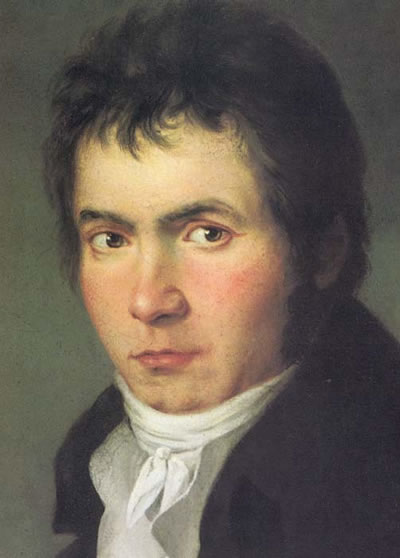 illustrate the article: there are just too many good ones. The “Pastoral” is one of the most often recorded symphonies, and great recordings go back to the early years of the industry. To list them would be to list the names of all great conductors of the 20th century. We decided on the live recording made by the Concertgebouw Orchestra under the direction of Bernard Haitink. We don’t claim that it’s the best but it is indeed excellent. Here it is. ♫
Each of Beethoven’s symphonic works up to the C minor Symphony represent individual steps in the determined path the composer set out on. In the first two, he adhered to the models of Mozart and Haydn, but only just so. His creative genius was already pushing out against the established manners and proportions of the symphony. The Eroica left behind all that was known and was the first significant work on the “new path” Beethoven declared in 1802. The B-flat Symphony which soon after followed, in outward appearance at least, may seem like a regression from the Eroica. Yet, even if it is stricter in form than its predecessor, the same passionate emotions pulse beneath its surface. The C minor, then, is the fusion of both works—that taut forms of the Fourth combined with the seriousness and heroism of the Eroica. However, with the Sixth Symphony, or the “Pastoral” as it is so often called, Beethoven presents us with a work entirely different from its any of its predecessors. That it came to birth alongside the fiery C minor is remarkable indeed. It is a startling revelation of the great breadth of the composer’s imagination, that he could conceive so vastly different works at the same time.
The “Pastoral” Symphony is Beethoven’s homage to nature. For him, nature was an absolute necessity—for life and for creative endeavors. He spent the better part of his summers wandering the wooded countrysides of Hetzendorf, Heiligenstadt, and Döbling. It was in these rustic environs that he conceived and drafted many of his greatest compositions, which were then completed and put into score during his winters in Vienna.
From a historical perspective, the Sixth Symphony was the first truly successful example of “program music,” and laid the groundwork for the concert overtures of Mendelssohn and the symphonic poems of Liszt. Yet, contrary to those later masters (Liszt in particular), Beethoven recognizes the limitations of music as an artistic medium. Though he has provided subtitles for each individual movement that succinctly describe the picture being painted by the music, he provides the crucial key to his intent beneath the work’s title: “More an expression of feeling than a painting.” Indeed, it is apparent in the conception of the symphony that Beethoven was quick to avoid any instance of actual imitations of sights or sound. Indeed, even the celebrated imitations of birdcalls towards the conclusion of the second movement Beethoven has admitted were intended as a practical joke, and the section as a whole is more in keeping with the capricious outbursts found in his other symphonies than any attempt at blatant tone-painting. (Continue reading here).
Read more...Ludwig van Beethoven - Symphony No. 6 in F major, Op. 68 ("Pastoral")
Concertgebouw Orchestra (Orchestra)
Bernard Haitink (Conductor)
Aram Khachaturian - Sabre Dance
Patil Zakarian (Fortepiano)
Ludwig van Beethoven - Sonata No. 21 in C major, Op.53, "Waldstein"
David Kaplan (Piano)
Wolfgang Amadeus Mozart - Rondo in A minor, K. 511
David Kaplan (Piano)
Patil Zakarian - Seeds of Pomegranate
Patil Zakarian (Fortepiano)
Franz Joseph Haydn - Sonata in F Major, Hob. XVI:23
Inga Kashakashvili (Piano)
Ludwig van Beethoven - Piano Sonata No. 28 in A Major, Op. 101
Inga Kashakashvili (Piano)
César Franck - Sonata for Violin and Piano in A Major (transcribed for cello)
Benjamin Capps (Cello)
Vassily Primakov (Piano)