
Bruckner’s Third Symphony, 2016
August 29, 2016. Bruckner’s Third Symphony. Next Sunday, September 4th, is the birthday of Anton Bruckner, who was born in 1824. The last two years we've celebrated this date with presentations of his Fourth 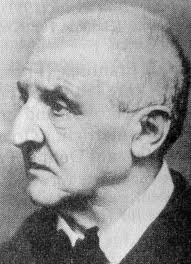 and Fifth symphonies. This time we’ll jump back several years and talk about what many consider his breakthrough work, Symphony no. 3. We had mentioned Bruckner’s notorious lack of confidence, his tendency to rewrite compositions over and over again. In this sense, the Third Symphony is one of the worst examples: there are six different editions of it. The first version was written in 1873. At the time Bruckner was living in Vienna, where he had moved to five years earlier from Linz. He assumed a teaching position at the Vienna Conservatory and became the organist at the Court Chapel, a prestigious but unpaid position. That year Bruckner, who adored Richard Wagner, visited him in Bayreuth and showed him the manuscripts of two symphonies, the Second and the Third, the latter still not complete. Bruckner asked Wagner which one he liked better. Wagner picked the Third, and Bruckner dedicated the symphony to him. The symphony was premiered four years later, the first performance taking place in Vienna on December 16th of 1877. By all accounts, it went badly. The conductor who was supposed to lead the orchestra, one Johann von Herbeck, died unexpectedly on October 28th of that year. Bruckner himself had to step in. He was a decent choral director but quite inexperienced with large symphony orchestras. The Third is about one hour long; the orchestra wasn’t playing well, the public was leaving in droves and by the Finale the hall was almost empty. To make matters worse, Eduard Hanslick, the influential Viennese music critic, a Brahms supporter and Wagner’s detractor, followed the performance with a scathing review. Not everybody disliked the Symphony, however: Mahler, for one, thought enough of it to arrange it for two pianos.
Bruckner started revising the symphony almost as soon as he finished it. In 1874 he created the first revision, mostly by re-orchestrating parts of it. Then, in 1876, he rewrote the second movement, Adagio. Another version followed in 1877 – that’s the version Bruckner gave to Mahler who used it for his two-piano arrangement. By mid-1880s Bruckner’s music became more acceptable. The Third Symphony was performed in several German cities and in the Netherlands, and was brought to New York (it was performed at the old Metropolitan Opera house). That didn’t stop Bruckner from tinkering with it. In 1889, twelve years after the premier, he returned to the Third and created another edition, and then, just one year later, yet another one. The version we’ll hear is from 1889. The Munich Philharmonic Orchestra is conducted by one of the most interesting interpreters of the music of Bruckner, the Romanian-born Sergiu Celibidache who at the time was the Principal conductor of the Munich Philharmonic. As are all Bruckner’s symphonies, the Third is in four parts. The first movement Gemäßigt, mehr bewegt, misterioso (Moderate, more animated, mysterious) runs about 25 minutes (here); the second, Adagio, sixteen and a half (here); the third, Scherzo, is just shy of eight minute (here), and Finale, Allegro (here), is about 15 minutes long.
Read more...Anton Bruckner - Symphony No 3 in D minor, 4th movement
Munich Philharmonic (Orchestra)
Sergiu Celibidache (Conductor)
Anton Bruckner - Symphony No 3 in D minor, 3rd movement
Munich Philharmonic (Orchestra)
Sergiu Celibidache (Conductor)
Anton Bruckner - Symphony No 3 in D minor, 2nd movement
Munich Philharmonic (Orchestra)
Sergiu Celibidache (Conductor)
Frédéric Chopin - Grand Valse Brillante, Op. 34, No. 1
Tekalli Duo (Duo)
Johannes Brahms - Violin Sonata No. 3 in D minor, Op. 108
Tekalli Duo (Duo)
Olivier Messiaen - Thème et Variations for Violin and Piano
Tekalli Duo (Duo)
Ludwig van Beethoven - Piano Concerto No 4 in G major, Op. 58
Gregg Michalak (Piano)
Debussy and Stockhausen, 2016
August 22, 2016. Debussy and Stockhausen. Claude Debussy, one of the greatest composers of the late 19th – early 20th century, was born in Saint-Germain-en-Laye, a suburb of Paris, on this 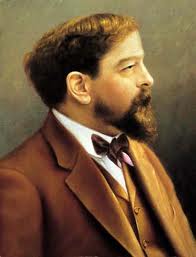 day in 1862. We’ve written about Debussy many times (here and here, for example) and usually illustrated his art with pieces written in the more popular genres – symphonic music and, especially, piano music. That somewhat skews the perspective: Debussy was prolific as a chamber composer, he wrote a large number of wonderful songs, and ever composed several operas, although he finished only one of them, Pelléas et Mélisande. Pelléas was written in 1902 on the libretto adapted from the namesake play by Maurice Maeterlinck. Debussy had toyed with the idea of writing an opera on several occasions. In 1890 he accepted a libretto written by a noted poet Catulle Mendès and started on the opera he called Rodrigue et Chimène. Debussy worked on it for the following three years, during which time his own compositional style had changed and he got dissatisfied both with his own music and with the libretto. Debussy abandoned Rodrigue after he saw a performance of Maeterlinck’s Pelléas. (The Opéra de Lyon asked Edison Denisov, the Russian composer blacklisted during the Soviet time, to complete the orchestration of the opera; Rodrigue was premiered in 1993, exactly 100 years after it was abandoned by Debussy). A short version of Pelléas was completed in 1895 but Debussy couldn’t find an opera theater that would commit to staging it. In 1898 André Messager, a composer, conductor and a friend of Debussy’, was made the music director of the Opéra-Comique in Paris. That lead to the premier on April 30th of 1902. The reaction was mixed. The public mostly disapproved, while musicians – friends of Debussy and most of the Conservatory students thought very highly of it. Camille Saint-Saëns, who disliked Debussy’s music in general said that he stayed in Paris, instead of leaving for a summer vacation, so that he could say “nasty things about Pelléas.” Here’s Act 3 of the opera (about 27 minutes of music); Claudio Abbado conducts the Vienna Philharmonic Orchestra, François Le Roux is Pelléas, Maria Ewing is Mélisande.
And now, as Monty Python would say, for something completely different. Karlheinz Stockhausen was also born on this day, in 1928. A seminal figure of the musical avant-garde of the after-WWII generation, he was praised by some and scorned by others (his electronic music Studie II received the lowest possible score of 1 from one of our listeners). Stockhausen was born in Burg Mödrath, near Cologne. When he was seven the family moved to Altenburg, nearby. His mother had a nervous breakdown and was institutionalized. In 1941 the family received an official letter informing them that she died of leukemia. It was determined later that she was gassed, as were most of the patients of the hospital, as a “useless eater” by the Nazis (Stockhausen will reinterpret this terrible episode in his opera Donnerstag aus Licht. Here’s the opening section of the opera. Karlheinz Stockhausen conducts the brass and percussion players). In 1947 he enrolled at the Cologne Musikhochschule (Conservatory), where he studied composition with Frank Martin. Upon graduating in 1951 he was invited to Darmstadt, the famous Ferienkurse für Neue Musik (Summer courses for new music). There he met several students of Olivier Messiaen and decided that he also needed to take his classes. He went to Paris in 1952, was accepted into Messiaen’s class and studied there for a year. Around that time a new Electronic Music Studio was established in Cologne and Stockhausen joined it in 1952. The new aural world was opening up.
Read more... « first ‹ previous … 272 273 274 275 276 277 278 279 280 … next › last »
Anton Bruckner - Symphony No 3 in D minor, 1st movement
Munich Philharmonic (Orchestra)
Sergiu Celibidache (Conductor)