
Claude Debussy - Pelléas et Mélisande, act 3
François Le Roux (Baritone)
Maria Ewing (Soprano)
Vienna Philharmonic Orchestra (Orchestra)
Claudio Abbado (Conductor)
Camille Saint-Saëns - Introduction and Rondo Capriccioso, Op. 28
Karina Canellakis (Violin)
Nicola Porpora, 2016
August 15, 2016. Nicola Porpora. Nicola Porpora, a prolific opera composer, was born in Naples on August 17th of 1686. He was 10 when he enrolled in the Conservatorio dei Poveri di 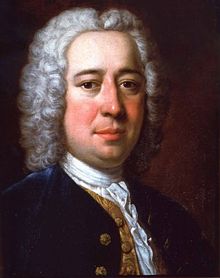 Gesù Cristo. In 1708 he received his first opera commission and wrote L’Agrippina but had to wait several years to get another one. That was probably because Alessandro Scarlatti so thoroughly dominated the Neapolitan opera scene: 1708 was the year the much more famous Scarlatti returned to Naples after six years in Florence and Rome. Porpora was 13 and still at the Conservatory when he started teaching and it’s his teaching talents that he would become famous for, at least as much as for his operas. As there were few opera commissions, he earned money working at the Conservatorio di S Onofrio and giving private lessons. In 1719 Scarlatti returned to Rome and that opened the stage for Porpora. One of the operas composed during that period was Angelica, on the libretto by the young Pietro Metastasio. The role of Orlando was sung by Porpora’s star pupil, the 15-year old castrato Farinelli, who would become one of the most celebrated singers in the history of opera. Among Porpora’s pupils was also Gaetano Majorano, known as Caffarelli, also a castrato, second only to Farinelli; he became one of Handel’s favorite singers. Here’s an aria from Angelica called Ombre amene. The countertenor is Robert Expert; the orchestra of Real Compañia Ópera De Cámara is conducted by Juan Bautista Otero.
In 1723-24 Porpora traveled to Vienna and Munich but received no appointments. He returned to Italy and settled in Venice. An intense rivalry developed between him and Leonardo Vinci, who was Porpora’s classmate in Naples. In 1730 Porpora and Vinci produced operas which ran simultaneously in two leading Roman opera houses, one in Teatro della Dame, another – in Teatro Capranica (Teatro della Dame was the largest in Rome when built in 1718, it burned down in 1863; Teatro Capranica, the second oldest public opera house in Rome after the Teatro delle Quattro Fontane, still exists but is mostly used for various public events). In 1730 Vinci died, age 40, and for a while Poprora’s competitive impulse focused on another successful opera composer, Johann Adolph Hasse.
In 1733 Porpora received an invitation from a group of Londoners who were setting up an opera house to rival Handel’s. Porpora traveled to London and stayed there for almost three years. During that time he composed five operas, which were staged at the new opera, called Opera of the Nobility. The first, Arianna in Naxo, turned out to be the most successful one, even though Farinelli made his London debut in the subsequent Polifemo. Porpora left London in 1736, and less than a year later both the Opera of the Nobility and Handel’s opera collapsed. Here’s the wonderful French countertenor Philippe Jaroussky singing the area Alto Giove, from Polifemo. Porpora returned to Italy, splitting his time between Venice and Naples. The opera commissions were drying up, and Porpora traveled to Dresden, where he received an appointment as Kapellmeister at the court of Saxony. That lasted for five years; in 1752 he was sent into retirement and moved to Vienna. There he renewed his friendship with Metastasio; and it was probably Metastasio who introduced the 20-year old Joseph Haydn to Porpora. Haydn, who was trying to make a living as a freelancing pianist and composer, became Porpora’s valet, keyboard accompanist, and student. It seems Porpora treated Haydn pretty roughly, but Haydn later claimed that he learned "the true fundamentals of composition from the celebrated Herr Porpora.” Porpora was living mostly on a pension from Dresden, and when that ended in 1759, he moved back to Naples. He was made maestro di cappella in the Conservatorio di S Maria di Loreto. His final opera was a failure, he had to resign from the conservatory and spent the last years of his life in poverty. Porpora died in Naples on March 3rd of 1768. Here’s the aria Tu che d'ardir' m'accendi from his opera Siface. Again, we’ll hear Philippe Jaroussky, this time with Le Concert d'Astree under the direction of Emmanuelle Haim.
Read more...Nicola Porpora - Tu che d'ardir' m'accendi, from Sirface
Philippe Jaroussky (Countertenor)
Le Concert d'Astree (Ensemble)
Emmanuelle Haim (Conductor)
Nicola Porpora - Ombre amene, from L'Angelica
Robert Expert (Countertenor)
Real Compañia Ópera De Cámara (Orchestra)
Juan Bautista Otero (Conductor)
Frank Bridge - Valse Russe, from Miniatures for Piano Trio
Allant Trio (Trio)
Felix Mendelssohn - Piano Trio No. 1 in D Minor, Op. 49
Allant Trio (Trio)
Kelly-Marie Murphy - Give Me Phoenix Wings to Fly
Allant Trio (Trio)
Dufay and the early Renaissance, part 2, 2016
August 6, 2013. Dufay and the early Renaissance, part 2. Last week we discussed, in broad terms, the period of music that is customarily called “Early Renaissance.” Today we’ll present three famous composers of that period, Dufay, Dunstaple and Binchois. What we find fascinating in their stories is how intertwined the European music culture of the time was, on a personal level and with musical ideas spreading from one country to another. All this in a war-torn Europe, which often seems so static to a contemporary observer.
The most famous 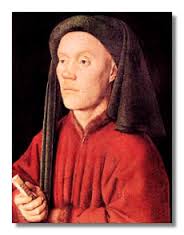 Franco-Flemish composer of the mid-15th century, Guillaume Dufay was probably born in 1397. Exactly where is not clear: either around Cambrai, in what is now Northern France, or in Beersel, outside of Brussels. He was an illegitimate child of a local priest. His uncle was a canon at the cathedral of Cambrai, and the young Guillaume became a chorister there. His talents were noticed early on and he was given formal musical training. In 1420 Dufay moved to Rimini to serve at the palace of Carlo Malatesta, a famous condottiero. There he wrote church music – masses and motets – and also secular ballades and rondeaux. Dufay stayed in Malatesta’s service till 1424 and then returned to France, to Cambrai or maybe Laon. In 1426 Dufay went back to Italy, this time into the service of Louis Aleman, a French Cardinal who at that time was a papal legate in Bologna. Two years later Dufay moved to Rome and became a member of the papal choir. He remained in Rome till 1433; by then his fame had spread all around Europe. He left Rome to join the court of Amédée VIII, the duke of Savoy. In 1434 the duke’s son Louis married Ann of Cyprus, and many guests were invited to the wedding. One of them wasPhilip the Good, duke of Burgundy. In the duke’s retinue was Gilles Binchois. Apparently Dufay and Binchois met on that occasion, at least according to Martin le Franc, the same le Franc who coined the term La Contenance Angloise to describe the style of John Dunstaple, another famous contemporary. In 1435 Dufay returned to the papal court, which this time was in Florence, where Pope Eugene IV was driven by an insurrection in Rome. It was in Florence that Dufay composed one of his most famous motets, Nuper Rosarum Flores ("Recently Flowers of Roses"). It was written for the consecration of the Florence cathedral, Santa Maria del Fiore (Saint Mary of the Flowers) on March 25th, 1436. The great architect Filippo Brunelleschi had just completed the magnificent cupola, and the Pope himself presided over the festivities. Dufay returned to Cambrai around 1459 and lived there for the rest of his life, actively composing till the end. His life was a long one, for the time: he died on November 24th of 1474.
Gilles Binchois was born around 1400 in the city of Mons, which is now in Belgium and back then was the capital of the County of Hainaut. It later became part of the Duchy of Burgundy. During the Hundred Years’ War the Burgundians fought on the side of the English, and at some point even captured Paris. It’s known that around 1425 Binchois was in Paris serving William de la Pole, earl of Suffolk and one of the English commanders during the War. Around 1430 Binchois joined the court chapel of Philip the Good, the Duke of Burgundy and stayed there for many years. Philip loved music and hired many musicians and composers; Guillaume Dufay wrote for him. Philip didn’t have a permanent capital and moved his court between the palaces in Brussels, Bruges, Dijon and other cities of the Duchy; Binchois most likely traveled with the court. Eventually he retired to Soignies, just outside of Mons. He died in 1460. Binchois was considered the finest melodist of the 15th century (although some might argue that this honor belongs to John Dunstaple), and was, with Guillaume Dufay, the most significant composer of the early Burgundian (Franco-Flemish) School.
John Dunstaple was born around 1390 (a conjecture based on the timing of some compositions), probably in the town of Dunstable. He served in the court of John of Lancaster, a son of King Henry IV and a brother of Henry V. John led the British forces in many battles of the Hundred Year War with France (he was the one to capture Joan of Arc) and for a number of years was the Governor of Normandy. It’s likely that Dunstaple stayed with John in Normandy. From there his music spread around the continent. Considering that a major war was raging in France, it is quite remarkable. Dunstaple’s influence was significant, especially affecting musicians of the highly developed Burgundian school; the reason was both musical and political, as Burgundy was allied with England in its war against France. The poet Martin Le Franc, a contemporary of Dunstaple, came up with the term La Contenance Angloise, which could be loosely translated as “English manner” and said that it influenced the two greatest composers of Burgundy, Guillaume Dufay and Gilles Binchois. Le Franc wrote his treaties in 1442, by then Dunstaple was back in England, serving in the court of Humphrey of Lancaster, John’s brother. In addition to writing music, he also studied mathematics, and was an astronomer and astrologer. While not a cleric, he was associated with St. Albans Abbey. Dunstaple died in 1453. During the reign of Henry VIII England became Protestant, many monasteries – the main keepers of musical tradition – were "dissolved" and their libraries were ruined. Most of the English manuscripts of Dunstaple’s music were lost. Fortunately, many copies remained in Italy and Germany – evidence of Dunstaple’s international fame. About 50 compositions are currently attributed to him: two complete masses, a number of sections from masses that are otherwise lost, and many motets.
The portrait above, by Jan van Eyck from 1432of an unattributed sitter, is sometimes said to represent Dufay; other believe it to be Binchois.
Read more... « first ‹ previous … 273 274 275 276 277 278 279 280 281 … next › last »
Karlheinz Stockhausen - Donnerstag Aus Licht, Act 1
Karlheinz Stockhausen (Conductor)