
Giuseppe Tartini - Sonata in G minor "Didone Abbandonata" - 1st mov.
Alessio Benvenuti (Violin)
Alessandro Tricomi (Piano)
Maurice Ravel - Vocalise Etude en forme de Habanera
Alessio Benvenuti (Violin)
Marco lo Muscio (Piano)
Johannes Brahms - Violin Concerto in D major, Op. 77 - I mov. (extract)
Alessio Benvenuti (Violin)
Johannes Brahms - Violin Concerto in D major, Op. 77 - Adagio (extract)
Alessio Benvenuti (Violin)
Jules Massenet - Meditation from "Thais"
Alessio Benvenuti (Violin)
Alessandro Tricomi (Piano)
Johann Sebastian Bach - Fugue from G Minor solo violin sonata - LIVE
Alessio Benvenuti (Violin)
Johann Sebastian Bach - Adagio from G Minor solo violin sonata
Alessio Benvenuti (Violin)
Claude Debussy - Romance for violin and piano
Alessio Benvenuti (Violin)
Marco lo Muscio (Piano)
Brandenburg Concertos, part II
October 12, 2015. Johann Sebastian Bach’s Brandenburg Concertos, part II. Today we’ll complete the article on Bach’s great Brandenburg Concertos, covering numbers 3 through 6. You may read the introduction here. As before, we illustrate the concertos with live performances by the Orchestra Mozart of Bologna, Claudio Abbado conducting.
Concerto No. 3 in G major
Believed to be one of the earliest of the Brandenburg Concertos to be written, the Third in G major (here) is scored solely for stings--three each of violins, violas, and cellos--and continuo. Yet, Bach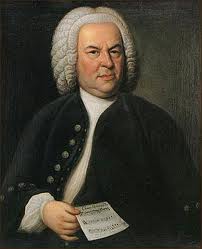 masterfully overcomes the homogenous sound of his chosen ensemble by constantly varying the juxtaposition of the parts. Throughout the entirety of the work no instrument is rarely singled out as a soloist, and it thus sometimes described as "symphonic." Instead, the instruments engage in delightful conversation amongst themselves, whether in sections (as in much of the finale), or more individually, resulting in masterful contrapuntal imitations. Indeed, within the first movement, the ensemble even provides its own ritornello with a unison passage that marks key structural divisions.
However, despite its rich and warm sonorities and inviting melodies, the work has long vexed scholars and performers alike. Standing betwixt its two radiant G major movements is a curious, solitary measure in Adagio tempo and consisting of nothing more than a Phrygian half cadence in E minor. Such a cadence frequently concluded a penultimate movement in Baroque times, preparing the way for an ensuing major key finale. And, one might even suspect that a slow movement is perhaps missing from the Concerto if the measure in question did not occur in the middle of a page. Furthermore, scholars have noted that some of Bach's contemporaries, including Corelli, inserted bare cadences in their scores as well. Since this lone measure is hardly an adequate respite, it is quite possible the cadence was meant to frame or conclude a cadenza improvised by one of the performers. Indeed, it is likely the cadence was a form of shorthand that performers of the period would have easily understood, though the certainty of such is perhaps lost, like much of Baroque performance practices were as the 18th century came to close.
With the lack of any certainty in what Bach's expectations were, actual performance practice of the enigmatic Adagio varies. Some, adhering to a strict interpretation, perform the measure as is with no further ornamentation. Others provide varying degrees of embellishment, from simple ornamentations of the two chords by the harpsichord or violin, to lengthy extemporized fantasias that recall themes from the first movement in a manner akin to cadenzas of Classical and Romantic concerti. On the other hand, some go even further and attempt to restore the balance of the standard three-movement concerto form by inserting a slow movement from one of Bach's (usually lesser known) other works. Given the importance of improvisation during the Baroque era, from ornamentation to figured bass realization and even extemporized full-fledged fugues, it is likely that embellishment of the cadence or an improvised cadenza are perhaps the closest solution to Bach's original intentions (continue).
Read more... « first ‹ previous … 320 321 322 323 324 325 326 327 328 … next › last »
T.A.Vitali, J.S.Bach, L.Van Beethoven, N.Paganini - Concert at Immaculate Chuch of Crotone Live
Naoko Matsui alias Goryo Goryokaku (Violin)
Giuseppe Arnaboldi (Violin)
Fernando Romano (Conductor)
Orfeo Stillo Orchestra (Orchestra)