
Darius Milhaud - La Cheminée du Roi René
Kent Hewitt (Quintet)
Johannes Brahms - Sonata in Eb, Op. 120
John D Hunter (Clarinet)
Thelma Hunter (Piano)
Brandenburg Concertos, part I
September 28, 2015. Johann Sebastian Bach’s Brandenburg Concertos, part I. (Note: we illustrate the concertos with live performances by the Orchestra Mozart of Bologna, Claudio Abbado conducting.)
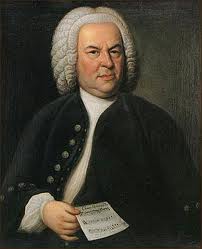 Though today there are perennial favorites with audiences and performers alike and ranked among the finest examples of Johann Sebastian Bach’s music, the six Brandenburg Concertos were perhaps the most elaborate failed job application in the history of music. In late March 1721, Bach sent a carefully prepared manuscript of the Concertos to the Margrave Christian Ludwig of Brandenburg, with the following dedication recounting their origin:
Since I had a few years ago, the good luck of being heard by Your Royal Highness, by virtue of his command, & that I observed then, that He took some pleasure in the small talents that Heaven gave me for Music, & that in taking leave of Your Royal Highness, He wished to make me the honor of ordering to send Him some pieces of my Composition: I therefore according to his very gracious orders, took the liberty of giving my very-humble respects to Your Royal Highness, by the present Concertos, which I have arranged for several Instruments; praying Him very-humbly to not want to judge their imperfection, according to the severity of fine and delicate taste, that everyone knows that He has for musical pieces …
The trip Bach refers to is mostly like his visit in 1719 to Berlin, where he tested and accompanied home a newly constructed harpsichord for his employer, Prince Christian Leopold of Cöthen. Regardless, Bach presumably played for the Margrave. Apparently pleased with the performance, the Margrave then requested of Bach a score to add to his library.
Bach seemingly enjoyed his job in Cöthen. Prince Leopold was himself and an avid musician and maintained his own private ensemble. He was also a Calvinist, which freed Bach from the necessity of composing sacred music. Yet, for whatever reason, Bach began to look elsewhere for employment, and saw the music requested by the Margrave as an opportunity. The dedication further read:
I very humbly beg Your Royal Highness, to have the goodness to maintain his kind favour toward me, and to be persuaded that I have nothing more at heart, than to be able to be employed in some opportunities more worthy of Him and of his service …
Thus, Bach presented the Concertos as not only the scores the Margrave desired to add to his library, but as an impressive musical resume.
The immediate fate, however, of the Brandenburg Concertos is unknown. The Margrave certainly did not hire Bach, as Bach later went on to serve as Cantor at the Thomasschule in Leipzig. It is generally thought that the Margrave did not even bother to acknowledge their receipt, much less to bestow on Bach any kind of reward. Nor, is it believed that he even had them performed. Though, both of these assertions rest on little more than speculation and the pervasive lack of documentation during that era. However, the Margrave most likely did lack the instrumental forces to perform the works (the Sixth would have been within the closest reach of his meager in-house ensemble), as King Frederick William of Prussia was not a large patron of the arts. Regardless, after the Margrave’s death, Bach’s manuscript ultimately was lumped together with a large collection of scores from his library, and were assigned the nominal value of four groschen apiece (roughly $4) in order to divide the estate equally among his heirs.
Like so much of Bach’s music, the Brandenburg Concertos (with the sole exception of the Fifth) fell into obscurity, and were not rediscovered until generations later. They first appeared in print in 1850 to mark the centenary of Bach’s death, and then later gained wider attention when they reappeared in 1868 as part of the Bach Gesellschaft editions. Yet, even with the growing interest in Bach's music spearheaded by Felix Mendelssohn, and the burgeoning field of musicology and the more general enthusiasm for early music during the mid to late 19th century, the Concertos still did not gain wide popularity until the following century. Today, however, they are praised by audiences and scholars alike. It is difficult to escape their remarkable charm, and their impeccable craftsmanship and immense complexity, combined with just the right amount of ambiguity, will forever provide food for scholarly debate. (Continue reading here)
Read more...Johann Sebastian Bach - Brandenburg concerto no. 1 in F major, BWV 1046
Orchestra Mozart (Ensemble)
Claudio Abbado (Conductor)
Johann Sebastian Bach - Brandenburg concerto No. 2 in F major, BWV 1047
Orchestra Mozart (Ensemble)
Claudio Abbado (Conductor)
Wolfgang Amadeus Mozart - Piano Sonata in C Major K. 330
Vladimir Oppenheim (Piano)
Wolfgang Amadeus Mozart - Piano Sonata in C Major K. 330
Vladimir Oppenheim (Piano)
Wolfgang Amadeus Mozart - Piano Sonata in C Major K. 330
Vladimir Oppenheim (Piano)
Franz Schubert - Piano Sonata in A Major, D. 664
Zhenni Li (Piano)
Heinrich Schütz - Wohl dem, der den Herren fürchtet, from Psalmen Davids
Cantus Cölln (Chorale)
Concerto Palatino (Ensemble)
Konrad Junghänel (Conductor)