
Recent birthdays and uploads - September 2015
September 14, 2015. Recent birthdays and uploads. From one of the recent uploads, here’s Robert Schumann’s Kinderszenen, op. 15 in a sensitive and intelligent performance by Tanya Gabrielian, live from the Dame Myra Hess concert in June of 2015. Born in the United States in 1983, Ms. Gabrielian began playing the piano at the age of three and studied in the Preparatory Division of the San Francisco Conservatory of Music. At the age of sixteen, she was admitted to Harvard University as a National Merit Scholar to study biomedical engineering. Instead, she chose a career in music, and in 2000 moved to London, where she received a Master’s degrees from the Royal Academy of Music. Upon graduation, she also received “DipRAM,” the highest performing award of the Royal Academy of Music. In 2009, Ms. Gabrielian moved to New York to enter the Juilliard School’s Artist Diploma program. Tanya Gabrielian has performed across North America, Europe, and Asia, in venues including Carnegie Hall and Alice Tully Hall in New York, Queen Elizabeth Hall and Wigmore Hall in London. She has played with the Los Angeles Philharmonic, the New London Sinfonia, the Royal Scottish National Orchestra, and other orchestras. Ms. Gabrielian is also active in the National Alliance on Mental Illness, in programs featuring composers with mental illnesses.
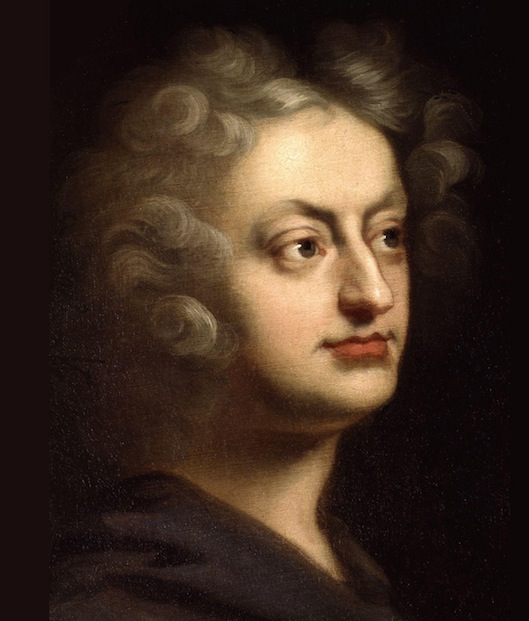 Last week we mentioned Henry Purcell, probably the greatest English-born composer of all time, who died tragically young at the zenith of his career, aged 36. Purcell was born on September 10th, 1659. Just to situate him historically: Corelli was born in 1653 and Alessandro Scarlatti – in 1660. Purcell’s family was musical: both his father and uncle, an important figure in Henry’s life, were singers, and his younger brother Daniel, a composer (he finished Purcell’s opera Indian Queen after Henry’s untimely death). The family lived next to Westminster Abbey, a slum during that time. As a boy, Henry was a chorister in the Royal Chapel. He’s said to have started composing at the age of nine. He studied with two important composers, John Blow and Matthew Locke. Upon Locke’s death in 1677 Purcell became the composer for the King’s violins, the so-called Four and Twenty Violins of Charles II, modeled after the famous 24 Violins of the French court. Two years later, upon the resignation of John Blow, he became the organist at the Westminster Abbey. Later he was appointed organist of the Chapel Royal. During that period he was writing mostly sacred music but in 1688 he composed the opera Dido and Aeneas (before that Purcell had composed music for several plays, but Dido was a real sung opera). Dido, while not the first one, is clearly the finest English baroque opera. Here’s the aria “When I am laid in earth” from Dido sung by Jessye Norman. Purcell continued to write incidental music to stage plays, songs and odes for the court. In 1694 he wrote Te Deum and Jubilate Deo. One of his last compositions (and the last court ode) was Who can from joy refrain, a brief "Birthday ode for the Duke of Gloucester" (here). The soprano Julie Hassler is accompanied by the ensemble La Rêveuse.
Henry Purcell - Who can from joy refrain
Julie Hassler (Soprano)
La Rêveuse (Ensemble)
Benjamin Perrot (Conductor)
Claude Debussy - Three Art Songs (transcribed for flute)
Peter Feher (Flute)
Liliana Garlisi (Piano)
Manuel de Falla - Fantasía Bética
Tanya Gabrielian (Piano)
Robert Schumann - Kinderszenen, Op. 15
Tanya Gabrielian (Piano)
Johann Sebastian Bach - Prelude from Cello Suite No. 2 in D minor, BWV 1008
Tanya Gabrielian (Piano)
September 10, 2015. Announcement from Classical Connect. Lately you may have noticed that Adobe Flash has fallen out of favor with many browsers. Messages warning about security concerns or even outright bans prevent Flash-based systems from functioning properly. To make matters worse, Apple has had issues with Flash for a long time and has not supported it on its devices. The original Classical Connect Player was written using Flash: with so many built-in functions, we had no viable alternatives at the time. Now with other options available, we’ve decided to rewrite the Player. On September 9th, 2015 we switched to the new Player. If you experience problems accessing the site or using the Player on this day or later, please reload the site or do a “hard reload”: ctrl-F5.
The good news is that now Classical Connect will play on practically all available devices, from Windows-based to Android to Apple, whether desktops, laptops, tablets or mobile phones. So if you had tried the service and were disappointed that it didn’t work, please try again: you should now be able to access any of the approximately 7,000 recordings in our library on any device.
If you have any problems or concerns, please let us know. Just send us an email to cc_contact@classicalconnect.com and we’ll get back to you.
In the mean time, please enjoy the great music and the wonderful musicians.
The Classical Connect team
Frédéric Chopin - Nocturne op. 72
Vladimir Horowitz (Piano)
Frédéric Chopin - Nocturne op. 62, no. 2
Sviatoslav Richter (Piano)
Claude Debussy - Sonata for Violin and Piano
Kenneth Renshaw (Violin)
Zhenni Li (Piano)