
Bruckner, Cage 2015
August 27, 2015. Bruckner, Cage and many more. Several great – or at least interesting – composers were born this week: Johann Pachelbel, Pietro Locatelli, Anton Bruckner, Darius Milhaud, Giacomo Meyerbeer, Amy Beach and John Cage. Anton Bruckner, who was born on September 4th, 1824, clearly belongs to the former category, and even though we’ve wrotten about him extensively before, we cannot neglect his anniversary. This time we’ll present his Symphony no. 4 in its entirety (when we wrote about Bruckner three years ago, we played just the third movement, Scherzo). Bruckner created many versions of this symphony: he wrote the first version in 1874, then in 1878, after completing the Fifth symphony, he returned to the Fourth, revised the first two movements and completely rewrote the finale. He continued tinkering with it for several more years, and then significantly revised it again in 1887. One year later he made more changes – altogether there are seven versions, of which three are considered “principal.” We’ll hear the second of these. Claudio Abbado leads the Lucerne Festival Orchestra.
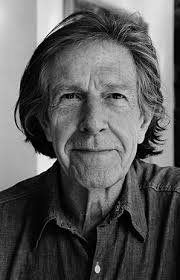 Bruckner, while a composer of genius, was sometimes verbose and repetitive. It’s difficult to imagine somebody more different than our next composer, John Cage, who is famous (or infamous, in the eyes of some) for his 4’33’’, which is “performed” without a note being played. (It’s often assumed that the point of this piece is four minutes and 33 seconds of silence; Cage was actually interested in the ambient sounds of the concert hall). John Cage was born on September 5th of 1912 in Los Angeles. He studied composition with Henry Cowell and later, in 1934, with Arnold Schoenberg. During the following 15 years he composed mostly in the 12-tone mode, writing music for different percussion ensembles (much of it in collaboration with his friend, the choreographer Merce Cunningham) and, eventually, the prepared piano (the piano is “prepared” by placing different objects between the strings, thus changing its sound). In 1949 he traveled to Europe and met Olivier Messiaen and the young Pierre Boulez who became a good friend. Six Melodies for violin and electronic piano (here) written in 1950 are from the end of that period. In the early 1950s, Cage, together with Morton Feldman, embarked on a completely new path: they introduced chance, or randomness, into the process of composing. Cage first employed it in the Concerto for Prepared Piano and orchestra: he created a set of sonorities for both the piano and the orchestra, but the sequencing of these sets were completely random and up to the musicians. To support the chance technique, Cage had to come up with his own notational principles. Some of them involved transparencies that could be mixed and matched to create the final score. The majority of the public was not convinced, and even some of the modernist composers, such as Pierre Boulez and Karlheinz Stockhausen heavily criticized this approach. Iannis Xenakis called it an abuse of (musical) language and an abrogation of the composer's function. Nonetheless, Cage’s influence, and even fame, were spreading, both in the US and even more so in Europe. His work with the popular Cunningham Dance Company helped in this respect. Cage continued his chance-based composition using more and more unusual instruments: one of them directed performers to mount and play 88 tape loops on several tape recorders. Cage is probably an acquired taste, but he was very influential as a composer who altered our approach to sound and modern definition of music itself. Cage continued to compose and experiment almost to the end of his life. He died in New York on August 12th of 1992.
And now as a respite from Cages’ musical experiments, something much more conventional: music by Pietro Locatelli, who was born on September 3rd of 1695 in Bergamo. An Italian Baroque composer and violinist, he wrote a number of very pleasing, if not necessarily revolutionary, compositions. Here’s one of them, his Violin Concerto in C minor op. 3. Luca Fanfoni is the soloist with the Reale Concerto.
Read more...John Cage - Six Melodies
Annele Gahl (Violin)
Klaus Lang (Piano)
Anton Bruckner - Symphony no. 4
Claudio Abbado (Conductor)
Lucerne Festival Orchestra (Orchestra)
Frédéric Chopin - Ballade Op 52 Synopsis Davide Polovineo / Krystian Zimerman (NACPM 61)
Davide Polovineo (Piano)
Kristian Zimerman (Piano)
Béla Kovács - After You, Mr. Gershwin!
Melissa Sunshine Simmons (Clarinet)
Patrick Godon (Piano)
York Bowen - Sonata for Clarinet and Piano, Op. 109
Melissa Sunshine Simmons (Clarinet)
Patrick Godon (Piano)
Jan Novák - Scherzi Pastorali
Melissa Sunshine Simmons (Clarinet)
Patrick Godon (Piano)
Louis Cahuzac - Cantilène
Melissa Sunshine Simmons (Clarinet)
Patrick Godon (Piano)
Steans Concert 1, 2015
August 24, 2015. A concert at the Steans. The 2015 season at the Ravinia’s Steans Music Institute is over, and we’ve uploaded some of the recordings made at their concerts. Every year the Steans, which is Ravinia’s summer conservatory, brings to this Chicago suburb a group of talented young musicians. 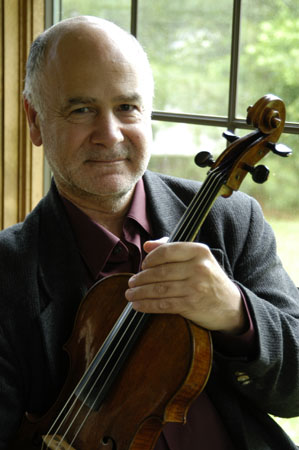 They study with some of the most renowned teachers, and also perform: the Steans concerts are the highlight of the season. The students play solo recitals and make music together, in ad hoc trios, quartets, and even octets – some of these temporary ensembles achieve very high level of musicianship (it goes without saying that technically all of them play at a very high level). And that’s how the first concert of the 2015 season was programmed: Leonardo Hilsdorf, a young Brazilian pianist, played Domenico Scarlatti’s Sonata in F Minor, K. 466 and five string players performed Mozart’s String quintet no. 4. But the most interesting and in a way quite unique part of the program was the set of Twelve Caprices for viola solo by Atar Arad. Mr. Arad, who is 70, is a world-renowned viola player; he taught at the Steans for a number of years. He was born in Tel-Aviv and started out as a violinist before switching to the viola in 1971. As a youngster he won several international competitions and made a number of highly praised recordings. In 1980 he moved to the US and joined the Cleveland Quartet. He’s also collaborated with the leading musicians of our time, among them the pianists Eugene Istomin and Emanuel Ax, violist Jaime Laredo and the cellists Yo-Yo Ma and Mstislav Rostropovich. He started composing rather late, publishing his first work in 1992 (Solo Sonata for Viola). His Twelve Caprices for viola solo were composed in 2003. During the first Steans concert, several violists took turns playing all twelve. Mr. Arad played one of them. Here’s the First caprice, performed by the Russian violist Georgy Kovalev. The Third Caprice is played by Mr. Arad, and Caprice no. 11 – by Dana Kelley (here).
For those who would rather listen to something more traditional, here’s the above-mentioned Sonata by Domenico Scaralli, and hear – the Mozart.
Read more... « first ‹ previous … 327 328 329 330 331 332 333 334 335 … next › last »
Pietro Locatelli - Violin Concerto in C minor op. 3
Luca Fanfoni (Violin)
Reale Concerto (Orchestra)