
Maurice Ravel - Tzigane
Sergej Bolkhovets (Violin)
Han-Wen Yu (Piano)
Johannes Brahms - Scherzo for Violin and Piano in c minor, WoO posth. 2 (from F.A.E. Sonata)
Sergej Bolkhovets (Violin)
Han-Wen Yu (Piano)
Ludwig van Beethoven - Violin Sonata No. 1, Op. 12 No. 1
Sergej Bolkhovets (Violin)
Han-Wen Yu (Piano)
Johannes Brahms - Rhapsody Op 79 / 2
Nico De Napoli (Piano)
Frédéric Chopin - Ballade N° 3 in A-flat
Nico De Napoli (Piano)
Orlando do Lasso, 2014
December 29, 2014. Happy New Year! 2015 is fast approaching, and following yet another serendipitous tradition that was established at Classical Connect over the last several years, we 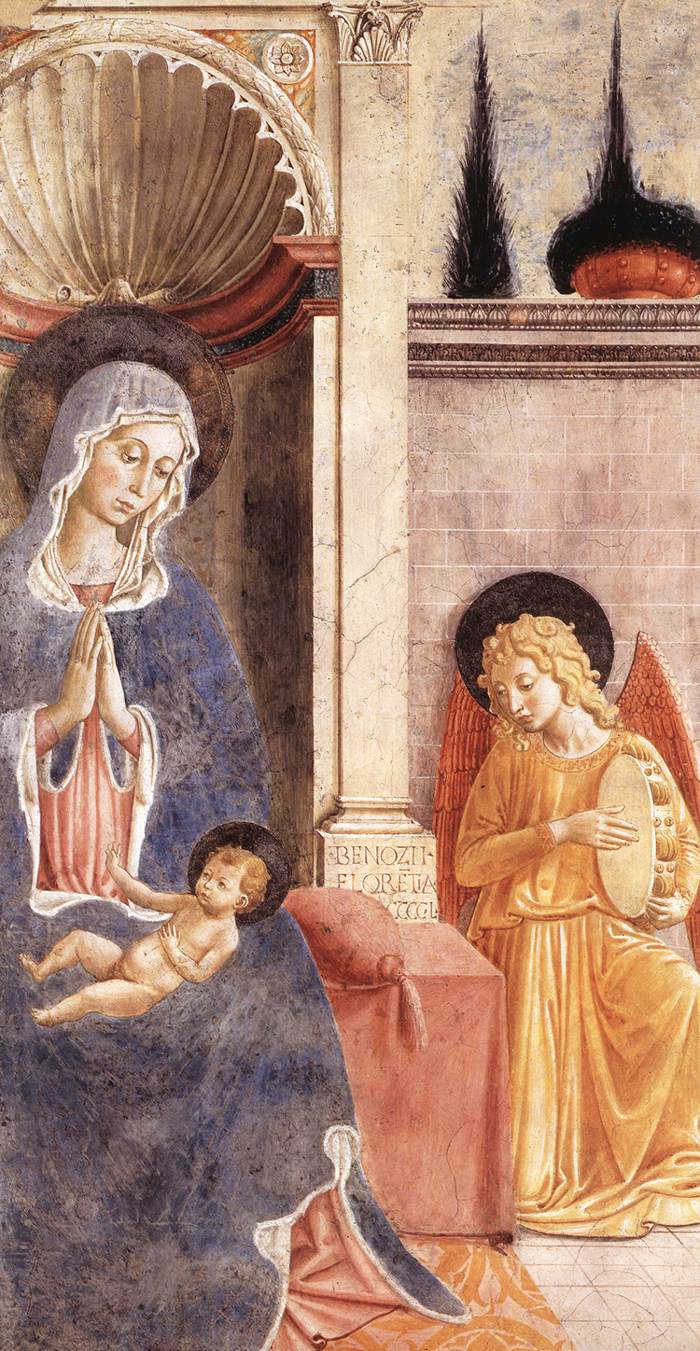 dedicate the last annual entry to a composer with an unknown birthdate. For obvious reason, these composers usually come from the age when record-keeping was not very accurate. During Medieval times not only the birthdate, but often the name and the music itself were usually lost, so our composers come from the period that followed, the Renaissance. Orlando di Lasso (or Orlande de Lassus, as his name is sometimes written) was one such composer. He was born either in 1530 or 1532 in the town of Mons, in the County of Hinaut in what is now Belgium (Gilles Binchois, another famous composer of the Renaissance, was born in Mons 130 years earlier). It is said that as a boy, Orlando had a very beautiful voice – according to a legend he was even kidnapped for it, not once, but three times. When Orlando was 12, Ferrante Gonzaga, of the Mantuan Gozagas, a condottiero close to the Emperor Charles V, heard him sing and made Orlando part of his entourage. Gonzaga’s travels brought Orlando to Italy, Mantua first, then Sicily and Milan. He then moved to Rome, to the household of Cosimo I de’ Medici, the grand duke of Tuscany (despite the title, Cosimo was from a minor branch of the great family that ruled over Florence in the 15th century). He then received a very prestigious position as the maestro di capella at the basilica of Saint John Lateran, the second most important church in Rome (Palestrina would succeed him several years later). He started publishing his music around that time, and in several years became famous not just in Italy, but in all of civilized Europe.
In 1556 Orlando was hired by the court of the Duke of Bavaria. He moved to Munich and remained there for the rest of his life. His fame continued to grow; composers would visit him in Munich, the Pope knighted him, he was invited to many courts. Only Palestrina could compete with Orlando in popularity. He made several visits to Italy, but despite all offers always returned to Bavaria. In his last years his health declined; he died on June 14th of 1594 and was buried in Munich.
Orlando was immensely prolific. Apparently he wrote over 2000 pieces of music, sacred (masses and motets), as well as secular (madrigals and chansons). The cycle of motets called Cantiones sacrae sex vocum (Sacred songs for six voices) was published the year of his death, in 1594. Here are three of these songs: Ad Dominum cum tribularer, Beatus homo, and Cantabant canticum Moysi. They are performed by Collegium Vocale Gent under direction of Philippe Herreweghe. The Madonna and Child (above) are by the Florentine painter Benozzo Gozzoli. It was completed in 1450.
Read more...Bach as Artist or Preacher?
01/31/2015 19:30, MAYFIELD SALISBURY PARISH CHURCH
Lecturer/director Professor John Butt
Music performed by Mayfield Festival Singers & Players
J.S Bach Cantata BWV 21, ‘Ich hatte viel Bekümmernis’
& BWV 150, ‘Nach dir, Herr, verlanget mich’.
Music for Passiontide
03/29/2015 18:00, St Giles' Cathedral, Edinburgh
Brahms 'Requiem'
in the original piano duet version, with
Carine Tinney Soprano
Hugh Hillyard-Parker Bass
St Giles’ Cathedral Choir
Christmas 2014
December 22, 2014. Christmas of 2014. We wish all our listeners a Merry Christmas, a holiday joyous to all music lovers, whether religious or not. We traditionally celebrate it with Johann 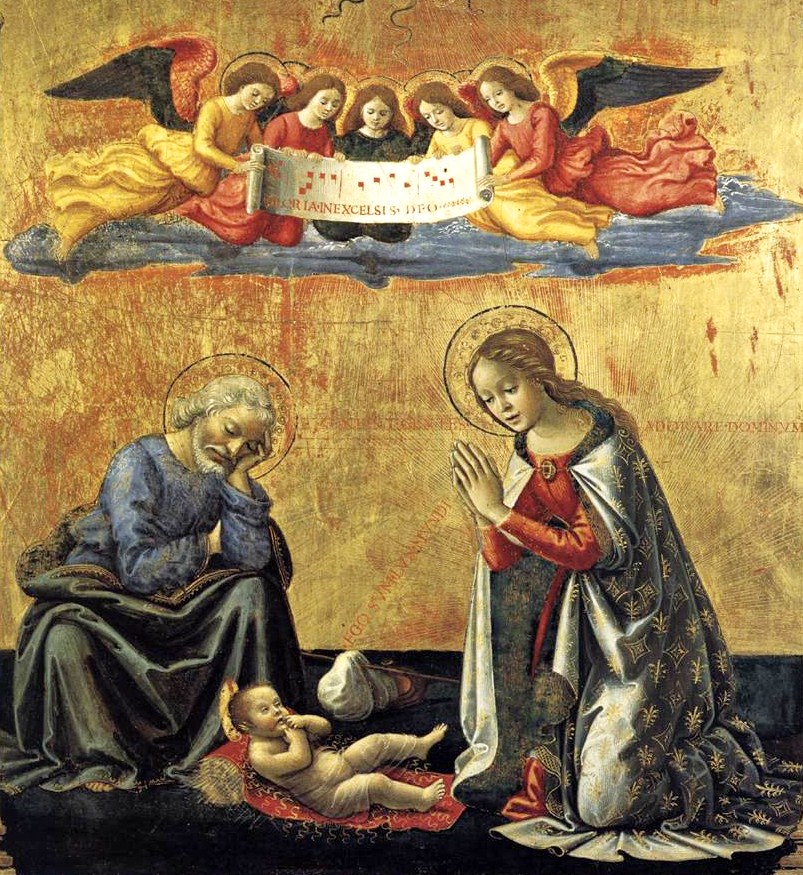 Sebastian Bach’s Christmas Oratorio. A six-part work lasting about three hours, it was written for the Christmas season of 1734, but incorporates several cantatas and other music written earlier. The first part of the cantata describes the birth of Jesus. Here are movements 5 through 9, the final movements of part one. It starts with a Chorale, the tenor recitative of the Evangelist follows, then another Chorale, then a Bass aria and the finale Chorale to the words of Martin Luther. This portion of Christmas Oratorio is performed by the Monteverdi Choir and the English Baroque Soloists under the baton of Sir John Eliot Gardiner. The picture on the left is by the great Italian master Domenico Ghirlandaio. It was painted in 1492 and these days it hangs in the Pinacoteca museum in Vatican. Note that the angels seem to need the sheet music to properly sing Gloria in excelsis Deo -- or maybe they invite us to sing along.
Jörg Widmann - Fantasie
Noemi Sallai (Clarinet)