
Franz Schubert - Schubert Impromptu Op.90 no. 3
David-Michael Dunbar (Piano)
Franz Schubert - Impromptu in B flat Major, D. 935, no. 3
Inon Barnatan (Piano)
Bartók and d’Indy, 2014
Mach 24, 2014. Bartók and d’Indy. Béla Bartók, one of the greatest composers of the 20th century, was born on March 25th of 1881. Last year we celebrated him with one of his last compositions, the Concerto For Orchestra, which he wrote in the US in 1943 and revised the year of his death, 1945. The last years of Bartók’s life were difficult: his 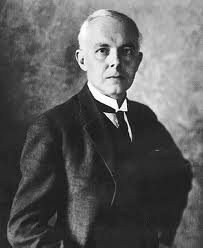 health was failing, he couldn’t adjust to the life in a foreign country, and his family was in financial dire straits. Today we’ll turn to a much brighter period in his life, from the late 1920s to the late ‘30s, when his art had reached its maturity and he produced a number of masterpieces. Much of Bartók’s music is intimately related to his activities as an ethnomusicologist. Together with Zoltan Kodály he collected a vast number of authentic folk melodies, not just Hungarian, but also Romanian, Slovakian, and Bulgarian. He even went to Algeria and Turkey to study the folk music of those countries. Bartók assimilated many of the tunes and tempos of old melodies into his own music, producing highly original and sophisticated pieces. During this period he wrote several String quartets, two Piano concertos, a composition for chorus and orchestra called Cantata Profana, a number of vocal, violin and orchestral pieces based directly on folk tunes, and one of his best-known compositions, Music for Strings, Percussion and Celesta. It’s scored for an unusual set of instruments: the percussions include a xylophone, different drums, and a tam-tam. There’s also a piano, which is used more or less as a percussion instrument. And of course, such a prominent use of celesta, which looks like an upright piano but produces the sound when the hammers strike pieces of metal, is a rarity (it’s probably best known from the Dance of the Sugar Plum Fairy in Tchaikovsky’s ballet The Nutcracker, and Mahler used it broadly in his symphony, no. 6). You can hear Music in the performance by the Philadelphia Orchestra. The conductor is a fellow Hungarian, Eugene Ormandy (Ormandy, famous for his long and productive tenure in Philadelphia, was born in Budapest in 1899 and moved to the US in 1931).
The French composer Vincent d'Indy was born in Paris on March 27, 1851. The d’Indys were an aristocratic family from Ardèche, and carried the title of counts. Vincent started piano lessons at an early age (his grandmother was his first teacher). Later he studied at the Paris Conservatory with Cesar Franck. He was critical of the teaching methods at the Conservatory, and in 1894 became one of the founders of a private music school called Schola Cantorum de Paris. The Schola became a very important French musical institution. Among his students there were Isaac Albéniz, Joseph Canteloube, Erik Satie, Arthur Honegger, Darius Milhaud and many other prominent musicians. Later in the 20th century Olivier Messiaen and Darius Milhaud taught at the school. Influenced by Wagner, Berlioz and his teacher, Franck, d’Indy was a very conservative composer. He lived to 1931, but none of developments in modern music, not even Impressionism, ever affected he work (he did conduct a number of works by Debussy, though). In addition to composing and teaching, d’Indy did much to revive some of the forgotten works of Palestrina, Monteverdi and the forgotten operas of Vivaldi. One of his more popular compositions is the poem Symphony on a French Mountain Air for piano and symphony orchestra. You can listen to it here, in the 1958 performance by the same Philadelphia orchestra under the baton of Eugene Ormandy. The piano soloist is Robert Casadesus, a major French pianist of the 20th century, and one of the greatest interpreters of the music of Ravel and Debussy.
Read more...Vincent d'Indy - Symphony on a French Mountain Air
Robert Casadesus (Piano)
Philadelphia Orchestra (Orchestra)
Eugene Ormandy (Conductor)
Béla Bartók - Music for Strings, Percussion and Celesta
Philadelphia Orchestra (Orchestra)
Eugene Ormandy (Conductor)
P. Kellach Waddle - Sonata for Solo Double Bass after E. Hemingway's " The Sun Also Rises" -- Mvmt. 2---..There is no reason why because it is dark you should look at things differently from when it is light. The Hell there isn't
P. Kellach Waddle (Double Bass)
Sergei Rachmaninov - Prelude Op. 23 no. 2 in B Flat Major
David-Michael Dunbar (Piano)
Scarlatti CD presentation and recital (Scarlatti and Debussy)
05/09/2014 19:00, Sala Vasari - Neaples, Italy
Sarlatti - 12 Sonatas
Debussy - 12 Préludes (1er livre)
Johann Sebastian Bach 2014
March 17, 2014. Bach. Johann Sebastian Bach was born on March 21th, 1685 (but see the note below) in Eisenach, a small town in what is now the central German state of Thuringia, but back then – the ducal seat of 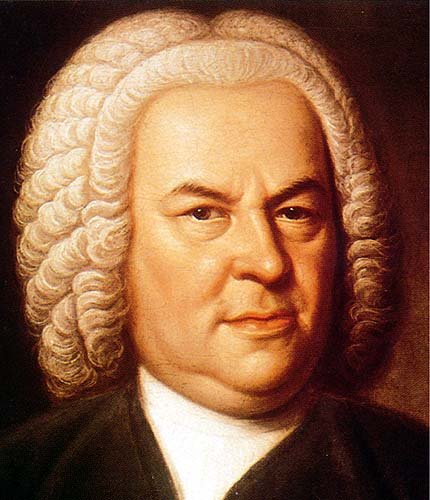 the house of Saxe-Eisenach. After working in Weimar for nine years and then serving at the court of Prince Leopold of Anhalt-Köthen for the following six (1717 through 1723), Bach received several prestigious positions in Leipzig. He was appointed the cantor of the Tomasschule, the school of the St. Thomas church, where he was to serve as the choir director. He was also made the music director of two other important churches in the city, St. Nicholas church (Nikolaikirche) and Paulinerkirche, the University church. His responsibilities included teaching music to the students at the school (the choirs of the main churches in Leipzig were formed from the best students of Tomasschule) and composing music for the three main churches. His most important assignment was to provide music for Sunday services. Every Sunday he was supposed to conduct a cantata, and he composed most of them himself. Additional cantatas were composed for holidays. Fortunately, during the Advent and Lent music was not performed, which gave Bach a respite. Cantatas were collected in annual cycles; in Bach’s obituary five such cycles are mentioned, of these three still exist and two were lost. While in Leipzig, Bach wrote more than 300 cantatas, of which more than 200 survive.
Despite this astonishing workload, he found time early in 1724 to create one of his major masterpieces, a sacred oratorio The St. John Passion. The Passion was composed for the Good Friday evening service. The basis of the text comes from the two chapters, 18 and 19, of the Gospel According to St. John, in Martin Luther’s translation. It was set in two parts. Part I starts with the Betrayal and Capture of Jesus, following with Peter’s Denial. Part II continues with Interrogation and Flagellation, then Condemnation and Crucifixion, followed by The Death of Jesus, and, finally, The Burial. The Evangelist, sung by a tenor, directly follows the words of the Gospel, narrating the text in recitative. The texts of the chorals come from the 16th and 17th century German hymnals. The Passion is also interspersed with arias for an alto (sometimes sung by a countertenor), a tenor, a soprano, and a bass. These voices represent the characters of the Gospel, such as Jesus himself, Apostle Peter, Pilate, and minor characters. They also sing for the people of Israel and the congregation.
Bach intended the Passion to be performed in the Thomaskirche, but at the last moment it was moved to St. Nicolas church. The harpsichord had to be repaired and additional room created for the choir, but that was done in time. The council sent out the flyers announcing the change of venue. Bach’s original orchestration was intimate: strings, basso continuo, flutes, oboes, and probably lute, viola d’amore and viola da gamba. In the 20th century a “romantic” tradition developed, with a much larger orchestra and richer sound. Lately, though, the process has reversed to something more resembling Bach’s original intentions. We’ll hear one such interpretation: Part I of The St. John Passion is performed by Concentus Musicus Wien, one of the earlier period-instrument ensembles, with the Arnold Schoenberg Choir, Nikolaus Harnoncourt conducting. It runs about 35 minutes.
A note on the dates: in 1685, when Bach was born, all German principalities were still using the Julian calendar, even though Italy and some other Catholic countries had converted to the new calendar, following the bull of Pope Gregory, in 1582 (therefore called Gregorian). German states didn’t adopt the modern calendar till 1700. By the time Bach was born, the difference between the Julian and Gregorian calendars (old and new styles) amounted to 10 days. That’s why some sources put Bach’s birthday on March 31, 1685.
Read more... « first ‹ previous … 445 446 447 448 449 450 451 452 453 … next › last »
Samuel Barber - Adagio, from String Quartet No. 2
Walasek String Quartet (Quartet)