
Felix Mendelssohn - String Quintet No. 2 in B-Flat Major, Op. 87
Robyn Bollinger (Violin)
Nigel Armstrong (Violin)
Ida Kavafian (Viola)
Steven Laraia (Viola)
Andrea Casarrubios (Cello)
Franz Schubert - Rondo in A Major, D. 951
Lindsay Garritson (Piano)
Henry Kramer (Piano)
Robert Schumann - Piano Trio no.1 in d minor, Op. 63
Dami Kim (Violin)
Tavi Ungerleider (Cello)
Lindsay Garritson (Piano)
Michael Brown, Piano
11/28/2012 12:15, Preston Bradley Hall
Constellations and Toccata Michael Brown (b. 1987)
German Dances, D. 783 Franz Schubert
Pièce en forme de Habanera Maurice Ravel (Arr. Maurice Dumesnil)
La Soirée dans Grenade from Estampes Claude Debussy
Alborada del gracioso from Miroirs Maurice Ravel
The Serpent’s Kiss William Bolcom
Jessica Mathaes, Violin, Daniel Paul Horn, Piano
11/21/2012 12:15, Preston Bradley Hall
Scherzo in c minor WoO 2 Johannes Brahms
Orientale (from Kaleidoscope) Cesar Cui
Suite from "Much Ado About Nothing" Erich Korngold
The Lark Ascending Ralph Vaughan Williams
Benjamin Britten and more 2012
November 19, 2012. Last week we celebrated the anniversary of Alexander Borodin but left out two major composers of the 20th century, Aaron Copland and Paul Hindemith. This week is even more prodigious, from Manuel de Falla to Benjamen Britten, Virgil Thomson, and Alfred Schnittke. We’ll start with last week’s birthdays. Aaron Copland was born on November 14, 1900 into a family of recent Russian-Jewish émigrés (his father changed his name from Kaplan), studied in Paris, but became the most "American" of all American composers. His use of hymns and songs, such as the famous rendition of Shakers’ "Simple Gifts" in Appalachian Spring harkens back to the Russian and Czech Nationalist composers, but his musical idiom was very much of the 20th century. Here is At the River, from Old American Songs. It’s performed by the baritone Jonathan Beyer with Jonathan Ware at the piano.
Compared to the lyrical Copland, few composers are more different than the cerebral Paul Hindemith, even though both wrote tonal music and never ventured into the twelve-tone world. Hindemith was born on November 16, 1895 near Frankfurt am Main. He played violin and viola, and started composing at the age of 21. Hindemith’s compositional career blossomed during the time Nazis were in power, and their relationship was complex. Some Nazis despised Hindemith’s music, but other wanted to make him into a model German composer and ambassador of German culture. Hindemith emigrated to Switzerland and then to the US in 1940. In the US he taught at Yale; among his students were Lucas Foss, Normal Dello Joio, and many other. Here is Hindemith’s Viola Sonata Op. 11 No. 4. It is performed by Yura Lee and Timothy Lovelace.
Benjamin Britten was the greatest British composer of the 20th century and probably the 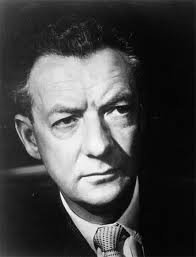 first great British composer since Henry Purcell, or Handel, depending on whether the latter is counted as a German composer or an English one (our apologies to the devotees of Elgar, Delius and Vaughan Williams!). He was born on November 22, 1913. When he was 17 he entered the Royal College of Music, where he studied with composers John Ireland and Arthur Benjamin. He started composing around that time. In 1936 he met the tenor Peter Piers who strongly affected Britten’s musical development and also became his lifelong partner. Britten and Pears moved to the US in 1939 (both were conscientious objectors), but returned to Britain in 1942. Britten’s greatest work was in opera: Peter Grimes (1945) made him a star, and altogether he wrote 13 operas, Billy Bud, The Beggar’s Opera and The Turn of the Screw being among the most popular. We don’t have Britten’s operas, but we do have a wonderful song cycle, A Charm of Lullabies, Op. 41 (here). It is sung by the mezzo-soprano Jennifer Johnson with Scott Gilmore at the piano. On a much lighter note, the late Dudley Moore’s parody of Pears singing the supposedly Britten’s rendition of Little Miss Muffet is hilarious and absolutely ingenious (you can find it on YouTube).
We’ll get back to Falla and Schnittke later, in the mean time enjoy the music.
Read more...Clara Schumann - Three Romances op. 22
Emanuel Salvador (Violin)
Jill Lawson (Piano)
Fritz Kreisler - Liebesleid
Emanuel Salvador (Violin)
Jill Lawson (Piano)
Fritz Kreisler - Syncopation
Emanuel Salvador (Violin)
Jill Lawson (Piano)
Johann Sebastian Bach - Sonata No. 1 in b minor for Violin and Piano, BWV 1014
Alexi Kenney (Violin)
Renana Gutman (Piano)