
A bountiful week of 2012
June 11, 2012. A bountiful week. Richard Strauss, Edvard Grieg, Charles Gounod, and Igor Stravinsky were all born this week. Richard Strauss was born on June 11, 1864. He clearly deserves our full attention, but this week, so full packed with 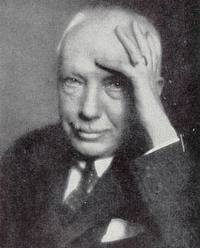 birthdays, we’d like to make just two comments. One is on his place in the musical Pantheon of the late 19th – early 20th century. Strauss said, with amazing self-deprecation, "I may not be a first-rate composer, but I am a first-class second-rate composer." We’d like to disagree. The place of the composer is judged by his best output, not some abstract “average” weighted down by weaker pieces (think of the number of mediocre music written, for example, by Tchaikovsky). Strauss’ tone poems, such as Also sprach Zarathustra, Till Eulenspiegel's Merry Pranks, An Alpine Symphony are all first-rate. As are his operas, Der Rosenkavalier, Ariadne auf Naxos, Salome, and other. And so is his Violin sonata, op. 18 (you can listen to it here, performed by Ilya Kaler, violin, and Eteri Andjaparidze, piano. He also wrote wonderful songs (here is Cäcilie, Op. 27, No. 2, sung by the soprano Janai Brugger-Orman, with Renate Rohlfing on the piano). He clearly was a great composer. And the other comment is to Strauss’ decency. Totally apolitical, he maintained relations with Jewish writers and artists when it was already considered inopportune in Nazi Germany. Here’s a great quote from his letter to the writer Stefan Zweig: “Do you believe I am ever, in any of my actions, guided by the thought that I am 'German'? Do you suppose Mozart was consciously 'Aryan' when he composed? I recognize only two types of people: those who have talent and those who have none.”
If we ever had some doubts about the accepted "rankings" of great composers, Edvard Grieg’s position would’ve been the one to question. But the overwhelming popularity of his Piano Concerto and incidental music to Peer Gynt clearly outweigh any snobbish pretenses. He also deserves additional points for being the only national composer in the modern history of Norway! But before our listeners start sending us indignant messages, here is In the Hall of the Mountain King, from the Peer Gynt suite, played by McKeever Piano Duo. And here is Grieg’s wonderful Violin Sonata, op. 45. It’s performed by Gregory Maytan, violin and Nicole Lee, piano. And why are we writing about Grieg? He was born this week, on June 15, 1843 in the city of Bergen in what was then the Union of Sweden and Norway. The Union was dissolved in 1905, two years before Grieg’s death, so there are no questions about Grieg’s nationality!
Just one song from Charles Gounod, the oldest in this group: he was born on June 17, 1818. The young mezzo-soprano Rebecca Henry sings Que fais-tu, blanche tourterelle?, Tom Jaber is on the piano (here). We’ll write about Igor Stravinksy (June 17, 1882 – April 6, 1971), who clearly was one of the greatest composers of the 20th century (but probably not as nice a person as Richard Strauss) some other time.
Read more...P. Kellach Waddle - Of The Sunday Afternoon Bread & Tobacco : Sonatensatz-Air for Flute and Bass
P. Kellach Waddle (Double Bass)
Lauryn Gould (Flute)
Benjamin Dunnett - Solace
Benjamin Dunnett (Piano)
Beatrice Berrut 2012
June 4, 2012. Beatrice Berrut. One of the first pieces that Ms. Berrut uploaded to Classical Connect was Schumann’s Piano Sonata no. 1. Schumann was just 23 when he composed what he called Grosse Sonate ("Grand Sonata"). Schumann had at the time already written a 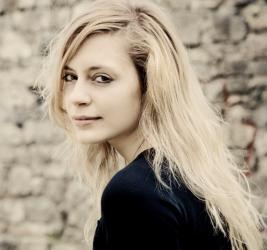 number of great pieces, from Papillons to Toccata in C Major to Carnaval, but clearly he still wanted to write a serious, classical piece (perhaps to impress his bride, the young virtuoso Clara Wieck). Beatrice was the same age of 23 when she recorded the sonata in 2009. What impresses the listener in this recording is the depth, the seriousness of it, something you may not expect from a young performer. This is the hallmark of Ms. Berrut’s art. Whether she plays her beloved Schumann (she recorded all three piano sonatas for Centaur Records), Chopin, Brahms, or Scriabin, she digs deep into the music to uncover the essence and bring it to the listener. The great violinist Gidon Kremer recognized this quality when he described Beatrice as “a wonderfully talented and musical pianist, with impressive seriousness, commitment and sensitivity.”
Beatrice was born in the Swiss canton of Valais, and started the piano rather late, at the age of 9, first in Lausanne with Pierre Goy (paino) and Pierre Amoyal (chamber music), and then at the Neuhaus Foundation in Zurich under renowned pianist Esther Yellin, a pupil of Henrich Neuhaus. She then graduated from the Hanns Eisler Hochschule für Musik in Berlin, where she studied with Galina Iwanzowa. She receives regular guidance from Menahem Pressler and John O’Conor. Beatrice says that she’s also influenced by her work with pianists Brigitte Engerer and Leon Fleisher.
The winner of the Société des Arts Competition in Geneva, she was the Swiss laureate at the Eurovision Contest for young classical musicians, and represented Switzerland at the European Contest in Berlin. She also won the Bach special award at Wiesbaden International Piano Competition. Since the release of her debut CD in 2003 featuring works by Beethoven, Schumann, and Liszt, Beatrice has been in demand as a soloist both in recitals and with numerous orchestras, such as the Orchestra della Svizzera Italiana, Kammerphilharmonie Berlin, Menuhin Chamber Orchestra. She also appears regularly on Swiss, German, US, and Canadian radio and television.
A keen chamber musician, Beatrice was invited in 2005 by Gidon Kremer to play several concerts at his festival in Basel, and in 2007 and 2008 by Shlomo Mintz to his festival in Sion as well as \duo recitals in Argentina in September 2011. In August 2011, she performed Schumann’s Quintet with Itzhak Perlman at the Hamptons, NY.
On Wednesday, June 6 Beatrice will perform at the Dame Myre Hess concert in Chicago. On the program are two Bach chorales in Busoni’s transcription, Chaconne in d minor, and Liszt’s Après une Lecture de Dante. If you cannot make it to the concert, you can listen to Après une Lecture here.
Read more...Ruti Abramovitch, Piano
06/20/2012 12:15, Preston Bradley Hall
From 24 Preludes, Op.28 Frédéric Chopin
No. 3 Vivace in G Major
No. 6 Lento Assai in B minor
No. 8 Molto Agitato in F sharp minor
From Goyescas Enrique Granados
V. El amor y la muerte
From Miroirs Maurice Ravel
II. Oiseaux tristes
IV. Alborada del gracioso
V. La vallée des cloches
Joanna Marie Frankel, Violin, David Kaplan, Piano
06/13/2012 12:15, Preston Bradley Hall
Chanson de Matin, Op. 15, No. 2 Edward Elgar
Sonata for Violin and Piano in E-flat Major, Op. 18 Richard Strauss
I. Allegro, ma non troppo
II. Improvisation: Andante cantabile
III. Finale: Andante – Allegro
Danse Espagnole from La Vida Breve Manuel de Falla (arr. Fritz Kreisler)
Chanson de Nuit, Op. 15, No. 1 Edward Elgar
Beatrice Berrut, Piano
06/06/2012 12:15, Preston Bradley Hall
Two Chorales J. S. Bach (arr. Ferruccio Busoni)
Nun komm, der Heiden Heiland
Nun freut euch, lieben Christen g'mein
Chaconne in D minor, BWV 1004 J. S. Bach (arr. Ferruccio Busoni)
Après une Lecture de Dante Franz Liszt
Franz Liszt - Consolation no. 3, S.172
Frank Verna III (Piano)
Anna Leonova - I Hide Myself
Dominika Zamara (Soprano)
Marco Fedalto (Piano)
Sergey Akhunov - Centaurs
Rustam Komachkov (Cello)