Pnina Becher Morocco tour
03/03/2012 19:34, Morocco
Franz Liszt - Grandes études de Paganini No. 5, S.141
Carlos Gallardo (Piano)
on Italian Baroque 2012
June 25, 2012. On Italian Baroque. Recently, while contemplating some pictures of Rome, we were struck, yet again, by the incongruity of terms we use to describe art. This, of 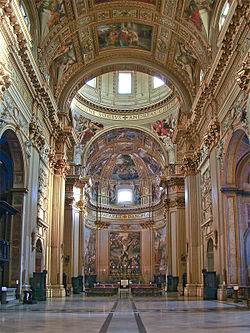 course, is part of a much larger problem, one with which this site struggles often when attempting to "describe" music and performances. The way we try to deal with this issue here is by avoiding it whenever possible: we let our users listen to the music instead of talking about it. Still, the problem remains and manifests itself not only when we attempt the impossible, as in "describing" music, but even in much more mundane areas, such as when we try to classify historical art periods. The term "Baroque" is case in point. The Baroque architecture of Rome has its origins in the late 16th – early 17th century (Carlo Maderno designed Santa Susanna around 1603), and reached its glorious zenith with the works of Francesco Borromini, Pietro Cortona and Gian Lorenzo Bernini in the mid-1600s. When we think "Rome" – the façade of Saint Peter’s, the two iconic churches off Piazza Venezia, Santa Maria di Loreto and Santissimo Nome di Maria al Foro Traiano, the interior of the Gesù, the Trevi fountain – all of it is Baroque. But the music that played in Santa Susanna was not "Baroque" in our understanding of the term. Most likely it was written by composers of the Roman school, like Palestrina and the Spaniard, Tomás Luis de Victoria. Another Roman, Gregorio Allegri, composed his famous Miserere in the1630s (it would not have been sung at Santa Susanna anyway, as it was composed specifically for use in the Sistine Chapel). And as much as we like Palestrina and Victoria, it’s clear that music as art did notdevelop to the heights it had reached in its visual forms till much later, and it didn’t happen in Rome. Lully, and later Rameau and Couperin in France, Purcell in England, and later still Vivaldi, Scarlatti, Bach and Handel brought it to the canonical level which we habitually allot to the great painter and architects of Italy.
The church in the picture above is Sant'Andrea della Valle, on what is now Corso Vittorio Emanuele II in Rome. It was designed mainly by Carlo Maderno in 1608 and completed later. Here is an example of the music that could be heard in this church during that time. It’s a motet by Giovanni Pierluigi da Palestrina, Sicut cervus desiderat, (“As the deer thirsts for the waters, so my soul longs for Thee, O God”). It’s performed by the Westminster Cathedral Choir (courtesy of YouTube).
Read more...Giovanni Pierluigi da Palestrina - Sicut cervus desiderat
Westminster Cathedral Choir (Chorale)
James O'Donnell (Conductor)
Gabriela Montero - Happy Birthday variations
Gabriela Montero (Piano)
Lev Solomonovich Ruzer
June 24, 2012. Today is the birthday of a dear friend of Classical Connect, Lev Solomonovich Ruzer: he turns 90! 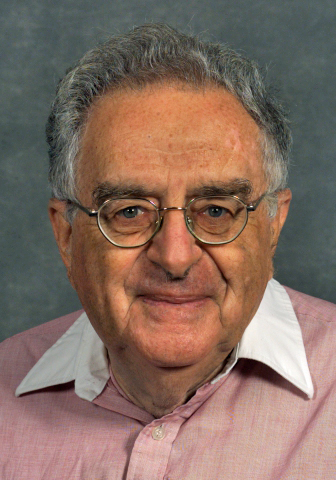 A physicist by profession who successfully transitioned from running a research lab in the Soviet Union to the Lawrence Berkeley National Laboratory, he’s also an amateur pianist. He started piano lessons in his teens,continued playing while at Moscow University, and he still plays piano every day! We suspect that music is what supports his amazing vitality and joie de vivre. On this wonderful day we join his family in wishing him great health, lots of love and more music to enjoy.
We could probably record a Classical Connect rendition of Happy Birthday, but we suspect Lev Solomonovich would not be impressed. Here, instead, is the Venezuelan-American pianist Gabriela Montero playing her own improvisation on the traditional tune. She does a much better job with it.
Read more...
Robert Schumann - Waldszenen (Forest Scenes), Op. 82
Sofya Melikyan (Piano)
Stephan Baier - Piano improvisation 40
Stephan Baier (Piano)
Stephan Baier - Piano improvisation 39
Stephan Baier (Piano)
Robert Schumann - Arabesque in C Major, Op. 18
Alexander Osminin (Piano)