Welcome to our free classical music site

Do you write about classical music? Are you a blogger? Want to team up with Classical Connect? Send us a message, let's talk!
Do you write about classical music? Are you a blogger? Want to team up with Classical Connect? Send us a message, let's talk!




September 5, 2011
Arvo Pärt, September 11, and Giya Kancheli. The Estonian composer Arvo Pärt was born on September 11, 1935. Pärt is rightly considered one of the most important contemporary composers. His essentially minimalist style was deeply influenced by Gregorian chant and early European polyphony. Not surprisingly, it works most effectively in his sacred pieces, such as Fratres or Cantus in Memoriam Benjamin Britten. Practically from the beginning of his career Pärt had problems with cultural authorities. Many of his compositions, written while he was living in Soviet Estonia, were banned by the local censors. In 1980 Pärt emigrated to Austria and later moved to Germany. Some years after Estonia gained independence Pärt returned to his native land.
Of course we are approaching not just Arvo Pärt’s birthday, but also the tenth anniversary of September 11, 2001. No music can express the horror of these events, but Pärt’s deeply contemplative piece, "Spiegel im Spiegel" (“mirror in the mirror") seems to be at least adequate in its tone. It can be heard here in the performance by janus trio.
Another piece from our library, which we thought would be appropriate under the circumstances, is Giya Kancheli’s Valse-Boston for Piano and Strings (1996). Kancheli is a tremendously talented composer, and he deserves to be better known in the US. Like Pärt, Kancheli was born in a former Soviet republic – Georgia,, and in the same year, 1935. Like Pärt, he emigrated to the West in 1991, first to Berlin, and later to Antwerp, where he now lives. While not a real “minimalist,” Kancheli’s style is ascetic in nature, to quote Rodion Shchedrin. And, like Pärt, Kancheli often writes liturgical music. The lighthearted name of the composition, Valse-Boston, is rather misleading: it’s a profound piece (of course there have been many precedents to that in the history of music, Ravel’s La Valse being probably the most famous example). Valse-Boston is performed by the pianist Eteri Andjaparidze with Round Top Festival Chamber Orchestra under the baton of Jean-Marie Zeitouni. To listen, click here.
August 29, 2011. Boyce Lancaster interviews the pianist Simone Dinnerstein. Simone Dinnerstein launched her career in the most unusual way: she raised funds and recorded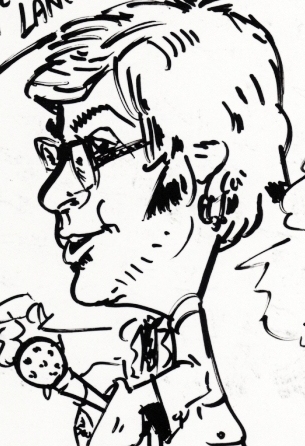 Johann Sebastian Bach’s challenging Goldberg Variations, apiece that usually crowns a well-developed career, rather than lays its foundation. She played the same piece at her New York recital debut in November 2005 at the Weill Recital Hal. Her Goldberg recording became a sensation and in 2007 was picked up by Telarc and released worldwide in 2007.
Boyce Lancaster talks to Simone as she prepares to release yet another CD, Bach: A Strange Beauty. You can listen to snippets of Simone’s pianism: Variation XXV from the Goldberg recording here, and Sarabande, from Suite no. 5 in G Major, BWV 816 here. The complete interview is here, and below is Boyce’s introduction to his conversation with Simone.
In the music world, much as in the world of sports, it’s the flashy ones who get most of the ink. A case in point is Lang Lang. He has made himself larger than life, plays the piano with flourishes and dramatic flair, and sells Rolexes, Adidas, and Audis. His piano talent was nurtured from a very early age. He won numerous piano competitions. Over four billion people saw him perform before the 29th Olympiad. He has even accompanied world champion figure skaters, playing a piano positioned on the ice. By contrast, Simone Dinnerstein begged for piano lessons at the age of four, but was given a recorder. When she was 15, she wanted to travel to London to study piano, but was encouraged to go across the river to Juilliard, where she stayed for a few years, dropping out at eighteen. (She did eventually return and finish her degree.) She entered no competitions. By the time she was thirty, she had a degree, lots of talent, but no manager, no recording contract, no bookings, and limited prospects for a concert career. On top of that, she was going to have a child.Permalink
August 22, 2011
Today is the anniversary of the great French composer Claude Debussy’s birthday: he was born on this date in 1862 in Saint-Germain-en-Laye, just outside of Paris. His music, while highly original, was almost instantly accepted by the listening public, and for the last 90 years he has been and remains one of the most widely performed classical composers. Debussy was eighteen when he started writing music. The earliest composition in our library is the song cycle Quatre Chansons De Jeunesse, written in 1881-1882. Here’s the song Claire de lune, performed by the soprano Tina Beverly with William Billingham on the piano. Debussy used the same title for the third movement of his Suite Bergamasque, another early work (it was written in 1890). You can listen to the complete Suite here as played by the young Chinese pianist Xiang Zou. In 1884 Debussy won the Prix de Rome, an award which included a residence at the Villa Medici, the French Academy in Rome. Debussy spent three years in Rome, from 1885 to 1887. His return to Paris traditionally marks the beginning of his “middle period.” Among many pieces written during those years is the piano cycle Estampes (1903). Here’s Pagodes, from Estampes, played by the pianist Miyuki Otani. The first book of Préludes is usually also attributed to this period, even though just three years separate it from the second volume, considered to be a late work. Here’s the fourth prelude from Book I, with the evocative title The sounds and fragrances swirl through the evening air (Les sons et les parfums tournent dans l'air du soir). It’s performed by the Italian pianist Roberto Russo. Book II of Préludes was written in 1913. Here’s prelude number four, Bruyères, played by the pre-eminent Mexican pianist Jorge Federico Osorio. The last composition completed by Debussy was his Sonata for Violin and Piano, performed here by Nathan Cole, violin, and Kuang-Hao Huang, piano. He finished it in 1917. Several months later, on March 25, 1918, during the German bombardment of Paris, Debussy died of cancer. We look forward to the next year when we’ll join the world’s classical community in celebrating the 150th anniversary of his birthday.
August 15, 2011. Boyce Lancaster interviews the violinist Vadim Gluzman. They sat down while Vadim was visiting Columbus, OH to play Mendelsshon’s Concerto in d minor for Violin and Strings with ProMusica (Mendelsshon was 13 when he composed this piece). An Israeli violinist, Vadim was born in Russia and currently resides in Chicago (he teaches at the Roosevelt University). Boyce and Vadim talked about Alfred Schnittke, Felix Mendelsshon’s, and the young composer Lera Auerbach. We can offer you two samples of Vadim’s art. Here's his performance of Brahms’s Violin Concerto with the Symphony Orchestra of Saarbrücken Radio, Günther Herbig conduction and here – an excerpt from Lera Auerbach’s Double Concerto, which he plays with his wife, the pianist Angela Yoffe, and the Stuttgart Radio Symphony Orchestra, Andrei Boreyko conduction. You can listen to the interview here, and below is Boyce’s introduction to his conversation with Vadim.
PermalinkVadim Gluzman: Music’s Fearless Champion
I recently read an interview Vadim Gluzman did with Laurie Niles for violinist.com in he told the story of how he came to play the violin. Gluzman was six years old when he took examinations for entrance into a specialized school for musically gifted children in what was then the Soviet Union. At one point, members of the panel examined his hands, which Gluzman said he thought was to make sure his fingernails were clean. The following day, Vadim saw his name on a list of those accepted for study. Next to his name, it said “Скрипка,” (roughly pronounced “Skripka”) which means violin. Gluzman said he had a fit, because he and his father, Michael, had designs on him studying piano, which his father had described to him as the king of instruments, rather than the violin, which his father described as the queen.
Thirty years later, Gluzman concedes that, indeed, his hands are perfectly suited for the violin, though he still marvels at how they knew by examining the hands of a six-year-old boy that he was born to play the violin.
August 8, 2011
Rachmaninov’s Piano Concerto no. 4. By the time Sergei Rachmaninov emigrated from Russia in December of 1917 he was of 44, and had already written most of his most successful compositions: the Second and Third Piano Concertos, two piano sonatas, two sets of Études-Tableaux, two sets of piano Preludes and other piano pieces, two symphonies, the symphonic poem Isle of the Dead, and the choral symphony The Bells. In fact, in the last 26 years of his life Rachmaninov wrote only five significant pieces: Piano Concerto no. 4 (in 1926, revised in 1941), piano Variations on a Theme of Corelli (in 1931), the ever-popular Rhapsody on a Theme of Paganini for piano and orchestra (in 1936), Symphony No. 3 (in 1941), and the orchestral Symphonic Dances.
The story of the Piano Concerto no. 4 Op. 40 is very interesting. Rachmaninov wrote it in 1926. He showed the score to his friends, the composer Nikolai Medtner (to whom he dedicated the Concerto) and the pianist Joseph Hoffman. Both liked the score and were very supportive. Rachmaninov, on the other hand, felt very insecure about the piece: he apparently thought that the 3rd movement was too long and not dynamic enough, and that there was “too much orchestra” (it’s true that the orchestra plays practically throughout the duration of the concerto, but the same could be said about the Second concerto, and why would that be wrong in itself is not at all clear). The concerto was premiered in Philadelphia in March of 1927; Rachmaninov himself played the piano, with Leopold Stokowski conducting the Philadelphia Orchestra (during that time Rachmaninov played the concerto five more times). The reception was universal – and highly negative. The discouraged Rachmaninov made a number of cuts to the score and published it in 1928. In 1941 he revised the concerto again, making more cuts and considerably changing the Finale. Rachmaninov premiered the revised version in 1941, also with the Philadelphia Orchestra, but in this case under the baton of Eugene Ormandi. The public reception, if somewhat better than in 1927, was rather cool, and Rachmaninov himself was left unsatisfied with the orchestral part.
Some musicians, Vladimir Ashkenazy in particular, believe that the original uncut manuscript version of 1926 was superior to all the revisions, and that the composer “got it right” the first time around. The original manuscript became available to the public only in 2003 when it was published by Boosey and Hawke; very few recordings of it have been made since then. You can hear one as performed by the pianist Eteri Andjaparidze, with Pascal Verrot conducting the Round Top Festival Orchestra. To listen, click here.
August 1, 2011. Boyce Lancaster interviews the famous American lutenist and baroque guitarist Hopkinson Smith. Since the early 1970s Mr. Smith has been living in Switzerland. He was one of the founders of Hespèrion XX, an international early music ensemble. Mr. Smith plays different plucked string instruments, including the vihuela (called viola da mano in Italy), Renaissance lute, theorbo, Renaissance and Baroque guitars and the baroque lute. During the interview he plays music of the Spanish Baroque composers Gaspar Sanz and Francisco Guerau. Here’s Boyce:
A tall, slender gentleman with a regal bearing glides toward me, extends his hand, and says “Hello, I’m Hopkinson Smith.” His voice is soft, not unlike the instrument he plays, but at the same time, he commands attention as he speaks. He chooses his words carefully, describing his instruments and the music he plays as a painter describes what he sees with a brush. His accent is unique and rests pleasantly on the ears…an amalgamation of his life in the Northeastern United States and his current home in Switzerland, where he teaches at the Schola Cantorum Basiliensis.
In my conversation with Hopkinson Smith, I learned that he played electric guitar, horn, saxophone, and trumpet, among many other instruments. If there was an instrument missing in the band, he would simply pick it up and figure it out on his own. He was about 17 when he discovered the classical guitar. After a couple of years, the lute caught his attention. He would soon move to Europe to study with Emilio Pujol, who had once been a student of Francisco Tarrega.
In the years since, he has expanded his expertise to include many instruments, renaissance lute, vihuela, theorbo, Renaissance and baroque guitars and the baroque lute among them. He has release 20+ solo recordings on these various instruments, as well as collaborating with many of the world’s greatest musicians. He was involved in the founding of the ensemble Hesperion XX and collaborated for some ten years with Jordi Savall, who also teaches at Schola Cantorum Basiliensis.
I could go on, but it is far more interesting to hear in Hopkinson Smith’s own words. Here’s the interview.Permalink