
Bruno Maderna 100
This Week in Classical Music: April 20, 2020. Maderna and more. Tomorrow, on April 21st we’ll celebrate the 100th anniversary of the birth of the Italian composer Bruno Maderna. 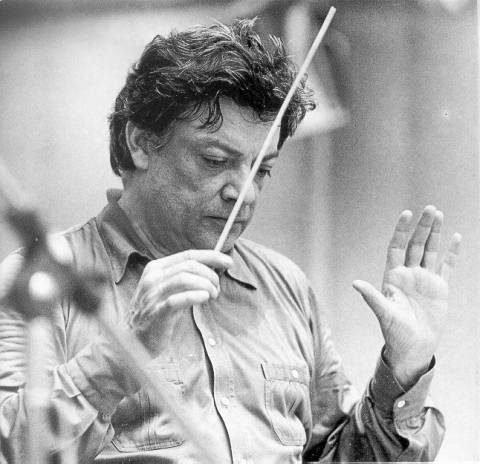 Maderna, one of the most important avant-garde composers of the 20th century, was born in Venice. A child prodigy, he played the violin and, at the age of 12 conducted the orchestra of La Scala. He was noticed and celebrated by Mussolini’s cultural authorities. In 1941-42 Maderna studied with the eminent composer Gian Francesco Malipiero. Later he studied conducting with Hermann Scherchen, an influential interpreter of the music of Mahler (later in his life Maderna also became a very successful interpreter of Mahler’s music. At the end of the 1940s Maderna got involved with a group of musicians at Darmstadt, among whom were the young Pierre Boulez, Olivier Messiaen, John Cage, Luigi Nono and Karlheinz Stockhausen. Another young Italian composer associated with Maderna was Luciano Berio, with whom he established Studio di fonologia musicale di Radio Milano, which facilitated their research into electonic music. In the 1960s and ‘70s Maderna spent a lot of time in the US, performing with contemporary ensembles but also conducting at established venues like Tanglewood, where he was appointed director of new music and working with major orchestras in New York, Boston and Chicago. Maderna died in Darmstadt on November 13th of 1973 of cancer. Maderna’s music was highly influential, though, like the music of his Darmstadt colleagues, not easy on the first hearing. His output was broad: he composed many symphonic pieces, chamber music and several concertos for different instruments, from the piano to the oboe. Here’s his rather short (less than 12 minutes) concerto for two pianos from the early period: it was written in 1948. It’s performed by the Italian pianists Aldo Orvieto and Fausto Bongelli, with the ensemble “Orchestra Della Fondazione Arena Di Verona,” Carlo Miotto conducting.
One of the greatest composers of the first half of the 20th century, Sergei Prokofiev was born on April 23 of 1891, though not all sources agree on the date: the English-language Wikipedia says it’s April 27th. Prokofiev himself celebrated his birthday on the 23rd and that’s the date we use. Next year is his 130th anniversary, and we will dedicate a full entry to him.
Yehudi Menuhin, one of the greatest violinists of the 20th century, was born in New York on April 22nd of 1916. Here’s what we wrote about him last year.
And finally, the British conductor John Eliot Gardiner, a brilliant interpreter of the music of Bach, was born on this day in 1943. We have several samples of his work in our library, mostly Bach’s oratorios. In 2000 Gardiner, together with his ensembles, English Baroque Soloists and the Monteverdi Choir, set out on what Gardiner called his Bach Cantata Pilgrimage. For a full year they traveled around Europe and the US performing all Bach’s oratorios: a triumphm, both musically and logistically.
Read more...Easter 2020
This Week in Classical Music: April 13, 2020. Easter and three pianists. Yesterday was Easter Sunday, the beginning of the Easter Season, and we wish everybody a happy Easter. Around this time we usually play Bach’s music: he wrote some of his greatest pieces for this 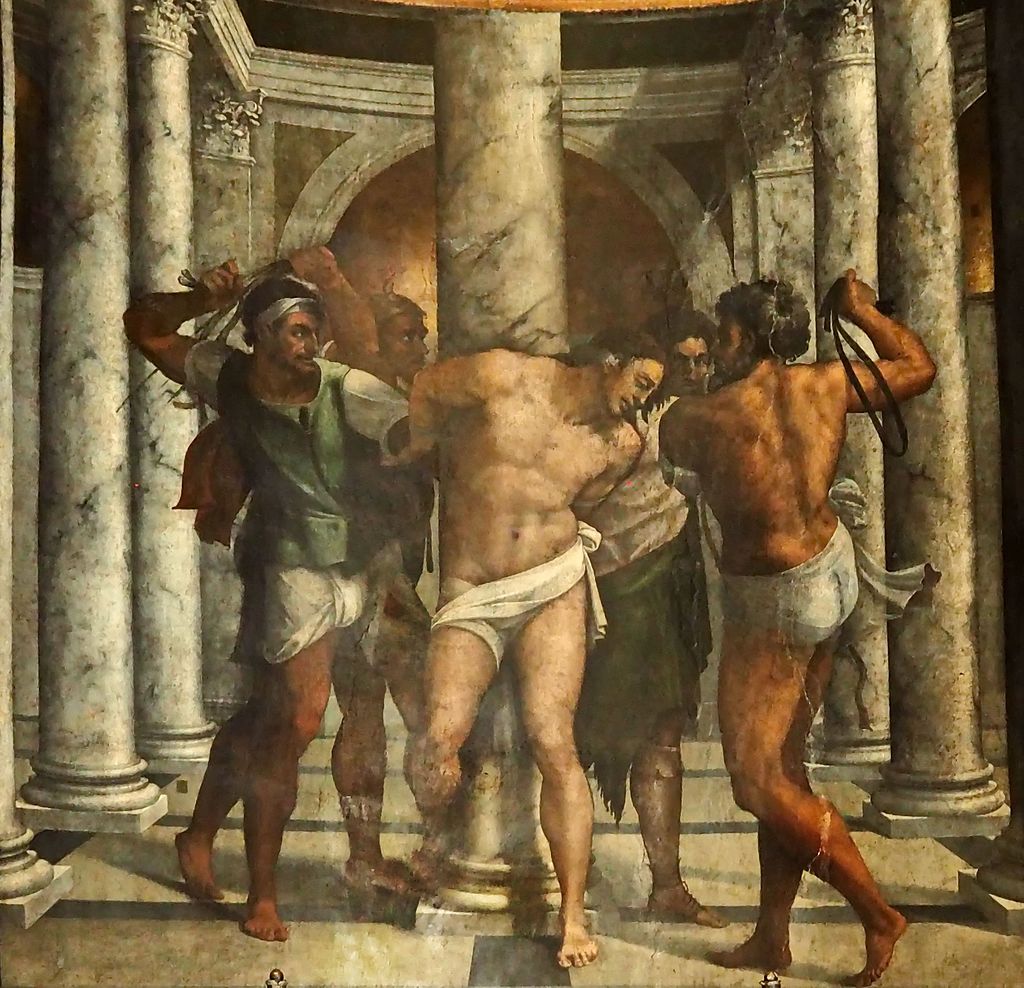 occasion, such as two complete Passions, the St. John and St. Matthew (his St. Mark’s Passion is lost; it’s assumed by musicologists that it was mostly a “parody,” meaning that Bach recycled some of his previously written music. The St. Luke Passion, previously attributed to Bach, is almost certainly not his own). Bach’s friend Georg Philipp Telemann also wrote a number of Passion Oratorios. They are not well known and aren’t performed as often as Bach’s. While we realize that they are not on the same plane, we find their music much worthy of your attention. Here’s the first section of Telemann’s oratorio Das selige Erwägen des bittern Leidens und Sterbens Jesu Christi (Blessed Contemplation of the Bitter Suffering and Dying of Jesus Christ) – about 20 minutes of music. Ensemble L'arpa festante is conducted by Wolfgang Schäfer.
Artur Schnabel, the great Austrian pianist, was born on April 17th of 1882 in a small town of Lipnik (then Kunzendorf) in the Austro-Hungarian Empire. Today the town is in Poland. His family was Jewish: Schnabel’s birth name was Aaron. When he was two, the family moved to Vienna. At the age of nine Schnabel became a pupil of the famous pianist and pedagogue Theodor Leschetizky who later told Schnabel: “You will never be a pianist; you are a musician.” In 1898 Schnabel moved to Berlin. In his youth, his repertoire was very broad: in addition to his beloved Beethoven, he played other German greats - Mozart, Schubert, Schuman and Brahms. But he also played a lot of Chopin, Liszt and other Romantics. He formed a quartet with the violinist Bronisław Huberman, Paul Hindemith, who was not only a composer but also an excellent violist, and the cellist Gregor Piatigorsky. Later in his career Schnabel narrowed his repertoire, concentrating on Schubert and especially Beethoven. In Beethoven he excelled; no pianist before him, and very few after, played Beethoven with such depth. In 1933 Schnabel emigrated from Germany first to England and then, in 1939, to the US. He mother stayed in Vienna and in 1942, at the age of 83, she was deported to Theresienstadt, where she died two months later. Schnabel, who after the war played in many European countries, never returned to either Austria or Germany. Schnabel was the first pianist to record all of Beethoven’s piano sonatas. Even though one can hear some technical flaws, these recording stand out, even all these years later. As Harold Schonberg, the music critic, said of Schnabel, he was "the man who invented Beethoven.”
Two Soviet pianist, both winners of the Tchaikovsky Competition, were also born this week: Grigory Sokolov in Leningrad on April 18th of 1950 and Mikhail Pletnev in Arkhangelsk on April 14th of 1957. Sokolov won the 1966 Tchaikovsky Competition at the age of 16. Pletnev won his in 1978, at 21. Sokolov emigrated to Europe and developed a cult following there; Pletnev stayed in the Soviet Union and made a brilliant career, both as a pianist and conductor.
The Flagellation, above, was painted in 1516 by the great Italian, Sebastiano del Piombo; it’s based on a drawing by Michelangelo.
Read more...Georg Philipp Telemann - Easter Oratorio Das selige Erwägen des bittern Leidens
Freiburger Vokalensemble (Chorale)
L'Arpa Festante München (Ensemble)
Wolfgang Schäfer (Conductor)
Keith Lay - Earth Caoine (Cry)
Richard Stoltzman (Clarinet)
Warsaw Philharmonic (Orchestra)
Jerzy Swoboda (Conductor)
Claudio Merulo, 2020
This Week in Classical Music: April 6, 2020. Merulo and the painters. Claudio Merulo, the famous Italian composer, keyboardist and music publisher of the Renaissance, was born on April 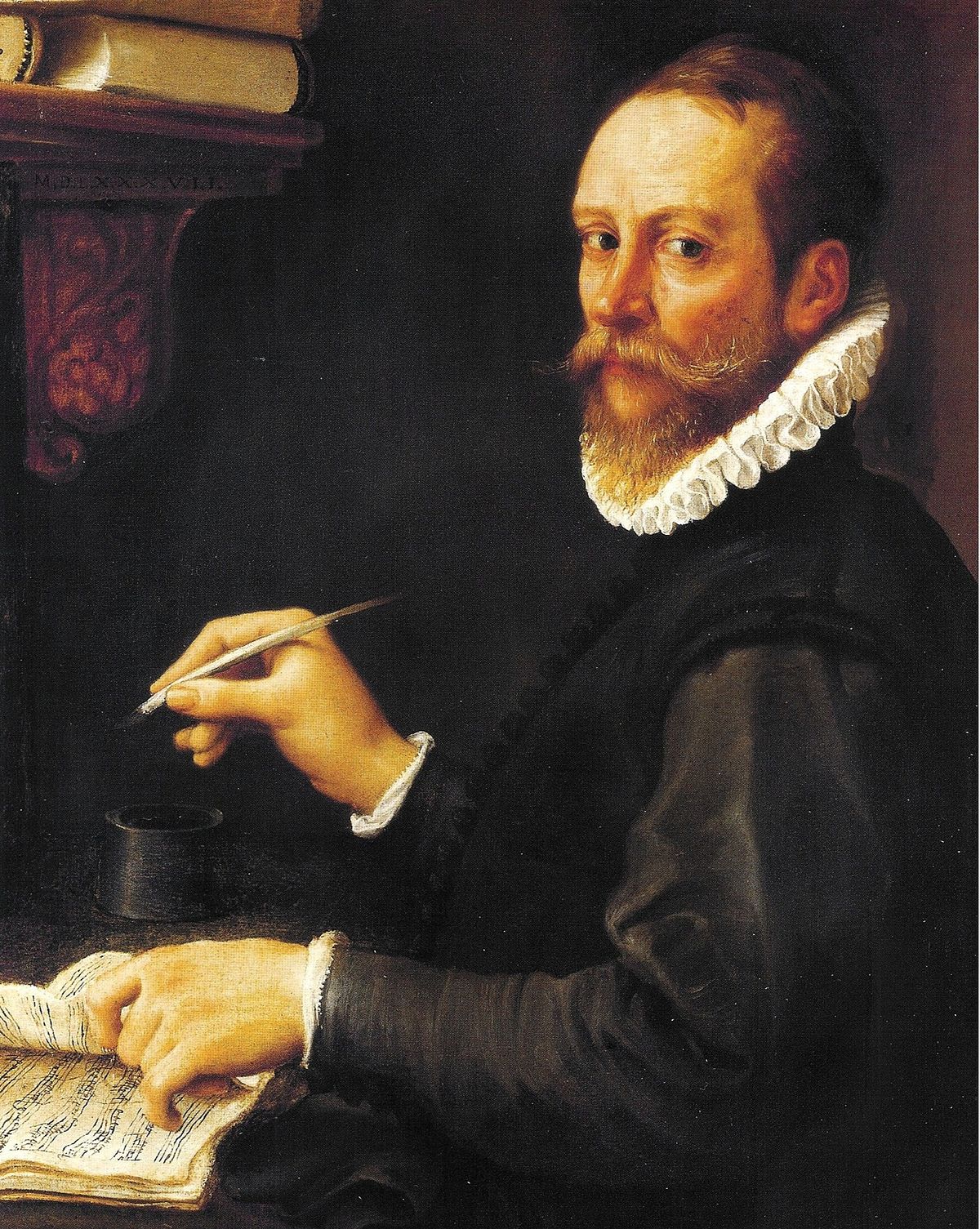 8th of 1533 in Correggio, a town in the Emilia-Romagna (Correggio is also the birthplace of the famous High Renaissance painter who took his name after the town). In Correggio, Merulo studied with Tuttovale Menon, a composer who had previously worked at the court of Ferrara, one of the musical centers of Italy. Merulo probably also studied with Adrian Willaert in Venice. At the age of 23, he was appointed organist at Brescia Cathedral. Just one year later, he was elected the second organist at the Basilica of San Marco in Venice (the basilica had two organs), even though a luminary like Andrea Gabrieli was also in contention. When in 1566 Merulo took over the position of the first organist, Gabrieli was made the second organist. Merulo stayed at San Marco for 27 years; this was a very productive period, as he composed music for services at the basilica and secular music, for the festivities thrown by the city and its nobility. In 1584 Merulo left Venice and moved to Parma to serve at the court of Duke Ottavio Farnese. He was made organist of the Cathedral of Parma, married (for the third time) a local noblewoman and lived, quite prosperously, in a large house near the Cathedral. He died in Parma on May 4th of 1604. The dome of the Parma Cathedral is famous for a large fresco, Assumption of the Virgin, that covers its dome. The creator of this fresco is none other than Antonio da Correggio.
During his life Merulo was known for his keyboard compositions. We’ll hear three pieces by Merulo: one for the organ, Toccata quinta del secondo tono, from Merulo’s First Book of Organ Toccatas (here). It’s performed by the organist Massimiliano Raschietti. Here’s a piece for the harpsichord, Ricercare primo. It’s performed by Marco Mencoboni. And finally, some music that is not for a keyboard instrument. Merulo wrote many motets and madrigals. Here’s a motet, Innocentes pro Christo, from his Libro Primus Sacrarum Cantionum. It’s performed by the Modus Ensemble, Mauro Marchetti conducting.
The portrait, above, is by Annibale Caracci, renowned for his frescoes in the Palazzo Farnese in Rome. Caracci was born in Bologna, a city in Emilia-Romagna not far from Merulo’s Correggio.
Read more...Claudio Merulo - Innocentes pro Christo
Modus Ensemble (Ensemble)
Mauro Marchetti (Conductor)
Claudio Merulo - Ricercare primo
Marco Mencoboni (Harpsichord)
Claudio Merulo - Toccata quinta del secondo tono
Massimiliano Raschietti (Organ)
Isaac Albéniz - Navarra
Kamil Tokarski (Piano)
Bruno Maderna - Concerto for Two Pianos
Aldo Orvieto (Piano)
Fausto Bongelli (Piano)
Orchestra Della Fondazione Arena Di Verona (Orchestra)
Carlo Miotto (Conductor)