
Claude Debussy - Sonata for Cello and Piano
Alexander Hersh (Cello)
Evan Wong (Piano)
Orlando di Lasso, 2020
This Week in Classical Music: June 22, 2020. Orlando di Lasso. No, the great Franco-Flemish composer of the Renaissance was not born this week. We are not even sure when he was 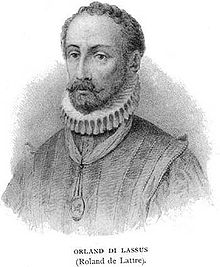 born, whether in 1530 or 1532. We do know, though, that he was one of the greatest and most prolific composers of his time. Orlando, often spelled as Orlande de Lassus, was born in the town of Mons in the County of Hainaut in what is now Belgium; at that time Hainaut and the rest of the Low Countries were part of the empire of Charles V, the Holy Roman Emperor. As a boy, Orlando moved to Italy with Ferrante Gonzaga, a condottiero who was then serving Charles V (Ferrante belonged to a minor branch of Gonzagas, the dukes of Mantua). Orlando’s first stop in Italy was Mantua but several months later Ferrante left the city for Sicily, with Orlando in tow. After serving at several Italian courts, Orlando moved to Rome, where, in 1553, he became maestro di cappella at San Giovanni in Laterano, a position that eventually would be assumed by Palestrina. We know that during that time Orlando traveled to many cities in Europe, possibly visiting England. In 1555 he went to Antwerp, where he met many musicians and made friends with Tielman Susato, a composer and major music publisher. That year Susato published Orlando’s music, his “opus 1.”
In 1556 Orlando received an invitation from Albrecht V, Duke of Bavaria to join his court; Orland accepted and moved to Munich. His initial position was that of a singer (tenor) in the Duke’s chapel (choir), which was being refashioned in the Flemish style. Orlando, who by then was well known as a composer, continued to write and publish music; soon he was made maestro di cappella of the Bavarian court. He stayed in that position for the rest of his life. Orlando’s duties included composing music for morning masses and numerous Magnificats for the Vespers in the evening. He also wrote a copious number of motets. In addition to church music, Orlando wrote many secular pieces composed for different court events: Tafelnusik for the feasts and banquets, and music for other occasions, for example, hunting parties. On top of that he was supervising music education of the choirboys – all that reminds us of the enormous workload Johann Sebastian Bach had as a Thomaskantor in Leipzig some century and a half later.
Orlando’s position at the court was exceptional: he was a friend to the duke and especially to his heir, the future Wilhelm V. He traveled extensively, hiring musicians in the Flanders, attending coronations in Prague and Frankfurt. When he visited Ferrara and Venice (in 1567) he told his hosts that good Italian music could be had even in a far-off Germany. He visited a French court on the invitation of King Charles IX. In 1570 Orlando was made a noble by Maximilian II, Holy Roman Emperor.
Orlando died in Munich on June 14th of 1594, the same year as Palestrina. Enormously productive, he wrote more than 60 masses and hundreds of motets. Here’s one of them, In Monte Oliveti, performed by the Hilliard Ensemble directed by Paul Hillier.
Read more...Orlando di Lasso - In Monte Oliveti
The Hilliard Ensemble (Ensemble)
Paul Hillier (Conductor)
Orlando di Lasso - Cum natus esset Jesus
The Hilliard Ensemble (Ensemble)
Paul Hillier (Conductor)
John Hunter - If Death, My Friend
Paul Hunter (Tenor)
Cassidy Cottle (Soprano)
Allena Sinlder (Mezzo-soprano)
Bahareh Poureslami (Soprano)
Dario Amador (Baritone)
Musical dynasties
This Week in Classical Music: June 15, 2020. Musical dynasties, Stravinsky. Several very interesting composers were born this week, two of them belonging to dynasties: Johann Stamitz was the head of one, while Johann Christoph Friedrich Bach was one of several sons 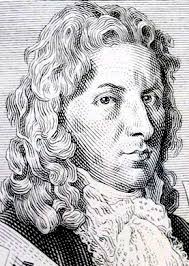 of Johann Sebastian who became prominent composers. Johann Stamitz was born on June 18th of 1717 in Bohemia, then ruled by the Habsburgs and to a large extent dominated by the German language and Austrian-German culture. Stamitz was a violin virtuoso; sometime around 1741 he was hired by the Mannheim Court to play in the famous orchestra. Stamitz’s career advanced quickly: he was soon appointed Konzertmeister, then Director of Court music and the orchestra’s chief conductor. Stamitz developed the orchestra into the “most renowned ensemble of the time, famous for its precision and its ability to render novel dynamic effects,” to quote the musicologist and historian Eugene Wolf. Johann’s sons Carl and Anton were among the best composers of the Mannheim school, of which their father was the founder.
Johann Christoph Friedrich Bach was Johan Sebastian’s fifth son. He was born on June 21stof 1732 in Leipzig, where his father was serving as Thomaskantor teaching at the Thomasschuleand composing for and playing at the Thomaskirche. J.C.F. is not as well known as his half-brothers Whilhelm Friedeman and Carl Philipp Emanuel, or his brother Johann Christian. Part of the reason may be that many of his scores were lost during the WWII bombing of Berlin; they were stored at the National Institute of the German Music Research, and most of its collection of scores and musical instruments were lost. Here’s his lively Piano Concerto in E Major, perfomed by Cyprien Katsaris, piano, with the Orchestre de Chambre du Festival d`Echternach, Yoon K. Lee conducting.
We celebrated Charles Gounod’s 200th anniversary in 2018, you can check out our entry here. Edvard Grieg was born on this day in 1843. And then there was Jacques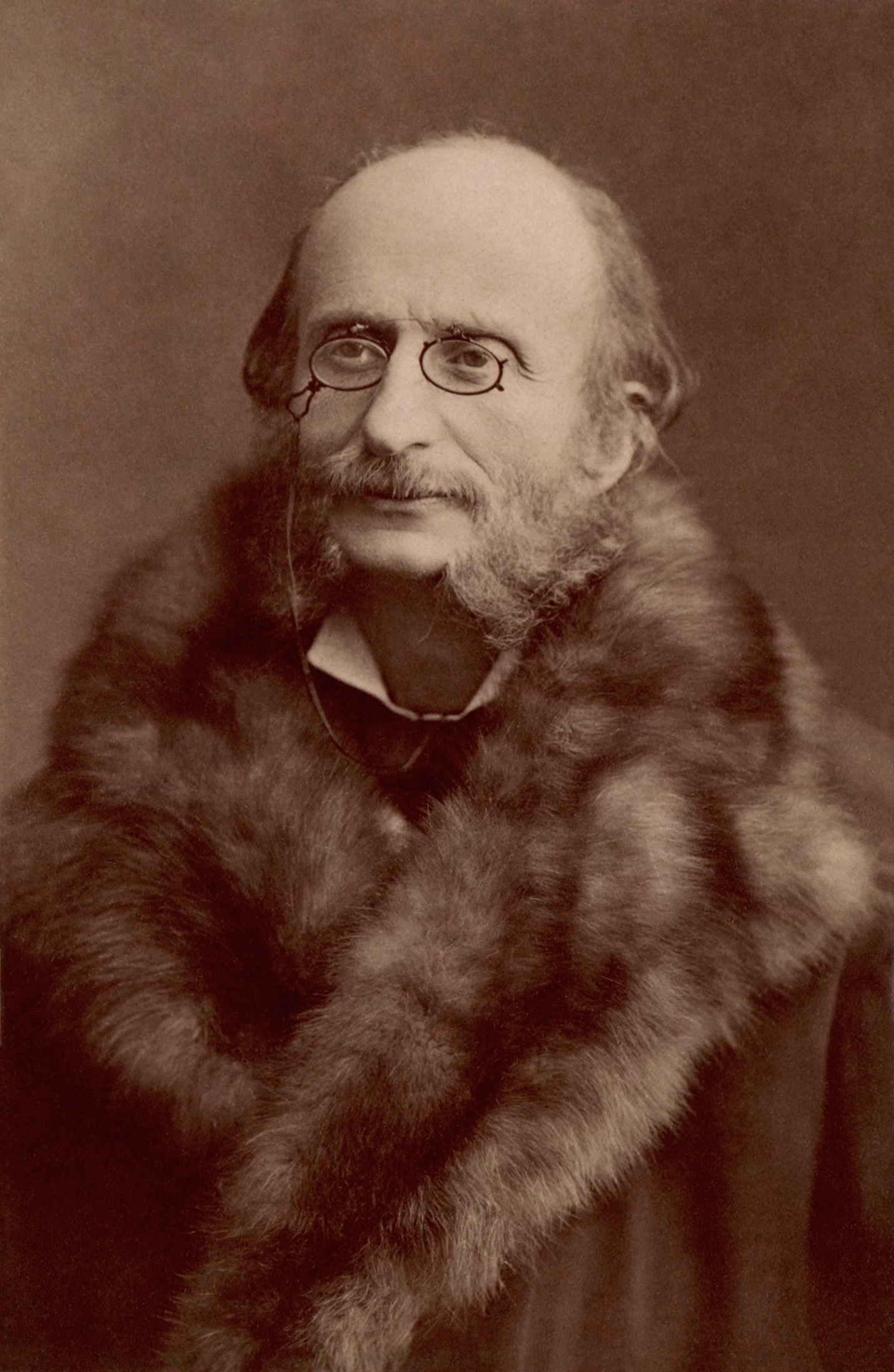 Offenbach, a German-Jewish composer from Cologne who practically invented the genre of operetta and became the most popular French composer of his time. Offenbach wrote 100 opera-buffe (operettas) and one unfinished opera, The Tales of Hoffmann, a staple of the opera repertoire. Here’s the overture to La Grande-Duchesse de Gérolstein. It’s not serious music, and was composed to be light, but the orchestration is quote brilliant and the whole piece is a lot of fun. In this recording the Philharmonia Orchestra is conducted by Sir Neville Marriner. (By the way, the librettists of La Grande-Duchesse were Henri Meilhac and Ludovic Halévy – Halévy was the nephew of another French Jewish composer Fromental Halévy; Meilhac and Halévy also co-wrote the libretto for the famous Carmen.)
The composer who towers over all of the above is Igor Stravinsky, born June 17th of 1882. Please check our previous entries as there are many, for example here, here and here.
Read more...Jacques Offenbach - La Grande-Duchesse de Gérolstein overture
Philharmonia Orchestra (Orchestra)
Neville Marriner (Conductor)
Charles Wuorinene, 2020
This Week in Classical Music: June 8, 2020. Charles Wuorinen. Robert Schumann’s 210th anniversary is today: he was born on June 8th of 1810 in Zwickau, Germany. He is without a 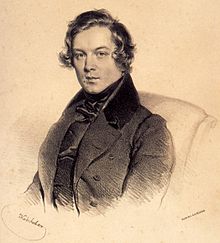 doubt one of the greatest composers of all time, and we’ve written about him many times. Many musicologists and regular listeners believe that Schumann’s best work was composed early in his life, and he was suffering greatly by the end of it (he died at just 46 years old in a mental institution). Despite all the depressions and hallucinations, Schumann continued to compose till almost the very end of his life. His last piano composition, called Geistervariationen (Ghost Variations) was written in 1854. At that time Schumann thought that he was surrounded by spirits who played him music, “both "wonderful" and "hideous".” Soon after he was admitted to the mental hospital in Endenich, a suburb of Bonn. He died there two years later. Here is a wonderful young pianist Igor Levit playing Geistervariationen.
Erwin Schulhoff was also bon on this day, in 1894. We’ve never had a chance to write about him; he was one of many European composers who perished during the Holocaust. Schulhoff was born in Prague into a German-Jewish family. Politically, a highly complicated figure but a very talented composer, he died in a German concentration camp in 1942. Here’s his Quartet no. 1, performed by the Kocian Quartet. We owe Schulhoff a separate entry; it will be coming soon.
Today is a special day, as yet another composer, an Italian from the Baroque era, Tomaso Albinoni was also born on this day in 1671. He was famous in his day as a composer of many operas. Now, unfortunately, he’s mostly known for the Adagio in G minor, which he actually didn’t write: it was composed by his biographer, Remo Giazotto, probably based on excerpts from Albinoni’s works.
The composer we’d like to commemorate today is Charles Wuorinen, who died less than three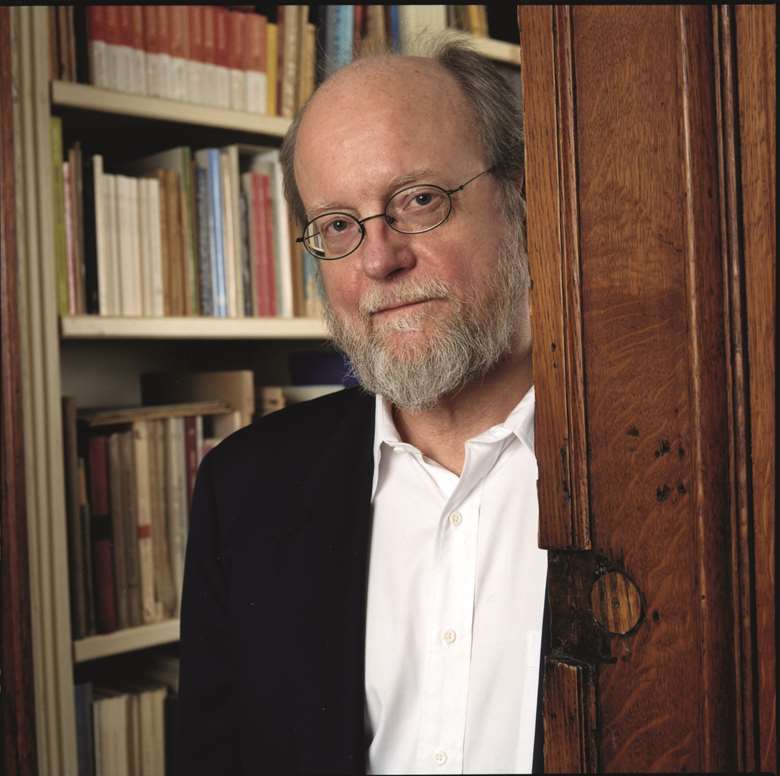 months ago, on March 11th of 2020 at the age of 81. Wuorinen (pronounce WOrinen) was born on June 9th of 1938 in Manhattan; his father was a prominent Finnish-American historian. Charles wrote his first compositions at the age of five. In 1962 Wuorinen formed an ensemble, The Group for Contemporary Music, which performed the music of modernist American composers of the day such as Milton Babbitt, Elliott Carter and Stefan Wolpe, as well as the music of Wuorinen himself. In 1970s he taught at the Manhattan School of Music. As many composers of his age, he experimented with electronic music, at some point in the 1970s even getting a grant from the Rockefeller Foundation to conduct sonic experiments at AT&T’s Bell Labs. In 2000s James Levine became a champion of Wuorinen’s music and commissioned a piano concerto (his fourth). Overall, Wuorinen composed about 270 pieces, including an opera, Brokeback Mountain (2015). Wuorinen had many supporter (the pianist Peter Serkin for one) and almost as many detractors, the renowned musicologist Richard Taruskin being one of them. Here’s Wuorinen’s very interesting Piano Concerto no. 3, performed by one his champions, the pianist Garrick Ohlsson and the San Francisco Symphony Orchestra conducted by Herbert Blomsted.
Charles Wuorinen - Piano Concerto no. 3
Garrick Ohlsson (Piano)
The San Francisco Symphony Orchestra (Orchestra)
Herbert Blomstedt (Conductor)
Anton Webern - Langsam in G Major
Alexander Hersh (Cello)