
Foss and the pianists, 2020
This Week in Classical Music: August 10, 2020. Foss and the pianists. The German-American composer Lukas Foss was born in Berlin on August 15th of 1922. Unusually gifted 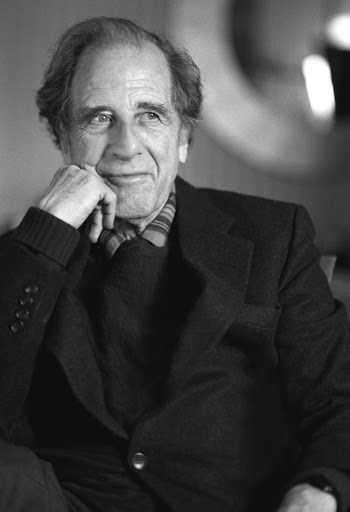 musically, he started composing at the age of seven. The Fosses, who were Jewish, emigrated from Germany in 1933 when the Nazis came to power. They first went to Paris where Lukas studied with several prominent musicians, then in 1937 they moved to the US. Lukas continued his studies at the Curtis Institute where he met Leonard Bernstein; they became lifelong friends. In 1944, Foss gained prominence with his cantata The Prairie on Carl Sandburg’s poem. A year later, when he was 23 years old, Foss became the youngest recipient of the Guggenheim Fellowship. In 1953 Foss was appointed Professor of Music at UCLA, the position previously occupied by Arnold Schoenberg. He created the Improvisation Chamber Ensemble, directed the Ojai Festival, went on to direct the Buffalo Philharmonic and founded the Center for Creative and Performing Arts in that city. He led and guest conducted a number of orchestras in the US and in Europe and incessantly promoted contemporary music.
Lukas Foss’s early compositions were neo-classical and often populist, as in this Early Song from Three American Pieces, 1944 (the solo violin is by Itzhak Perlman, with Seiji Ozawa conducting the Boston Symphony Orchestra). Later he turned to serialism and improvisation: here is his Elytres for 2 flutes and chamber orchestra from that period, composed in 1964. The New York Philomusica Chamber Ensemble is directed by the composer. Later Foss turned to electronic music. Here is his wonderfully whimsical take on Bach’s Partita in E for solo violin. Leonard Bernstein conducts the New York Philharmonic Orchestra. And here is the interview Lukas Foss gave to Bruce Duffie in 1987.
Two brilliant pianists were also born this week, Aldo Ciccolini on August 15th of 1925 and Julius Katchen, who was born on the same day one year later, in 1926 (Lukas Foss, by the way, was also a brilliant pianist). Ciccolini, an Italian who became a naturalized French citizen, was famous for his interpretation of piano music of his adopted country (his Debussy was exquisite). Katchen, one of the most interesting American pianists of his generation, was a renowned interpreter of the music of Brahms. Katchen died of cancer at the age of 42. We’ll write more about both of these wonderful pianists at a later date.
Read more...Lukas Foss - Phorion
New York Philharmonic Orchestra (Orchestra)
Leonard Bernstein (Conductor)
Lukas Foss - Elytres
The New York Philomusica Chamber Ensemble (Ensemble)
Lukas Foss (Conductor)
Lukas Foss - Early Song, from Three American Pieces
Itzhak Perlman (Violin)
Boston Symphony Orchestra (Orchestra)
Seiji Ozawa (Conductor)
Dufay's travels, 2020
This Week in Classical Music: July 27, 2020. Dufay’s peregrinations. Guillaume Dufay, the great composer of the Early Renaissance, is unique on at least two accounts: one is his position as 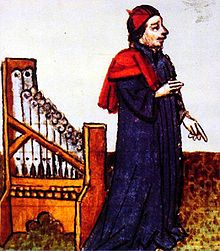 the most influential composer of his generation, who was acknowledged as such during his time and retained that position for the following half-millennium. Another is a curiosity: Dufay is one of the very few musicians born in the 14th century whose birthday was “reconstructed” with some certainty. It was done by the musicologist Alejandro Planchart, the foremost scholar of Dufay and his time, who established the date based on the time of Dufay’s ordination, his years as a chorister at Cambrai Cathedral, and events connected with the funding of his obit service. Planchart had determined that Dufay was born on August 5th of 1397 in Beersel, Brabant, not far from Brussels, and moved with his mother to Cambrai, France, soon after. One thing that doesn’t fail to surprise us is the mobility of musicians of the time. We know that in 1420 Dufay went to Rimini where he entered the service of Carlo Malatesta; Rimini is more than 800 miles away from Cambrai, and you have to travel to Geneva, then Turin, Milan and then Bologna in order to get there. After returning to Cambrai, Dufay went to Laon. He then went to Bologna, where he served at the court of Cardinal Louis Aleman. From Bologna Dufay went to Rome, where he served as the papal chaplain. He may have traveled for a brief stay in the Benedictine monastery of Cossonay, near Lausanne. In 1433, Dufay was hired by Duke Amédée VIII of Savoy, and traveled to Chambéry, then the capital of Duchy of Savoy. While in Savoy, Dufay met the composer Gilles Binchois, and the poet and writer on music Martin le Franc, who were working at the court of the Dukes of Burgundy. In 1435 Dufay returned to the papal chapel, which by then moved from Rome to Florence. Two years later, he left the papal employ and returned to Savoy. We know that he went to Lausanne and Basel and two years later entered the service of the Duke of Burgundy. The dukes didn’t have permanent capital and were moving around most of the time, from Dijon to Brussels to Bruges and other cities of the realm, and even though Dufay stayed mainly in Cambrai, we can assume that he also traveled along with the court, at least on some occasions. In the following years Dufay visited other cities, such as Turin, Padua and Mons. Dufay died inCambrai on November 27th of 1474. What makes his travels even more remarkable is that till 1452 the One Hundred Years War was raging between France and England –– and the fighting affected not only France but also Burgundy, making travels that more treacherous.
If you want to read more about Dufay and his time, take a look here and here.
Read more...Three Tenors, 2020
This Week in Classical Music: July 27, 2020. Three Tenors. Only two of our tenors were born this week, Sergei Lemeshev and Mario del Monaco, but the birthday of the third one, Giuseppe 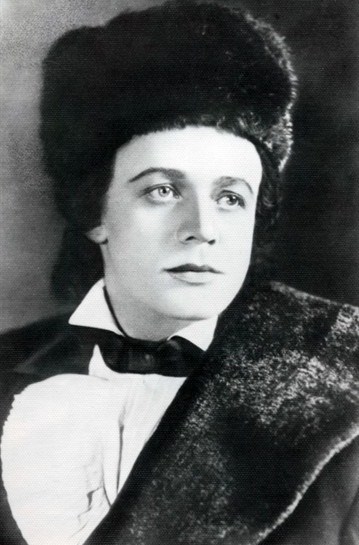 Di Stefano, was three days ago. The Russian tenor Sergei Lemeshev is the oldest of the three: he was born on this day in 1902. One of the greatest tenors of the Soviet Union, (along with Ivan Kozlovsky) Lemeshev was born into a peasant family. He went to St.-Petersburg to be a shoemaker, listened to gramophone recordings in his free time and learned the musical basics at a vocational school. In 1920 he was sent to the Moscow Conservatory, where he studied for four years, 1921 through 1925. In 1924 he performed the role of Lensky in Tchaikovsky’s Eugene Onegin under the direction of the famed Konstantin Stanislavsky. That was to become his most famous (and favorite) role: he performed it more than 500 times. After graduation he performed in provincial theaters; then in 1931 he was invited to the Bolshoi. With Koslovsky, he became one of Bolshoi’s leading singers for more than a quarter century. He sung numerous roles, many in the operas by Tchaikovsky, Rimsky and other Russian composers, but also the roles of Alfred in La Traviata, Gounod’s Faust, the Duke in Rigoletto and Rodolfo in La Boheme. During WWII he contracted pneumonia and then tuberculosis; he was treated but eventually one of his lungs collapsed. He sang with one lung from 1942 to 1948 when the lung was re-inflated. Lemeshev died in Moscow on June 26th of 1977.
Mario del Monaco was born on this day in 1915, Giuseppe Di Stefano – on July 24th of 1921. Both were giants of the Italian opera, and the period in the late 1950s-1960 when both were in their prime – and when Franco Corelli was also at the height of his career – is the golden age of opera, probably never to be repeated. The timber of their voices was different: Di Stefano was a lyric tenor who with time moved to more dramatic roles; it was said that he possessed the most beautiful voice since the time of Beniamino Gigli. He was Pavarotti’s favorite singer. Del Monaco, on the other hand, was a dramatic tenor: his voice was slightly lower than Di Stefano’s but his diapason was large, so he could sing lyric dramatic roles as well: he was great as Radames in Aida and Canio in Pagliacci. Del Monaco had a very exciting voice of enormous power; his most famous role was Otello. Del Monaco’s career was long: he first appeared on stage in 1940 and retired in 1975. Di Stefano, on the other hand, was at the top of his form for just several years in 1950 – but what a voice it was! Here’s Di Stefano in the role of Cavaradossi singing the famous aria E lucevan le stelle from Puccini’s Tosca. This is probably the best Tosca ever recorded: in addition to the phenomenal Di Stefano it featured Maria Callas as Tosca and Titto Gobbi as Scarpia, both at the top of their form. And here’s Mario Del Monaco with the incomparable Renata Tebaldi in the 1952 recording of Gia nella notte densa from Verdi’s Otello.
Read more...Giuseppe Verdi - Gia nella notte densa, from Otello
Renata Tebaldi (Soprano)
Mario del Monaco (Tenor)
Orchestra dell'Accademia di Santa Cecilia (Orchestra)
Alberto Erede (Conductor)
Giacomo Puccini - E lucevan le stelle, from Tosca
Giuseppe Di Stefano (Tenor)
Orchestra del Teatro alla Scala (Orchestra)
Victo de Sabata (Conductor)
Aaron Alter - String Theory
ÉxQuartet (Quartet)
Monika Sawczuk (Violin)
Łukasz Górewicz (Violin)
Grzegorz Sadowski (Viola)
Tomasz Szczęsny (Cello)
Nadeem Majdalany - Soliloquy of Eden
Judy Kang (Cello)
Nadeem Majdalany (Conductor)