
Giovanni Animuccia, 2020
This Week in Classical Music: August 24, 2020. Giovanni Animuccia. Leonard Bernstein was born on August 25th 101 years ago. Otherwise a rare paucity, which we’ll use to go back to the music of the Renaissance. Up till now we have never written about Giovanni Animuccia, a 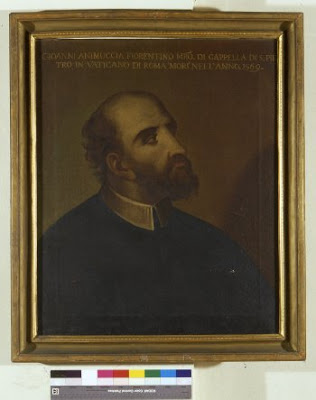 Florentine composer born around 1520. The music of Florence was not as developed as that of Rome; Animucci was one of only two significant composers working around that time, the other one being Francesco Corteccia, maestro di cappella to the Duke of Florence, Cosimo I de' Medici. While in Florence, Animucci composed a book of madrigals, which was published in Venice in 1548. He was associated with major literary and religious figures of Florence, such as the famous priest Philip Neri, who would later, after moving to Rome, be known as the Second Apostle of Rome and for whose religious community, the Oratory, Animuccia would write a set of Laude for early morning services. In 1550 Animuccia left Florence for Rome and entered the service of Cardinal Guido Ascanio Sforza. He met many former Florentines (the Florentines even had their own church, the San Giovanni dei Fiorentini) and enter the circle of Antonio Altoviti, whom Pope Paul III made the Archbishop of Florence. Duke Cosimo didn’t like Altoviti and banned him from entering the city, thus the archbishop spent the following 20 years in Rome. We mention this because Altovivi’s circle included the young Orlando di Lasso, so the two composers knew each other. Animuccia’s musical life was also tied to another great composer, Giovanni Pierluigi da Palestrina. In 1551 Pole Julius III appointed Palestrina the music director of the Cappella Giulia, the second most important choir in the St. Peter’s, after the Capella Sistine In January of 1555 Palestrina moved to San Giovanni di Laterano, the seat of the pope as the Bishop of Rome, and Animuccia took his place. He remained themagister cantorum at the Cappella Giulia until his death in 1571, at which time Palestrina returned to the post.
Here’s the Sequence (a hymn) from Animuccia’s Mass Victimae Paschali (Praises to the Passover victim), performed by Wellington, New Zealand- based The Tudor Consort.
Three conductors were also born this week: Wolfgang Sawallisch, a German conductor who for ten years led the Philadelphia Orchestra, on August 26th of 1923; the great German conductor Karl Böhm, on August 28th of 1894 (here’s our recent entry about him); and István Kertész, a Jewish-Hungarian conductor who led many of the best orchestras but died (by drowing) young, at 43 (Kertész was born on August 28th of 1929).
Read more...Giovanni Animuccia - Sequence, from Missa Victimae Paschali Laudes
The Tudor Consort (Ensemble)
Sergei Rachmaninov - Vocalise
Anahit Sevoyan (Piano)
Mozart - Piano Trio K.502 in B Flat Major.
Anahit Sevoyan (Piano)
Claude Debussy - Jardins sous la pluie (Gardens in the rain), from Estampes
Anahit Sevoyan (Piano)
P. Kellach Waddle - Vampires Heal In The Dark; Even On Valnetine's Day : Intermezzo for Solo Bass Intermezzo for solo bass Op. 665
Dritan Gani (Double Bass)
Bach-Kempff - Siciliano
Nico De Napoli (Piano)
Porpora and Salieri, 2020
This Week in Classical Music: August 17, 2020. Porpora and Salieri. Nicola Porpora, a composer famous of his time for his operas and as a music teacher (Farinelli was one, as was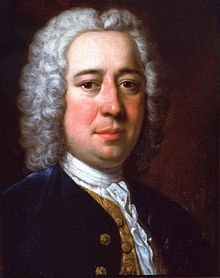 Haydn) was born on this day in 1686. Here is an entry we wrote about him two years ago. Another composer mentioned in this entry is Antonio Salieri. His birthday is also this week: Salieri was born on the 18th of August 1750. We left off our story about Salieri in 1784, when he returned from Vienna after a two-year stay in Paris. Two things had changed during this time: the Emperor Joseph II became more interested in Italian opera buffa, and new competition arrived from the likes of Giovanni Paisiello and the 28-year-old Mozart. Salieri’s first Viennese opera after his return from Paris was La grotta di Trofonio (1785). Here’s the overture to it, performed by the Mannheimer Mozartorchester, Thomas Fey conducting. Next, following the new tastes, he reworked his French opera Tartare in Italian (and gave it a new title, Axur re d'Ormus). Axur became very popular and between 1788 and 1805, when Vienna was captured by Napoleon, was staged more than 100 times. In 1788 Joseph appointed Salieri the Hofkapellmeister, the highest musical position at the court. Salieri held it till 1824, the longest tenure ever.
 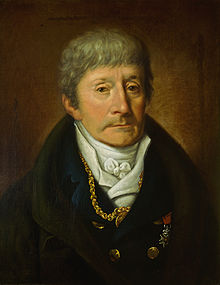 (It’s interesting that the highest position Mozart was ever to attain was Kammermusicus or Chamber Musician, lower than that of Hofkapellmeister, person in charge of music-making at the Court). Joseph II died in 1790 but Salieri continued working under the patronage of Joseph’s successor, Emperor Leopold II. Life was not quite the same for him: Leopold wasn’t as interested in music as his predecessor, Salieri couldn’t travel to Paris because of the Revolution, he stopped working with Da Ponte, the great librettist, and his genius competitor, Mozart, was dead. Still, Salieri continued to write, and one of the operas of the period, Palmira, composed in 1795, is now considered his best. And, like Porpora, Salieri taught: Beethoven and Schubert were among his students. Salieri retired in 1824 and died in Vienna a year later, on May 7th of 1825.
The great Claude Debussy was also born this week, on August 22nd of 1862. You can read our entries about him here and here. Also, one of the most interesting composers of the second half of the 20th century, Karlheinz Stockhausen was also born on August 22nd, but in 1928.
Read more...Antonio Salieri - La Grotta di Trofonio, Overture
Mannheimer Mozartorchester (Orchestra)
Thomas Fey (Conductor)
Leopold Koželuch - Sicilienne
Nico De Napoli (Piano)