
Schütz, Verdi and more 2020
This Week in Classical Music: October 5, 2020. An unusual week. Last week, unfortunately, we had two days of outages. This had to do with our hosting provider updating some software, but part of the problem was with us: we also need to keep up with evolving technology. For that we’ll need some help from our listeners. More on this tropic to come.
This coming week is quite bountiful: three composers, three pianists, one cellist (but what a 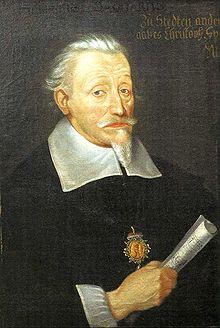 cellist!) and a conductor. First, the composers - a German, an Italian, and a Frenchman: Heinrich Schütz, Giuseppe Verdi and Camille Saint-Saëns. We’ve celebrated all of them many times, Schütz, probably the most important German composer before Bach, here and here; Verdi – many times (take a look here and here). We were more circumspect about Saint-Saëns: a fine composer, quite conservative at that: he died in 1921, ten years after Mahler, when Stravinsky has already written many of the masterpieces of his Russian period, after the Viennese school forever changed the way we would listen to music – and he was writing things like this Oboe Sonata in D major, op. 166, from 1921, the year of his death. A charming piece, but one that wouldn’t be out of place half a century earlier. In this performance Guido Ghetti is the oboist and Amadeo Salvato is on the piano.
Speaking of the piano: three distinguished pianists were born this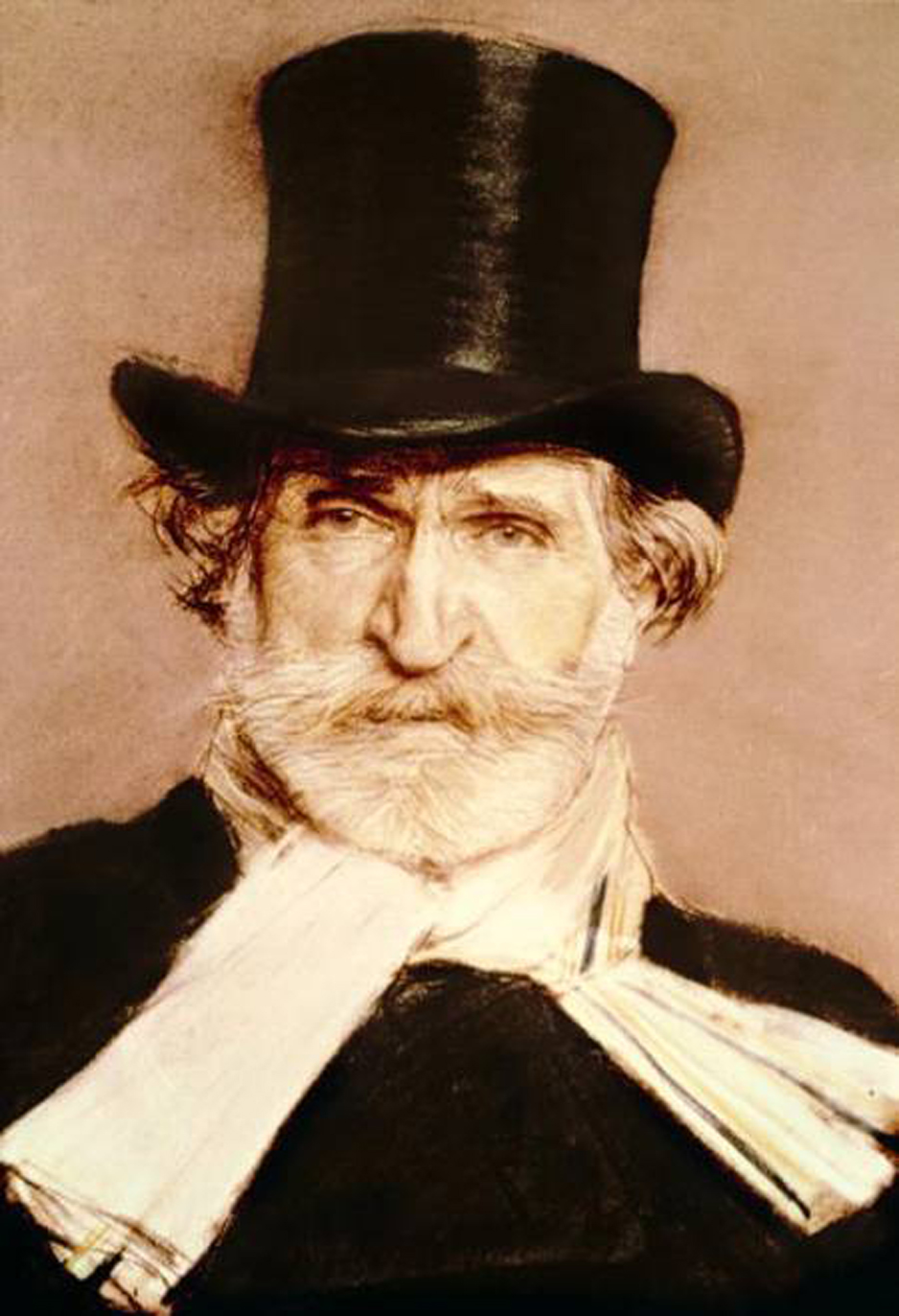 week, Edwin Fischer, Shura Cherkassky, and Evgeny Kissin. Edwin Fischer, a Swiss pianist, was born in 1886 but, fortunately, left a number of remarkable recording, especially those of Mozart and Bach. Shura Cherkassky was born in Odessa in 1909 and performed for almost 70 years: he started performing publicly in 1928, his last recording was made in 1995, the year of his death, when Cherkassky was 85. Shura (diminutive from Alexander) came to the US in 1923 and studied with Josef Hoffman. He moved to London after WWII. The music critic Harold Schonberg called Cherkassky “the last remaining exponent of the grand Romantic style.” Here’s a live recording of Cherkassky playing Rachmaninov’s Variations on a Theme of Corelli. It was made in 1986. As for Evgeny Kissin, who will turn 50 next year: we hope that both he and we are up and running and we’ll have a chance to dedicate a full entry to this extraordinary pianist.
Yo-Yo Ma is our cellist of the week. He was born on October 7th, 1955 in Paris to Chinese parents; his family moved to New York when Ma was seven. A child prodigy, he played several instruments from a very early age but eventually (by the age of seven!) settled on the cello. He studied with Leonard Rose at the Juilliard. When Ma was 15, Leonard Bernstein presented him on one of his TV programs. Since 1976 he’s been performing widely and is now consider one of the greatest cellists of his generation. He’s played with all major orchestras and distinguished instrumentalists, such as the violinists Pinchas Zukerman and Yehudi Menuhin and the pianist Emanuel Ax. Ma’s recorded repertoire is wide, and his recordings of Bach’s cello sonatas are especially highly valued.
And finally, our conductor of the week: Theodore Thomas, born on October 11th of 1835; he was the first music director of the Chicago Symphony Orchestra. Thomas was born in Essen, Germany but his family moved to the US when he was 10. He had a distinguished career as a conductor and came to Chicago after being promised a permanent orchestra. Under his direction, the Chicago Orchestra played its first concert on October 16th of 1891. In December of 1904 he opened Symphony Hall, designed by Daniel Burnham. Theodore Thomas died of pneumonia on January 4th, 1905 after conducting just two weeks of subscription concerts at the new hall.
Read more...Sergei Rachmaninov - Variations on a Theme of Corelli, Op 42
Shura Cherkassky (Piano)
Camille Saint-Saëns - Oboe Sonata in D major, op. 166
Guido Ghetti (Oboe)
Amadeo Salvato (Piano)
Instrumentalists, 2020
This Week in Classical Music: September 28, 2020. Instrumentalists. While there are no significant dates associated with composers this week, there are plenty of wonderful names to 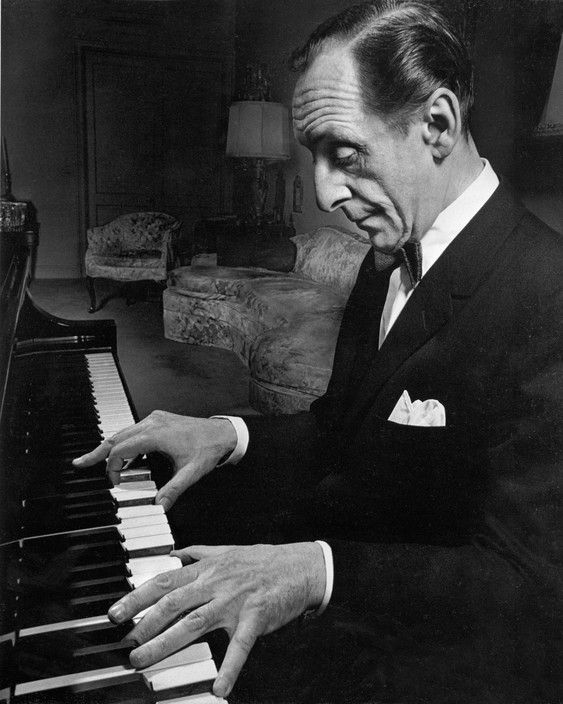 celebrate among the people who interpret composers’ music. Let’s start with the pianists. Vladimir Horowitz was born on October 1st of 1903 in Kiev, Ukraine, (then the Russian Empire) into a well-off Jewish family (Horowitz’s grandfather had a special merchant rank that allowed him to live outside of the Pale of Settlement; after the Revolution their assets were expropriated and the family impoverished). At the age of nine Horowitz entered the Kiev Conservatory where he studied with Felix Blumenfeld, among others. He made his solo debut in 1920; around that time, he met the violinist Nathan Milstein, who was the same age and showed great talent. They played together in concerts (Vladimir’s sister Regina was Milstein’s accompanist). Both Horowitz and Milstein left Russia in 1925; Vladimir went first to Berlin and then to the US. His debut, on January 12th of 1928, when he played Tchaikovsky’s First piano concerto faster than Thomas Beecham would have it and dazzled the public with his technique, became legendary. That was the beginning of one of the most brilliant pianist careers of the 20th century, even though Horowitz interrupted it four times, first from 1936 to 1938, then from 1953 to 1965, his longest absence from the concert stage, and again in 1969–74 and 1983–85. Altogether, he was away from the public for a long 21 years. That didn’t prevent him from becoming both a celebrity and one of the most interesting pianists of the century.
Vera Gornostayeva was practically unknown in the West, even though she was highly regarded by first the Soviet and then the Russian musical community as a very talented and “thinking” musician. She was also born on October 1st, in 1929, in Moscow. She studied with Heinrich Neuhaus at the Moscow Conservatory and then taught there for 50 years. One of her pupils, Vassily Primakov, was instrumental in publishing Gornostayeva’s CDs and bringing her art to the attention of the American public. She became a favorite of the listeners of WFMT, a Chicago classical music station. Gornostayeva had many students, among them Alexander Slobodyanik, Eteri Andjaparidze and Sergei Babayan.
David Oistrakh was also born this week, on September 30th of 1908. As a violinist he occupies 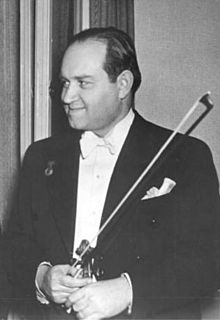 a place in the musical pantheon similar to Horowitz. Oistrakh was bon in Odessa, that cradle of Jewish violin virtuosos. Oistrakh studied with Pyotr Stolyarsky, as did Nathan Milstein, and played a concert with him in 1914. Oistrakh made his big debut in Leningrad in 1928, the year Horowitz made his debut in New York. In the 1930s the Soviets were keen to demonstrate their cultural achievement, and music competitions became politically important. Oistrakh excelled in them, winning many (among them the first prize in the prestigious Concours Eugène Ysaÿe in Brussels in 1937) and earned accolades at home and abroad. Oistrakh was one of the first Soviet musicians to travel to the West – he was allowed to play in Finland in 1949. In 1955 he went to the US for the first time, playing, to great acclaim, Shostakovich’s First Violin concerto, which the composer dedicated to him. Oistrach was a wonderful interpreter of the music of Bach. here’s Bach’s Violin Concerto no. 1 in A minor. David Oistrakh is accompanied by the Vienna Symphony, Georg Fischer conducting.
Johann Sebastian Bach - Violin Concerto no. 1 in A minor, BWV 1041
David Oistrakh (Violin)
Vienna Symphony (Orchestra)
Georg Fischer (Conductor)
Lokshin 100
This Week in Classical Music: September 21, 2020. Alexander Lokshin. Several great composers were born this week: Jean-Philippe Rameau, for example, on September 25th of 1683, or Dmitry Shostakovich, on the same day in 1906. George Gershwin was born on September 26th of 1898. Komitas, the national composer of Armenia, was also born on the 26th, in 1869, while Mikalojus Čiurlionis, who occupies a similar place in the musical history of Lithuania, was born on September 22nd of 1875. And let’s not forget Andrzej Panufnik, one of the most interesting Polish composer of the 20th century: he was born on September 24th of 1914.
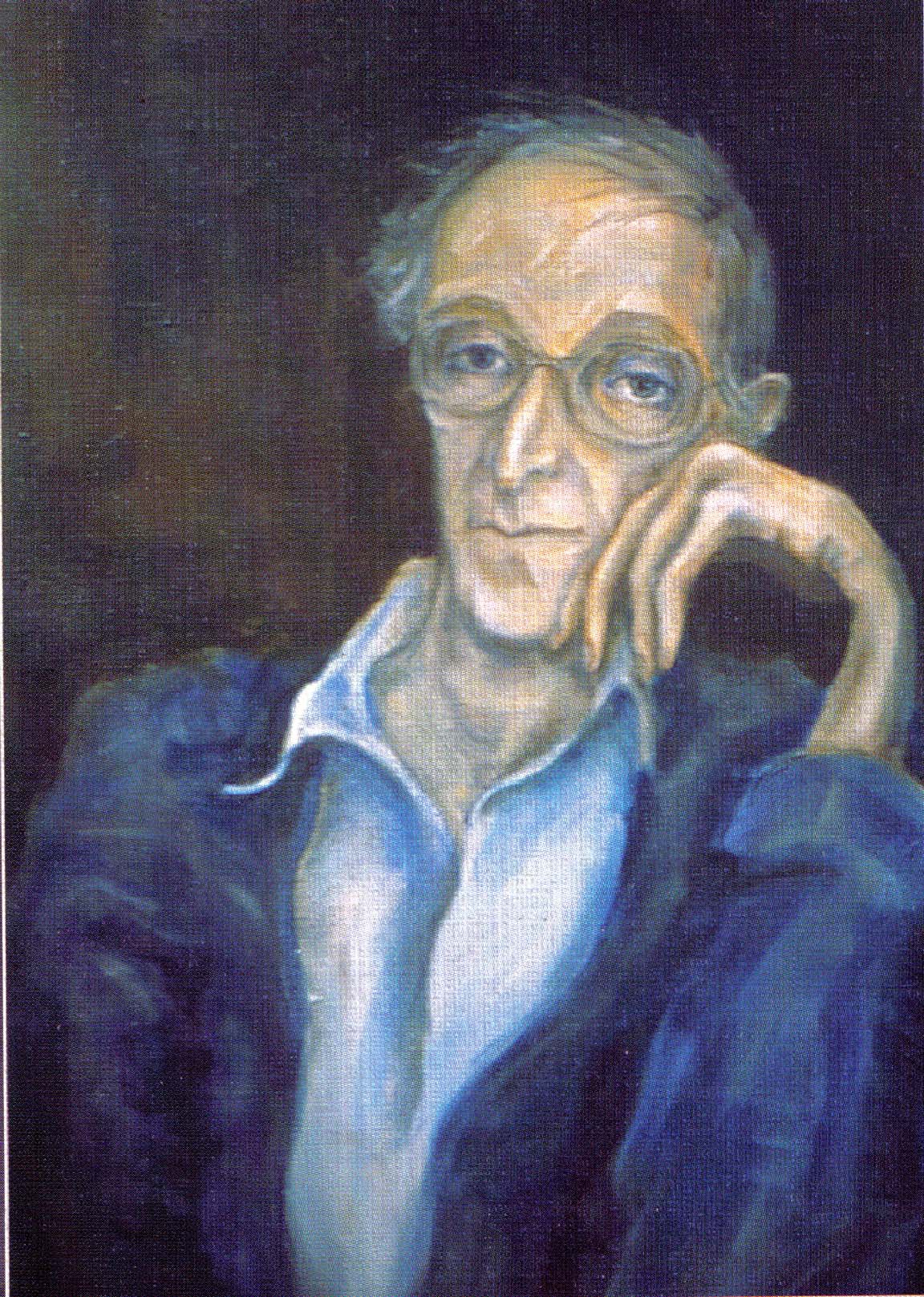 We’ve written about every single one of them, but this week we’d like to compensate for a significant date we missed last week. September 19th marked the 100th anniversary of the birth of Alexander Lokshin, a very talented Soviet composer whose tragic life in a way mirrors the history of his native country. Lokshin was born in Biysk, a city in Altai, southern Siberia, into a Jewish family. When Alexander was ten, the family moved to Novosibirsk, a much larger and culturally developed city, where Alexander attended a music school. In 1936 Lokshin went to Moscow and eventually was accepted at the Moscow Conservatory, the composition class of Nikolai Myaskovsky. In 1939, for his graduation, Lokshin wrote a symphonic piece with a vocal part based on Charles Baudelaire’s cycle Les Fleurs du Mal. In the 1939 Soviet Union Baudelaire was considered “bourgeois,” and even though the work was performed by the noted conductor Nikolai Anosov, Lokshin was denied a diploma and eventually kicked out of the Conservatory. But things worked unpredictably in the Soviet Union, where an official could be promoted and then executed a couple months later. In this case, Lokshin was lucky: Myaskovsky wrote a glowing letter of recommendation and in 1941, despite his troubles at the Conservatory, Lokshin was admitted to the official Composers’ Union. As the war started Lokshin volunteered to join the army but was soon dismissed because of poor health (he had terrible stomach problems). He moved back to Novosibirsk, where his family was living in poverty and his father was dying. In Novosibirsk Lokshin had several menial jobs and continued composing. In 1943 one of his works, a vocal-symphonic poem Wait for me (the words were based on a very popular poem by Konstantin Simonov), was performed by the Leningrad Symphony under the direction of Yevgeny Mravinsky, then touring Novosibirsk. The work was praised in musical circles and Lokshin was readmitted to Moscow Conservatory where Wait for me was accepted as his graduation work. In 1945 Lokshin was given a low-level job at the Conservatory, but three years later, in 1948, during Stalin’s antisemitic campaign against “Cosmopolitism” (read against the Jews), he was fired. Even though Myaskovsky and the pianist Maria Yudina, whom Stalin liked, tried to help him, he couldn’t find a job. For the rest of his life he had practically no income, and was supported by his wife, Tatyana Alisova, a specialist in Italian literature. Lokshin himself said that his serious compositional work started only in 1957, when he wrote his First Symphony (“Requiem”) which Shostakovish considered a work of genius. Such conductors as Gennady Rozhdestvensky and Rudolf Barshai were Lokshin’s champions. The last years of Lokshin’s life were marred by accusations that he was a KGB agent and that his denunciations led to arrests of several people. Many in intelligentsia turned away from Lokshin and Rozhdestvensky stopped playing his music. Some years later Lokshin’s son Alexander collected documents that seem to prove that Lokshin was discredited by the KGB to cover for a real agent. Lokshin died in Moscow on June 11th of 1987, his music practically forgotten. It still is rarely performed.
Lokshin is most interesting in his symphonic pieces, but here is an example of his piano music, Variations, in the performance by Maria Grinberg, a pianist who had also suffered terribly under the Stalin regime.
Read more...Alexander Lokshin - Variations for Piano
Maria Grinberg (Piano)
Franz Doppler - Andante et Rondo for 2 flutes and piano
HBG (Flute)
Emanuele Cristiani (Flute)
Akané Makita - Piano (Piano)
Franz Doppler - Franz Doppler - Fantaisie Pastorale Hungroise
HBG (Flute)
Cihan Yucel (Piano)
Baldassare Galuppi - Gloria in excelsis Deo, from Messa per San Marco
Vocal Concert Dresden (Ensemble)
Peter Kopp (Conductor)