Tchaikovsky 180
This Week in Classical Music: May 4, 2020. Tchaikovsky and more. This is one of these weeks when we don’t even know where to start: half a dozen composes, two pianists and three 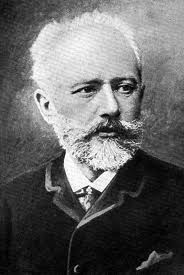 conductors all born within the next 7 days. We’ll have to start with Pyotr Ilyich Tchaikovsky: May 7th marks the 180th anniversary of his birthday. If you sense some reluctance on our part, you may be right. Don’t get us wrong: we consider Tchaikovsky a major talent, the most important Russian composer of the second half of the 19th century who influenced many, among them Igor Stravinsky. His Piano concerto in B-flat minor (no. 1), the Violin concerto; his last three symphonies, from no. 4 to no. 6; operas like “Eugene Onegin” and “The Queen of Spades” and some other pieces are of the highest quality. And he cuts a sympathetic figure: a homosexual in a conservative Russian society who attempted to marry to please his family – with disastrous results; a wanderer, who spend many years in Europe; a social recluse, who had an unusual relationship with his major benefactor, Nadezhda von Meck, whom he never met; his many personal traumas; his death of cholera at the age of only 53 which many think was a suicide – all this endears us to Tchaikovsky. So what of our hesitancy? It has nothing to do with a lot of mediocre music Tchaikovsky had written (like his 2nd and 3rd Piano concertos, or many operas, or much of the ballet music) – not a single composer, Mozart including, had written music on the highest level all the time - we value composers for their best piece, not judge them on their worst. No, the problem – and if there is one, it’s probably with our perception, not with Tchaikovsky – is with his unusual position vis-à-vis the development of European music. As much as his music is integral to it, he stands apart. Tchaikovsky died in 1893 and was writing till the very end; by then the whole symphonic tradition, originating with Wagner and then brought up by Bruckner and Mahler had been developed (Bruckner’s Symphony no. 4 was premiered in 1881; Mahler’s Symphony no. 1 – in 1889). A very different but highly innovative composer, Claude Debussy was already active for some years (his Suite Bergamasque was composed in 1890). Tchaikovsky seems to be out of step; despite his influence on Rachmaninov and many Russian and Soviet symphonists, it feels like the path he broke doesn’t lead anywhere. Whether it’s true or not, in the end it probably doesn’t matter. Here, to celebrate Tchaikovsky’s 180th, is a brilliant 2nd movement from Tchaikovsky’s last, Sixth Symphony. It was written in a 5/4 tempo: try to “conduct” it yourself while following a recording – it’s really difficult. In this particular case, the real conductor is Sir Georg Solti, leading the very nimble Chicago Symphony orchestra.
Where there is Tchaikovsky, there is Johannes Brahms. They were born on the same day, Brahms in 1833, sever years before Tchaikovsky. And other composers that were also born this week are, in a historical order: Giovanni Paisiello, an Italian and the most popular opera composer of the late 18th century (May 9, 1740); Carl Stamitz (May 8, 1745), the German composer of the Mannheim School fame; Stanislaw Moniuszko, the creator of the Polish national opera (May 5, 1819); Louis Moreau Gottschalk, an American of half-Jewish, half French-Creole descent (May 8, 1829), very popular in his days; and, finally, Milton Babbitt, one of the most interesting American modernist composers of the last century. As for the pianists and conductors, those will have to wait till next year.
Read more...Pyotr Ilyich Tchaikovsky - Symphony no. 6, 2nd movement
Chicago Symphony Orchestra (Orchestra)
Georg Solti (Conductor)
Alessandro Scarlatti, 2020
This Week in Classical Music: April 27, 2020. Scarlatti père. Alessandro Scarlatti, one of the most interesting opera composers of the Italian Baroque, was born on May 2nd of 1660 in .jpg "Young Alessandro Scarlatti") Palermo. He’s considered the founder of the Neapolitan school of opera, the school that gave the world such composers as Nicola Porpora, Leonardo Vinci, Giovanni Battista Pergolesi, Niccolò Piccinni, Giovanni Paisiello and Domenico Cimarosa. Scarlatti’s family moved to Rome when he was 10. He married a Roman girl at 18 and then managed to establish connections at the very top of the Roman society: he stayed at the palace of the famous sculptor Gian Lorenzo Bernini; Cardinal Benedetto Pamphili, a patron of arts and a member of Accademia dell'Arcadia, provided a libretto to several of Scarlatti’s operas and introduced him to the circle of Queen Christina of Sweden (Scarlatti himself would eventually join the prestigious Academy, founded under the patronage of Queen Christina).
Palermo. He’s considered the founder of the Neapolitan school of opera, the school that gave the world such composers as Nicola Porpora, Leonardo Vinci, Giovanni Battista Pergolesi, Niccolò Piccinni, Giovanni Paisiello and Domenico Cimarosa. Scarlatti’s family moved to Rome when he was 10. He married a Roman girl at 18 and then managed to establish connections at the very top of the Roman society: he stayed at the palace of the famous sculptor Gian Lorenzo Bernini; Cardinal Benedetto Pamphili, a patron of arts and a member of Accademia dell'Arcadia, provided a libretto to several of Scarlatti’s operas and introduced him to the circle of Queen Christina of Sweden (Scarlatti himself would eventually join the prestigious Academy, founded under the patronage of Queen Christina).
The cultural and musical life of Rome at the end of the 17th century was flourishing. This was somewhat of a miracle, as not that long prior, in 1527, Rome was devastated during the catastrophe of the Sack of Rome, when the mutinous troops of Charles V, the Holy Roman Emperor, entered and pillaged the city, killing and raping its inhabitants and plundering everything of value. The troops stayed in the city and continued the plunder for almost eight months, till the food ran out. When they left, the population of Rome was 10,000 – a year earlier it had been 55,000. The Sack of Rome marked the end of the Italian Renaissance, as most artists left Rome and never returned (though the event gave birth to the period called Mannerism). But despite everything, the devastated Rome was rebuilt, Michelangelo completed the design of the great cupola of St. Peter’s Basilica and Carlo Maderna finished its monumental façade in 1612. Baroque changed the face of the city, and Bernini, the sculptor of genius, embellished it as never before. By the end of the 16th century the population of Rome grew to 100,000 and by the time of Scarlatti it was even larger. The popes and the cardinals, despite all the corruption and nepotism, proved to be great patrons of arts; Cardinal Pamphili was one of the most important. His birthday was just two days ago – he was born on April 25th of 1653. We’ve written about Queen Christina and Cardinal Pietro Ottoboni, two great patrons of art – we should write about Benedetto Pamphili as well, he very much deserves it.
Scarlatti’s opera Gli equivoci nel sembiante (“Equivocal Appearances”) was so successful that Queen Christina appointed him her maestro di cappella; at the time Scarlatti was just eighteen. In the following six years, six of his operas were staged in Rome, quite a success for a young composer. But opera came under pressure from the church and the pope: religious authorities considered this art profane, and most operas were staged in private theaters. In 1684 Scarlatti received an offer from the Viceroy of Naples to become his maestro di cappella and left Rome. Here’s the aria Onde, ferro, fiamme e morte (Waves, iron, flames and death) from Gli equivoci nel sembiante. Renata Fusco is the soprano.
Read more...Alessandro Scarlatti - Onde, ferro, fiamme e morte, from Gli equivoci nel sembiante
Renata Fusco (Soprano)
Alexander Rosenblat - Carmen Fantasy (after Bizet)
Timothy Hagen (Flute)
Ben Corbin (Piano)
Georg Philipp Telemann - Capriccio in G Major, TWV 41:G5
Timothy Hagen (Flute)
Ben Corbin (Piano)
Valerie Coleman - Fanmi Imèn
Timothy Hagen (Flute)
Ben Corbin (Piano)
Timothy Hagen - Nocturne-Lullaby
Timothy Hagen (Flute)
Ben Corbin (Piano)
Francis Poulenc - Sonata for Flute and Piano
Timothy Hagen (Flute)
Ben Corbin (Piano)
Hans van Eck - Gymnopédie
Nicolas Horvath (Piano)