
The problem with Telemann, 2020
This Week in Classical Music: March 9, 2020. The problem with Telemann. Georg Philipp Telemann, born in Magdeburg on March 14th of 1681, was one of the most prolific composers of his time, and probably of any time. If we consider his instrumental output, here’s what we see in 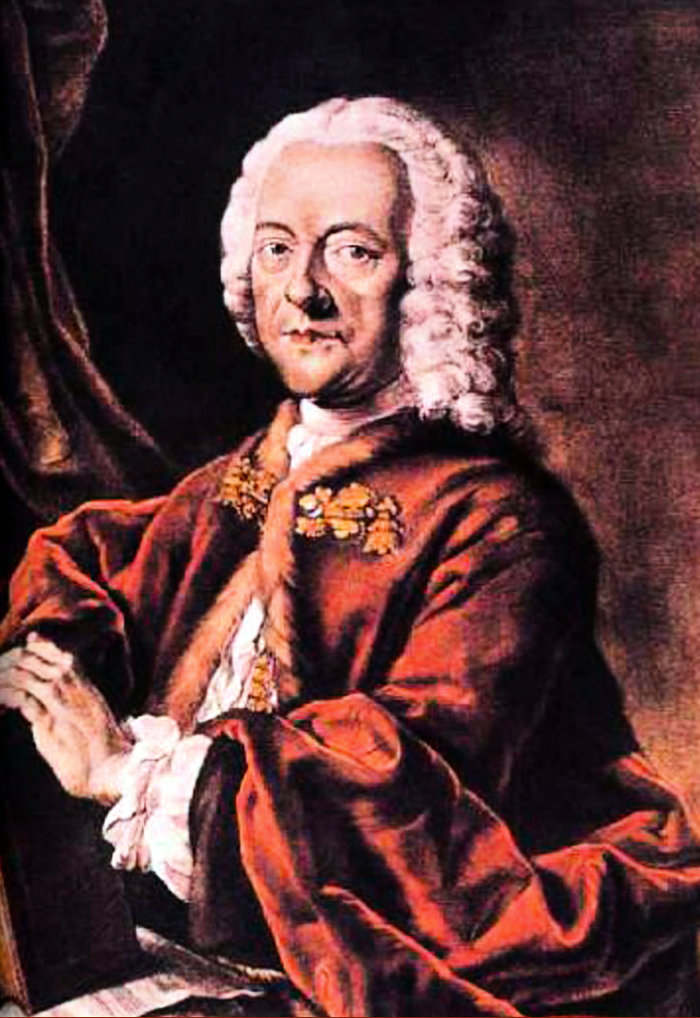 Grove: “125 orchestral suites, 125 concertos (for one to four soloists or without soloists), several dozen other orchestral works and sonatas in five to seven parts, nearly 40 quartets, 130 trios, 87 solos, 80 works for one to four instruments without bass and 145 pieces for keyboard (excluding two collections containing 50 minuets apiece).” But that’s just a small part of his output: church music constituted the bulk of it, and here the numbers are eye-popping: Telemann wrote more than 1700 cantatas! He also wrote several dozen operas. This creates a problem of vast proportions: how can we practically assess Telemann’s output, how can we compare the quality of different pieces, establish a “hierarchy” which may not be totally proper but could be useful in education and promotion of his music? Mozart wrote 41 symphonies, not all of them are equal but public perception is clear about the last three: they are considered his crowning achievement. Same is true with practically all other classical composers. But who would help us with Telemann? Was there a person who’ve heard, or at least read all of his music? Probably not. That makes listening to Telemann a rather frustrating experience, as what we hear (and what is being performed) is practically random. And Telemann was an uneven composer: some of his pieces are clearly rather mediocre, but some are absolutely superb. Philipp Spitta, the German music historian and musicologist who wrote a magisterial biography of Johann Sebastian Bach, held Telemann in low esteem and compared, unfavorably, some of his cantatas to those of Bach. Albert Schwetzer seconded Spitta in his own biography of Bach. Now we know that some of those “Bach” cantatas were actually written by Telemann. So how many more gems are we missing? Here, for example, is one of them, in this case one of Telemann’s Darmstadt Overtures (in D Major). The Cologne Chamber Orchestra is conducted by Helmut Müller-Brühl.
We’d also like to note the German conductor Hans Knappertsbusch, who was born on March 12th of 1888. Knappertsbusch was a leading interpreter of the music of Wagner. Politically a conservative, he nonetheless never joined the Nazi party, even though he was pressured into it and his contract with the Munich Opera was revoked (but later restored). He had many minor run-ins with the Nazis; what saved him was his popularity both with the German public and internationally. In 1944 he was included in the expanded Gottbegnadeten-Liste ("God-gifted list" or "Important Artist Exempt List") of the artists considered by the Nazis to be critically important to German culture. On that list were also Herbert von Karajan, Karl Böhm, Eugen Jochum and Wilhelm Furtwängler, although Furtwängler was later removed from the list. After the war Knappertsbusch lived in Munich; he conducted the first season of the reopened Bayreuth Festival from 1951 and continued conducting there for several years to great acclaim. He died in Munich on October 25th of 1965.
Read more...Gesualdo and more, 2020
This Week in Classical Music: March 2, 2020. Composers and conductors. Seven talented composers were born this week. The oldest (and one of our favorites) is Carlo Gesualdo, Prince 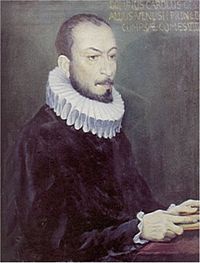 of Venosa and Count of Conza; he was born in Venosa on March 8th, 1566. Many of us know the extraordinary story of Gesualdo killing his wife and her lover whom he found in flagrante in his home, Palazzo di Sangro in Naples. His music is not as well known, which is a unfortunate, as Gesualdo had an enormous talent. He spent two years in Ferrara, then a major musical center, meeting with and listening to the music of the best Italian composers of the time (while there, he also married the Duke’s niece, Leonora d'Este). And while in Ferrara, he published the first four books of madrigals (eventually he’d publish two more). Luzzasco Luzzaschi was one of the Ferrarese composers who probably affected Gesualdo the most. He returned to the Gesualdo castle at the end of 1595 and remain there, secluded most of the time, for the rest of his life. Existing accounts of his moods and “melancholy” suggest that he was clinically depressed, which didn’t prevent him from composing both religious and secular music. Here’s Gesualdo’s sacred vocal piece for five voices, Tribulationem et dolorem inveni, composed in 1603. It was recorded in 1992 by Oxford Camerata, Jeremy Summerly conducting.
Antonio Vivaldi was born on March 4th of 1678 in Venice, more than a century after Gesualdo. By then the Baroque style was all the rage. Famous during his lifetime (his influence on Bach, who made a number of transcriptions of Vivaldi’s works, is well known), Vivaldi was almost forgotten by mid-18th century and rediscovered only in the 20th century. His Four Seasons remain (excessively) popular, but thanks in large part to Cecilia Bartoli, we’re now familiar with his operas too. Out of almost 500 instrumental concertos (many for the violin) some are very good, other are routine. Here’s an example of Vivaldi’s church music, Sileant Zephyri from his motet Filiae maestae Jerusalem performed by Philippe Jaroussky and his Ensemble Artaserse.
Carl Philipp Emanuel Bach, the fifth child of Johann Sebastian, was also born this week, on March 8th of 1714 in Weimar. While his father loved Vivaldi’s music, Carl Philipp Emanuel, like most German composers of his generation, was quite critical of him. And here are other composers also born this week: Maurice Ravel, Bedřich Smetana, Heitor Villa-Lobos, and Kurt Weill.
Bernard Haitink will celebrate his 91st birthday on March 4th, and the late Lorin Maazel would’ve been 90 on March 6th.
Read more...Antonio Vivaldi - Sileant Zephyri, from Filiae Maestae Jerusalem
Philippe Jaroussky (Countertenor)
Ensemble Artaserse (Ensemble)
Carlo Gesualdo - Tribulationem et dolorem
Oxford Camerata (Ensemble)
Jeremy Summerly (Conductor)
Chopin and his interpreters, 2020
This Week in Classical Music: February 24, 2020. Chopin and his interpreters. Next Sunday, March 1st is Frédéric Chopin’s 210th birthday. We’ve been writing about the great composer practically every year but not about some of the famous interpreters of his music. Last 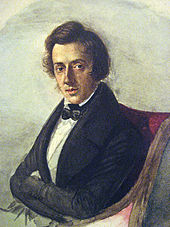 week we promised to get back to Benno Moiseiwitsch, who was born in Odessa on February 22nd of 1890. At the age of nine he won the Anton Rubinstein Prize (not to be confused with the Arthur Rubinstein competition, held in Tel Aviv since 1974) and five years later, in 1904, moved to Berlin to study with Theodor Leschetizky. He stayed in Berlin for four years after which his family moved to England. He played his London debut concert in 1909. After WWI Moiseiwitsch engaged in many tours in the US and Europe and for a while taught at the Curtis Institute, where Josef Hofmann was the director. In 1937 he took British citizenship. Rachmaninov used to say that Moiseiwitsch plays his music better than he, Rachmaninov, did. Here’s Benno Moiseiwitsch playing Chopin’s Scherzo No. 3 in C sharp minor Op. 39. This recording was made in 1949. And here he’s playing Chopin’s Nocturne in E Op. 62 No. 2. This one was made later, in 1958, when Moiseiwitsch was 68. Benno Moiseiwitsch died in London on April 9th of 1963.
Myra Hess and Lazar Berman were also born this week. Hess is just three days younger than Moiseiwitsch: she was born on February 25th of 1890. Moiseiwitsch moved to London as a teenager, Hess, also Jewish, was born there. Hess is better known for her interpretations of Bach, Mozart and Beethoven, and of course, for the courageous free concerts she gave in London during WWII while the Germans were bombing the city, but she also played Chopin. Here’s a wonderful, unhurried 1949 live recording of Myra Hess playing Chopin Fantasie in F minor Op. 49.
The Russian-Jewish pianist Lazar Berman would be 90 on February 26th: he was born in Leningrad (now St-Petersburg) on that day in 1930. Berman was a tremendous virtuoso and a great Lisztian but his repertoire was broad and of course Chopin was part of it. Here, from 1973, his recording of Chopin’s Polonaise in A-flat major op.53, "Héroique."
Read more...Frédéric Chopin - Polonaise in A flat Major, Op. 53
Lazar Berman (Piano)
Frédéric Chopin - Fantasy in F minor Op.49
Myra Hess (Piano)
Frédéric Chopin - Nocturne in E Major, Op. 62, No. 2
Benno Moiseiwitsch (Piano)
Frédéric Chopin - Scherzo No. 3 in c-sharp minor, Op. 39
Benno Moiseiwitsch (Piano)
Georg Philipp Telemann - Overture in in D major, TWV 55:D
Cologne Chamber Orchestra (Ensemble)
Helmut Müller-Brühl (Conductor)