
Galuppi, 2017
October 16, 2017. Galuppi. Franz Liszt was born this week and so was Charles Ives, but we’ve written about both extensively in the past. Luca Marenzio, a wonderful Italian madrigalist of the late Renaissance was also born this week, we celebrated him a year ago (here is his Là dove sono i pargoletti Amori, performed by Concerto Italiano, Rinaldo Alessandrini conducting). We’ve never 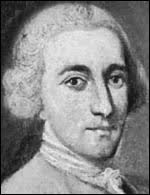 written about Baldassare Galuppi, though, and while he’s not one of the greats, he composed some very interesting music. Galuppi was born on October 18th of 1706 in Burano, an island in the Venetian lagoon almost as famous for its lace-making as Murano, an island nearby, is for its glass. Galuppi took music lessons with Antonio Lotti, the organist at San Marco. As a teenager he wrote an unsuccessful opera and at the age of 20 left Venice for Florence to work as a cembalist at the Teatro della Pergola. He returned to Venice in 1728 and continued composing and performing, although still without much success. In Venice of the time, Antonio Vivaldi ruled over the musical scene, and as for operas, Neapolitan productions were in vogue. In 1740 Galuppi was appointed the music director at the Ospedale dei Mendicanti, run by the Mendicanti friars. Mendicanti was an important institution, not just a hospital but also a school (especially for abandoned girls) and a shelter for lepers. Antonio Vivaldi’s father taught music there some years earlier. Galuppi’s responsibilities included teaching and composing. Less than a year into the contract with Mendicanti, Galuppi asked for permission to go to London. He stayed there for a year and a half and produced 11 operas, three of them his own. Apparently, Handel visited some of Galuppi’s productions. He returned to Venice in 1743; he continued composing operas, but his style was changing: in addition to opera seria (serious opera), in which he often cooperated with the famous librettist Metastasio, he tried himself in the new Dramma giocoso, (“drama with jokes”), the “new and improved” comic opera buffa. His new operas were more successful; Galuppi was also advancing professionally – in 1748 he was made the vice-maestro at San Marco. An even more consequential event took place a year later, when Galuppi started his collaboration with Carlo Goldoni, the famous playwright and librettist. In May of 1749, Galuppi wrote Arcadia in Brenta on Goldoni’ libretto. It was a big success, and by the end of the same year, they produced four more operas. Altogether, Galuppi and Goldoni created 18 more. Galuppi was so busy that he had to resign from Mendicanti. By the middle of the 1750s he was the most popular opera composer in all of Europe (Rameau and Gluck were probably very envious). In 1762, Galuppi was made maestro di capella of San Marco, the most important musical position in Venice.
In 1764 Catherine the Great, the Empress of Russia, requested that Galuppi come to St.-Petersburg to be her court composer and conductor. Many Italians were working for Catherine, but Galuppi was reluctant; he agreed to go to Russia only on the condition that he retain his position at San Marco, of which he was assured by the Venetian authorities. After visiting C.P.E. Bach in Berlin, Galuppi arrived in St.-Petersburg in September of 1765. He stayed there for three years, composing two operas and two cantatas. He also gave weekly harpsichord concerts and conducted the court orchestra, which needed much work. As agreed, he stayed in St-Petersburg for three years and in 1768 returned to Venice. In his last years he wrote more secular music, but continued with the operas (in all, he wrote almost 100). Charles Burney, the British music historian of the time, who was acquainted with Galuppi, thought that “like Titian’s,” Galuppi’s work got better as he got older. He wrote his last opera, La serva per amore, in 1773. He died on January 3rd of 1785.
Opera was not the only genre in which Galuppi worked. He composed many masses and other sacred music. He also wrote a large number of keyboard pieces. Here’s his Sonata in C Major, performed by another great Italian, Arturo Benedetti Michelangeli. (A note: Emil Gilels was born on October 19th of 1916, we’ll write about him next week.)
Read more...Andrew Ezell (BigDru) Wash - Lavish
Andrew Ezell Wash (Soprano)
Verdi and more, 0217
October 9, 2017. Verdi, Saint-Saens and more. The great Italian opera composer Giuseppe Verdi was born on this day – or maybe on the following day, October 10th, as we only know that 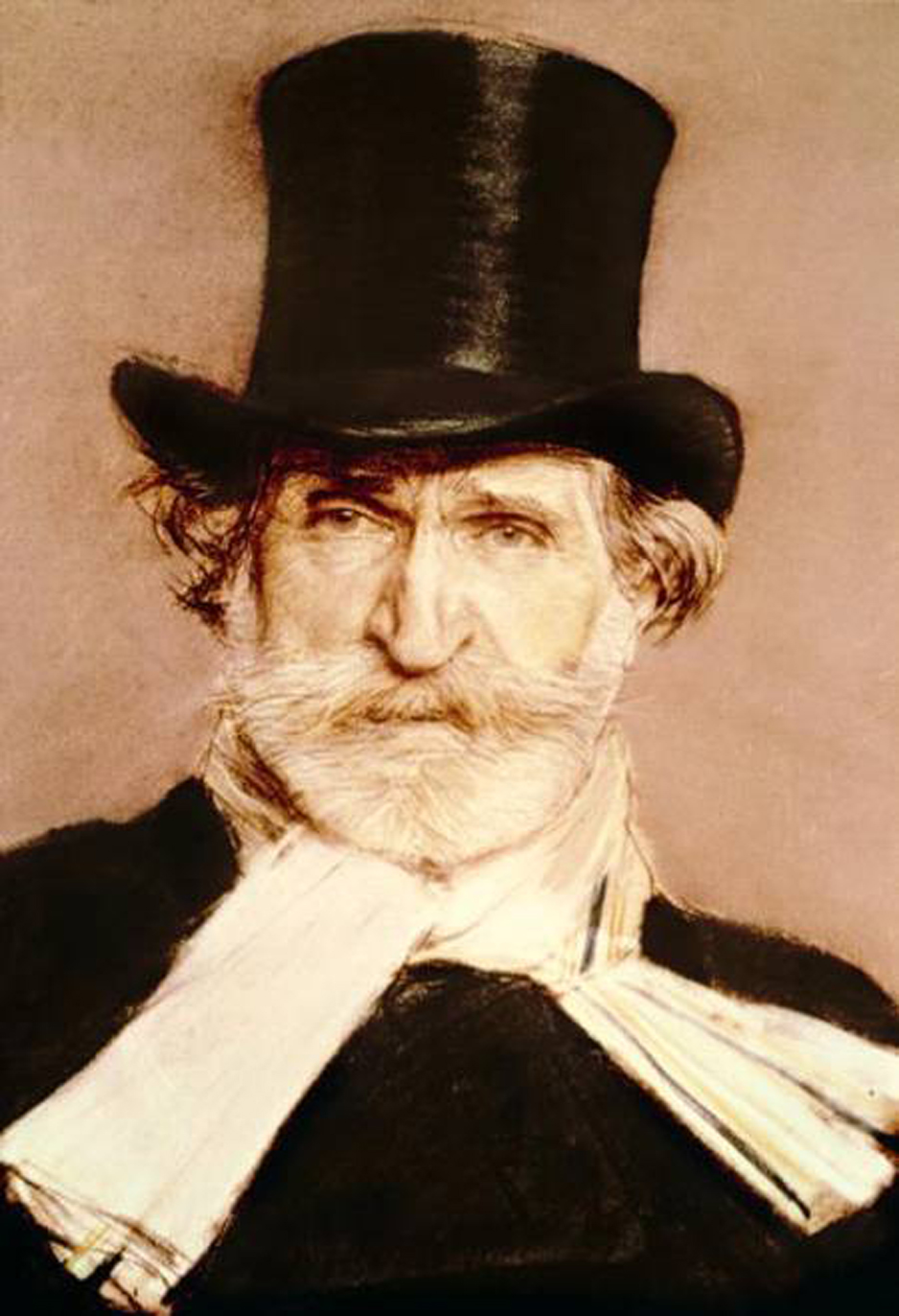 he was baptized on the 11th – in 1813, in Roncole, a small village in the province of Parma. The “national composer” of Italy, Verdi created 25 operas. Not all of them are staged today, but the majority represent the absolute best in the opera repertory. Verdi’s musical genius came into full force when he was approaching 40: just in three years he created three operas which haven’t left the stages of major theaters since their premiers: Rigoletto, first staged in La Fenice in Venice in March of 1851, Il Trovatore, premiered in Rome in 1853, and La Traviata, also in La Fenice in March of 1853. There is so much music in Rigoletto that it could fill several operas: every one of its three acts has something memorable, from Addio, addio and Caro nome in Act I, to Cortigiani, vil razza dannata, Tutte le feste al tempioi and Sì! Vendetta, tremenda vendetta! in Act II, to the ever popular La donna è mobile and the famous quartet Bella figlia dell’amore in Act III and so much more. A fitting tribute to Verdi would be to play the complete Rigoletto, but of course it’s not practical. Instead, we’ll play two excerpts, first, the duet Tutte le feste al tempio (Each holy day, in church) from Act II, with Maria Callas as Gilda and the great baritone Titto Gobbi as Rigoletto; Tullio Serafin conducting the La Scala orchestra in this 1955 recording (here). Then comes Bella figlia dell’amore, with Luciano Pavarotti, Joan Sutherland, Leo Nucci and Isola Jones. Riccardo Chailly conducts the Metropolitan Opera (here).
Camille Saint-Saëns was also born on this day, in 1835. A prolific composer, Saint-Saëns lived a long life: he died in 1921, three years after Debussy. While he had major melodic talent, he was a composer of conservative tastes; his music was rather conventional from the beginning; by the end of his life it sounded quite dated. Saint-Saëns wrote in many genres: orchestral music (his Third “Organ” Symphony is still popular), five piano concertos (the Second is regularly performed), three violin concertos, one concerto for the cello, and several operas, one of which, Samson and Dalilah is still staged quite often. We can “compare and contrast” it with Rigoletto: here’s Dalilah’s aria, performed by Maria Callas in 1961, the same Callas as we heard in Tutte le feste. By then her voice was not the same; still, it’s a lovely performance, and so is the music. Georges Prêtre conducts The French National Radio Orchestra.
One of the greatest pianists of his generation, Evgeny Kissin was born on October 10th of 1971 in Moscow. He entered the Gnessin Music School at the age of 6. His first, and, amazingly, only teacher was Anna Kantor. He was 10 when he publicly played his first piano concerto (Mozart’s Twentieth); at the age of 12 he played Chopin’s First and Second concertos at the Great Hall of Moscow Conservatory. In 1988 he famously played Tchaikovsky’s First with Karajan and the Berlin Philharmonic. He made his American debut in 1990, a year later he moved to New York. In the subsequent years he also lived in London and Paris, and, since marrying his childhood friend Karina Arzumanova, he moved to Prague. Here he plays Prokofiev’s Piano Concerto No.2 in G Minor Op.16. Vladimir Ashkenazy conducts the Philharmonia Orchestra.
Read more...Sergei Prokofiev - Piano Concerto No.2 In G Minor Op.16
Evgeny Kissin (Piano)
Philharmonia Orchestra (Orchestra)
Vladimir Ashkenazy (Conductor)
Giuseppe Verdi - Tutte le feste al tempio, from Rigoletto
Maria Callas (Soprano)
Tito Gobbi (Baritone)
Orchestra of the La Scala (Orchestra)
Tullio Serafin (Conductor)
Arthur Foote - Piano Trio No. 2, Op. 65
Neave Trio (Trio)
Leonard Bernstein - Piano Trio no. 2
Neave Trio (Trio)
Beethoven, Symphony no. 8, 2017
October 2, 2017. Beethoven Symphony No. 8. This week we’re publishing Joseph DuBose’s article on Symphony no. 8 in F major by Ludwig van Beethoven. And again, as with all other symphonies, the problem is in selecting a performance to illustrate the article: there are too many great ones. We decided on the 1978 recording made by Herbert von Karajan with the Berlin Philharmonic Orchestra. You can listen to it here. The 1st movement is Allegro vivace e con brio (0:01), the 2nd, Allegretto scherzando starts at 9:21, the 3rd, Tempo di menuetto -- at 13:18, and the 4th, Allegro vivace -- at 19:16. ♫
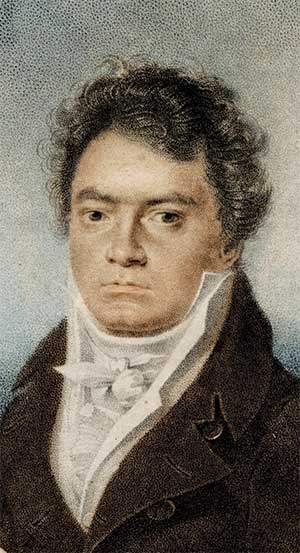 The Eighth Symphony was begun immediately after the completion of the Seventh. Its manuscript, which escaped the fate of that of its predecessor, is dated October 1812, meaning it was completed in a roughly four-month span. This makes it an exception to Beethoven’s usual method of composing, since his symphonies were usually sketched during the summer months, then worked out and put into full score during the winter in Vienna.
What is truly remarkable of the work is its humorous disposition considering the events that were then taking place in Beethoven’s life. In this manner, it is like the ebullient Second that so completely and effortlessly masked the inner torment that found its outlet in the famous Heiligenstadt Testament. Besides his increasing deafness, Beethoven’s health was already becoming problematic by this point in his life. Yet, of further grief to the composer was a quarrel with his brother Johann. Johann had been living with a woman named Therese Obermeyer, whom Beethoven absolutely loathed and disparagingly nicknamed “Queen of the Night.” Beethoven set out with the singular purpose of putting an end to the relationship. For what reason other than his disdain for Obermeyer is not known, but his actions certainly give credit to Goethe’s description of Beethoven as “an entirely uncontrolled person.” The confrontation between the two brothers was in all probability a mighty din.
To Beethoven’s chagrin, Johann emerged the victor when he married Therese Obermeyer on November 8th. Yet, despite this family feud, Beethoven enjoyed pleasant accommodations at his brother’s house, and the surrounding landscape provided him with ample scenery for his many romps through nature. Progress on the Eighth Symphony was unhindered, though some of its passages, no doubt, did not escape Beethoven’s furious temper at this time. (Continue reading here).
Read more...Ludwig van Beethoven - Symphony no. 8 in F Major
Berlin Philharmonic Orchestra (Orchestra)
Herbert von Karajan (Conductor)
Baldassare Galuppi - Sonata No.5 in C major
Arturo Benedetti Michelangeli (Piano)