
Rameau and Shostakovich, 2017
September 25, 2017. Rameau and Shostakovich. It is rather unfortunate that Jean-Philippe Rameau, the great French composer, and Dmitry Shostakovich, one of the most important Soviet 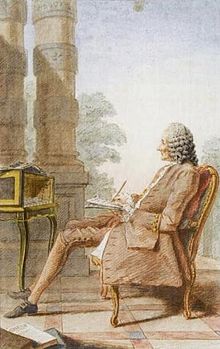 composers, were born on the same day, September 25th, one in 1683, another almost two and a half centuries later, in 1906. So different were the societies into which they were born, the cultures, the prevailing musical styles that it’s almost impossible to write about them in one post. The only thing that their lives had in common is that both lived in absolutist countries: Rameau, under the benign regimes of Louis XIV and his great-grandson, Lois XV, Shostakovich – under the murderous one of Stalin.
We know surprisingly little about Rameau’s first 40 years. He was born in Dijon. His father was an organist and gave Jean-Philippe music lessons, starting at an early age. Jean-Philippe studied at the Jesuit Collège des Godrans in Dijon. After finishing school, he went on a short trip to Italy, and stayed in Milan. In 1702, he was appointed a music master at the Cathedral of Notre Dame des Doms in Avignon and stayed there for four years. After that, he worked in several provincial towns, before returning to Dijon in 1709 to take his father’s position as the organist at Notre Dame. He eventually moved to Clermont to work as an organist there. We know that during those years he was already composing, most likely motets, but nothing significant has survived.
In 1722 Rameau moved to Paris, the only place in centralized France where a musician could build a significant career. As a composer, he was practically unknown. His first step was to publish Traité de l'harmonie, a work on music theory, which was soon followed by the Nouveau système de musique théorique, another theoretical work that made him famous not only in France, but in England as well. He continued to compose but mostly for the harpsichord, although he was already interested in writing operas (circumstances wouldn’t allow for that to happen till 1733). In the meantime, he was earning his living by teaching. In 1732, he convinced the playwright Simon-Joseph Pellegrin to create a libretto for him. Based on Racine’s Phèdre, it was called Hippolyte et Aricie. The opera premiered on October 1st of 1733 in the theatre of Palais-Royal. André Campra, a major opera composer of the time, said, upon listening to Hippolyte: “There is enough music in this opera to make ten of them; this man will eclipse us all.” At the time, Rameau was 50 and at the beginning of his real career, as a tremendously productive opera composer. Working almost exclusively in that genre, he wrote 32 operas. One of the most successful was Dardanus, but not till Rameau rewrote almost half of it: the first edition was premiered in 1739 and was criticized for a weak libretto; the second, the one that is being staged these days, was created five years later, in 1744. Here’s a suite based on Dardanus. Tafelmusic orchestra is conducted by Jeanne Lamon. And here, to give the impression of the vocal part, is the aria Lieux funestes from the 4th act of the opera. The Scottish tenor Paul Agnew is Dardanus; Antony Walker conducts the Orchestra of the Antipodes.
Even though we have little space left, we can’t not mention Dmitry Shostakovich. In his symphonies, Shostakovich felt obligated to toe the line of Socialist Realism; with his phenomenal ear, he picked up the style and the melodies that, he hoped, would embody Soviet realities and please the Party cultural inquisitors. In most cases it worked, in some he was severely criticized. The smaller form, quartets, for example, were not so visible, and here Shostakovich could allow himself to be less political. Here’s one, Quartet no. 3 in F Major, op. 73. It’s performed by the Fitzwilliam String Quartet.
Read more...Dmitry Shostakovich - String Quartet No. 3 in F major, op. 73
Fitzwilliam String Quartet (Quartet)
Jean-Philippe Rameau - Lieux funestes, from Dardanus
Paul Agnew (Tenor)
Orchestra of the Antipodes (Orchestra)
Antony Walker (Conductor)
Robert Schumann - Faschingsschwank aus Wien, Op. 26 (Carnival of Vienna)
Juan Carlos (Piano)
Claude Debussy - Estampes
Juan Carlos (Piano)
Federico Mompou - Musica Callada
Johan Bril (Piano)
Claude Debussy - La Fille aux cheveux de lin, from Préludes Book 1, No. 8
Armando Vazquez (Clarinet)
Čiurlionis, 2017
September 18, 2017. Čiurlionis. Here’s a composer whom we’ve managed to overlook all these years: Mikalojus Čiurlionis. He’s celebrated in Lithuania the way Smetana and Dvořák are celebrated in the Czech Republic – as a national composer. But he was more than that, he was also a very interesting painter. Čiurlionis was born onSeptember 22nd of 1875 in the south of Lithuania, in a village of Senoji Varėna which was then part of the Russian Empire. Though Lithuanian by nationality, the family’s language was Polish, as was customary 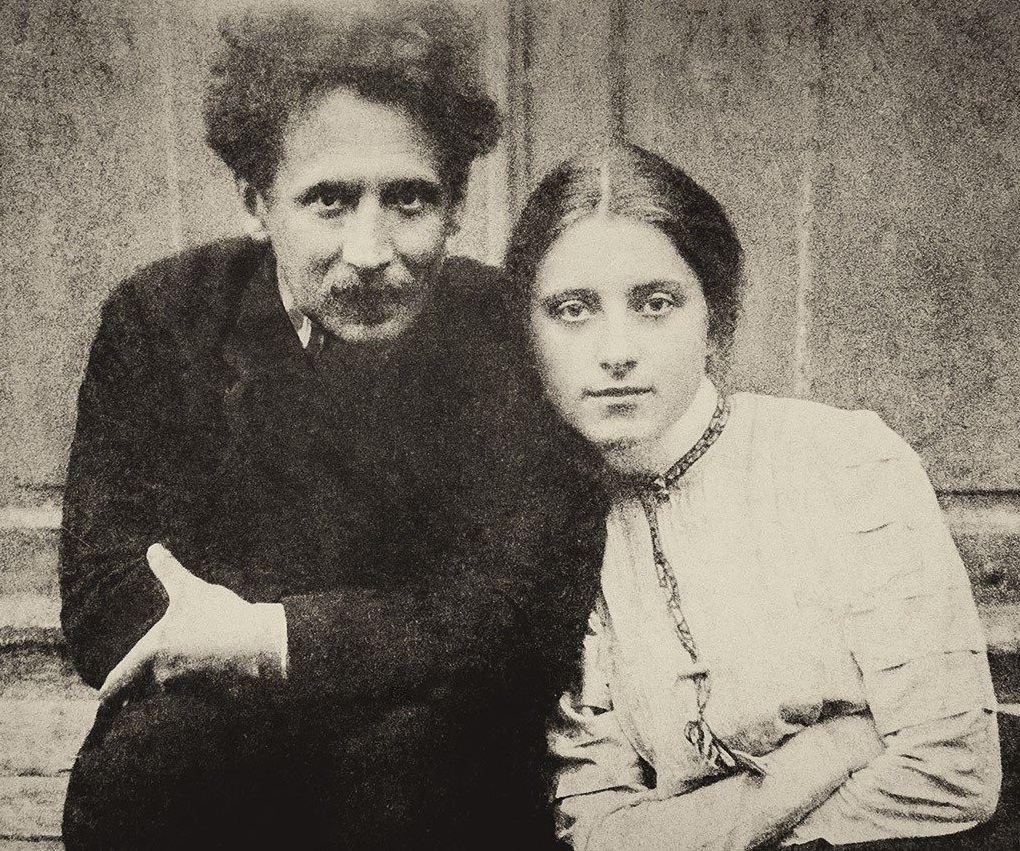 with the educated Lithuanians of that time (the upper-class Russians used to speak better French than Russian). The triad of cultures, Lithuanian, Polish and Russian was to influence Čiurlionis’s life and creative development. When Mikalojus was two, the family moved to Druskininkai, a pretty spa town on the river Neman. There his father worked as a church organist. Musically talented, Mikalojus started playing piano by ear at the age of four and could fluently read music at seven. In 1889, he was sent to a music school in the town of Plungė. The school was established by Prince Michał Ogiński, a Polish nobleman and diplomat, who served as a Senator to Czar Alexander I of Russia. Ogiński was also an amateur composer, the author of the so-called Oginski Polonaise, very popular in Russian and Poland. On a scholarship Mikalojus was sent to the Warsaw Conservatory, where he studied for five years, from 1894 to 1899. Čiurlionis started seriously composing around 1900. He briefly studied at the Leipzig Conservatory, but by 1902 was back in Warsaw. It was there that he started painting and two years later entered the newly-established Warsaw School of Fine Arts.
In 1905, he traveled to the Caucuses and was enthralled by the landscape and the local. 1905 was the year of the Revolution in Russia. Even though in the end it didn’t amount to much, it stirred up national movements in countries on the periphery of the Russian Empire. Čiurlionis returned to Lithuania in 1907, settled in Vilnius and became very active in the arts movement, both visual and musical. He organized the first Lithuanian Arts exhibition, and also became very interested in Lithuanian songs and folk music, like Bartók and Kodály in Hungary. Till that time his knowledge of the Lithuanian language was limited, Polish being his native tongue, but he met a young woman, Sofija Kymantaitė, who agreed to teach him _-_1905.jpg "Ciurlionis, Creation of the world, X") Lithuanian. Soon she became his wife. This was a time of great creative activity, as he was painting and composing music at a great pace. In 1908 Čiurlionis went to St. Petersburg, where he became involved with the painters of the Mir Iskusstva. His music was performed in the leading salons of the Russian capital, while his art was displayed by the Union of Russian Artists. Unfortunately, by the end of 1909, even as his career was on an upswing and he was feted by the major artists and musicians, he descended into a severe depression. He returned to Druskininkai and then was moved to a sanatorium outside of Warsaw. In April of 1911, while there, he caught a cold, developed pneumonia and died on April 10th. He was 35.
Lithuanian. Soon she became his wife. This was a time of great creative activity, as he was painting and composing music at a great pace. In 1908 Čiurlionis went to St. Petersburg, where he became involved with the painters of the Mir Iskusstva. His music was performed in the leading salons of the Russian capital, while his art was displayed by the Union of Russian Artists. Unfortunately, by the end of 1909, even as his career was on an upswing and he was feted by the major artists and musicians, he descended into a severe depression. He returned to Druskininkai and then was moved to a sanatorium outside of Warsaw. In April of 1911, while there, he caught a cold, developed pneumonia and died on April 10th. He was 35.
Here’s Čiurlionis’s early big symphonic work, In the Forest, written in 1900. Vladimir Fedoseyev conducts the Moscow Radio Symphony Orchestra. The paining above is the tenth in his series, Creation of the World.
Read more...Mikalojus Čiurlionis - In the forest
Moscow Radio Symphony Orchestra (Orchestra)
Vladimir Fedoseyev (Conductor)
Jean-Philippe Rameau - Dardanus suite
Tafelmusic (Orchestra)
Jeanne Lamon (Conductor)