
Alban Berg 2017
February 6, 2017. Alban Berg. The great Austrian modernist composer Alban Berg was born on February 9th of 1885. When we celebrated him the last time two years ago, we wrote about his first opera, Wozzeck, which was completed in 1922. Wozzeck was a huge 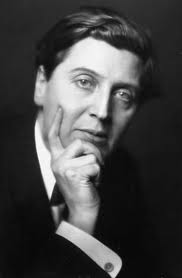 success, which speaks volumes of the Viennese musical sensibilities – almost 100 years later, it is still considered a “difficult” opera. Vienna was full of contradictions: on the one hand, it was the city where Schoenberg, Webern and Berg were acknowledged as masters and accepted by the artistic community; at the same time, it was more conservative than probably any other European capital, anti-Semitic, clinging to the vestiges of the lost empire. Greatly diminished in the aftermath of the Great war, Vienna was the capital of a small country, not an Empire. Austria even wanted to join Germany as a province, but the Allies wouldn’t have it. At the beginning of the 20th century Vienna was one of the world centers of music, if not the center, but by mid-1920s many musicians started moving from Vienna to Berlin; back then, as now, Berlin was seen as a more open, exciting cosmopolitan city. Composers Franz Schreker, whose operas were almost as famous as Richard Strauss’s, and Ernst Krenek left Vienna. Alexander von Zemlinsky, the famous composer and an important figure in the Viennese musical cultural life, also moved to Berlin. Even Schoenberg himself was spending more time in Berlin than in Vienna. As Michael Haas, a music producer and writer points out, conductors Fritz Stiedry, who assisted Mahler in his youth, Georg Szell, and Erich Kleiber, all at some point active in Vienna, also left the city. Still, even with these losses, the musical life of Vienna was vibrant. The Vienna Philharmonic was still considered one of the best orchestras in the world and practically all prominent musicians performed there.
Berg is best known as the creator of two seminal operas, the already-mentioned Wozzeck and Lulu, on which he started working in 1928 and continued for the rest of his life, leaving it incomplete on his death in 1935. The period between these two major compositions was also very productive. One of the more interesting pieces written during this time was Kammerkonzert (Chamber Concerto), a composition for Piano and Violin with 13 Wind Instruments. Even though it was composed in the 12-tone technique, Berg’s innate lyricism shines through, softening its very rigorous structure. Concerto was written in honor of Schoenberg’s 50th birthday, and Berg decided to create the main theme (or, rather, the main tone sequence) out of the names of Schoenberg and his two favorite pupils’, Anton Webern’s, and his own. In German musical notation, B is what in English is called B flat, while the English B is called H; the flat sign is “-es.” Therefore, “ArnolD SCHoenBErG” turned into the sequence of A–D–E-flat–C–B–B-flat–E–G. From “Anton wEBErn” he derived A–E–B flat–E, and from his own name, “AlBAn BErG,” A–B-flat–A–B-flat–E–G. Berg then went on to invert the theme, mirroring all intervals in the opposite direction, so that, for example, a third up became a third down. He then “retrogrades” it, running the sequence from the end to the beginning. Despite this scientific, almost mathematical approach, the music retains its undeniable warmth. Of course it’s not an easy listening, and we have to apologize for presenting two difficult pieces two weeks in a row (last week it was Luigi Nono’s Como una ola de fuerza y luz). Here’s Kammerkonzert, performed by Staatskapelle Dresden, Giuseppe Sinopoli conducting. The pianist is Andrea Lucchesini, the violinist – Reiko Watanabe.
Read more...Teo Milea - Silence
Teo Milea (Piano)
Schubert, Mendelssohn and Nono, 2017
January 30, 2017. Schubert, Mendelssohn and Nono. Two great German composers – and two prodigies – were born this week, Franz Schubert, on January 31st of 1797, and Felix Mendelssohn, on February 3rd of 1809. We’ve written about Schubert, a supreme melodist and one of 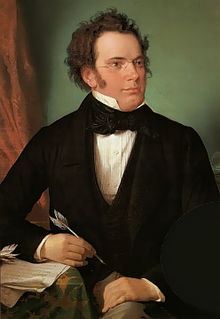 the most creative composers of the 19th century, practically every year. And last year, we wrote rather extensively about Mendelssohn. So this year we’ll present some of their music and then turn to a lesser known talent. Schubert is rightly famous for his songs. He wrote several cycles, two of which, Die schöne Müllerin and Winterreise, are considered the pinnacle of the German “lied.” He also wrote numerous individual songs, and Nacht und Träume (Night and Dreams) is one of them. Very difficult because of its exceedingly long melodic lines, it’s beautifully sung here by Nicolai Gedda. Gerald Moore is at the piano. Mendelssohn also wrote songs, eight books of them, but his were "Songs without words." Each book contains six short piano pieces, some very simple, some a bit more difficult, but all charming. Here’s Op. 19 no. 4, played by almost everybody who ever studied the piano, but probably not as exquisitely as Daniel Barenboim does in this recording. And slightly more challenging is Op.30 no. 2, here, also by Barenboim.
We just missed the birthday of Luigi Nono by one day – he was born January 29th of 1924 in Venice. He studied composition in his hometown with Gian Francesco Malipiero from 1941 to 1945. In 1946 he met Bruno Maderna, a modernist composer four years his senior, and they became friends for life.
Maderna got in touch with the Darmstadt courses in 1949; in 1950 both he and Nono went there for the summer, with Nono attending classes by Edgar Varèse. Nono continued going to Darmstadt for many years and from 1957 on he taught there every year. Through their work at Darmstadt, Nono, Boulez and Stockhausen, all three under 30, became known as leaders of the European avant-garde music. Politically active, Nono was involved in leftist causes. He wrote many pieces for human voice (often accompanied by tape recordings) for which he used text by Karl Marx, Fidel Castro, Che Guevara and other revolutionaries. Obviously, that’s not what have made them interesting, his music did. In 1971, on suggestion by Maurizio Pollini, Nono started working on a piece for piano and orchestra called Como una ola de fuerza y luz (Like a wave of strength and light). While still working on it, he had learned of the death of his friend Luciano Cruz, the leader of The Revolutionary Left Movement in Chile. (It’s not clear who killed Cruz but CIA reports suggest that it was a result of the rivalry on the Left during the Allende presidency). Nono changed his plans and created a piece for orchestra, solo soprano, piano, a chorus recorded on tape and other pre-recorded sounds. A complex composition, it demonstrates an amazing evolution of how we perceive the organized sound that we call music. Written 140 years after Schubert and Mendelssohn’s songs, it completely abandons tonality and uses sound sources that were never considered before. Even 46 years later, it’s not easy listening. Still, it’s worth a try, even if in small dozes (the complete piece runs for about 30 minutes). The sounds (and silences) of it, the juxtapositions of fury and serenity, are at times profound. Here it is, with Claudio Abbado conducting the Bavarian Radio Orchestra. Maurizio Pollini is on the piano, Slavka Taskova is the soprano.
Read more...Luigi Nono - Como Una Ola De Fuerza Y Luz
Bavarian Radio Orchestra (Orchestra)
Maurizio Pollini (Piano)
Slavka Taskova (Soprano)
Claudio Abbado (Conductor)
Franz Schubert - Nacht und Träume
Nicolai Gedda (Tenor)
Gerald Moore (Piano)
Felix Mendelssohn - Songs Without Words Op. 30, No. 2
Daniel Barenboim (Piano)
Felix Mendelssohn - Songs without Words Op. 19, No. 4
Daniel Barenboim (Piano)
Béla Bartók - Piano Sonata
Michael Refvem (Piano)
Franz Liszt - Hungarian Rhapsody No. 13 in A Minor
Michael Refvem (Piano)
Alban Berg - Kammerkonzert
Staatskapelle Dresden (Orchestra)
Andrea Lucchesini (Piano)
Reiko Watanabe (Violin)
Giuseppe Sinopoli (Conductor)