
Wolfgang Amadeus Mozart - Duo for Violin and Viola, K. 423
Jasmine Lin (Violin)
Anthony Devroye (Viola)
Handel 2017
February 20, 2017. Handel. George Frideric Handel, one of the greatest composers of the Baroque, was born in Halle on February 23rd of 1685. We’ve written about him many times (here 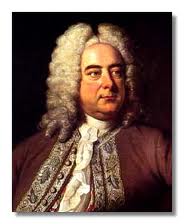 and here, for example), so on this occasion we’ll look into a period of his life following his departure from Italy. Handel lived there for about seven years, from 1703 to 1710. His operas, (especially Agrippina, which was staged during the Carnival in Venice at the end of 1709) and his oratorios and cantatas were so successful that by the end of his stay, while just 25 years old, he was already world famous. Among his admirers were Prince Ernst Georg of Hanover, and the Duke of Manchester, the English ambassador, both of whom invited Handel to their countries. Handel chose Germany and traveled to Hanover, where he was appointed Kapellmeister. We should remind ourselves of an unusual twist in the British royal lineage: by 1710 the Elector of Hanover, Georg Ludwig, was the acknowledged successor to the English throne and, upon Queen Anne’s death would become King George I of England. His son, Prince elector Georg II August, would become King George II. So, Handel was living at the court with intimate ties to Britain. Handel was given a big salary and a special travel allowance, which he used to travel to London in the autumn of 1710. London was always a musical city; one recent development at the time was the popularity of Italian operas, especially when sung by Italian castratos. Giovanni Bononcini was the acknowledged master of opera – that is till Handel’s arrival. As soon as he got to London, Handel set to work on a new opera; to speed up the process he reused some of the material he had written earlier in Italy. The opera was called Rinaldo, and the title role was sung by Nicolo Grimaldo, a castrato known as Nicolini. Nicolini, who became famous for performing major parts in operas by Alessandro Scarlatti, Porpora, Vinci and Bononcini, became one of Handel’s favorite singers. These days the role of Rinaldo is usually sung by mezzo-sopranos or countertenors; Cecilia Bartoli is one of the best interpreters (here she is in the famous aria Lascia ch'io pianga).
Rinaldo was a tremendous success but Handle had to return to Hanover, where he stayed for another year and a half. He obtained a leave from the court and moved to London by the end of 1712. There, he wrote two more operas, and even though they were not as successful as Rinaldo, which had continued to be staged practically every season; his popularity didn’t suffer. In the summer of 1714 the Elector of Hanover moved to London; on August 1st Queen Anne suffered a stroke and died, and George was proclaimed the King. Even though his relationship with Handel during the previous two years had gotten frostier (George resented that Handel preferred London to his court in Hanover) it became more cordial after the coronation. Te Deum and Jubilate, which Handel composed in 1714, were performed for the King, after which George doubled Handel’s salary. During the next five years, Handel didn’t write a single opera, concentrating instead on orchestral compositions and chamber pieces. His most successful composition of the period was Water Music, an orchestral suite written for George I to accompany him on his boat trip up the Thames. Water Music consists of three separate suites; here’s the first one, performed by the Academy Of St. Martin in the Fields under the direction of the late Neville Marriner.
Read more...Kazuo Missé - Le temps profond - 1st mov
Nicolas Horvath (Piano)
C K Poh - Morning Air
Chun Kit Poh (Piano)
Istituto Europeo di Musica - Celebrazioni per il ventennale 1997-2017: Annales
Davide Polovineo (Piano)
Marta Bizoń (attrice) (Duo)
Through the ages and countries, 2017
February 13, 2017. Through the ages and countries. This week affords us an unusually broad view of the development of European music, from the late 16th century to today. Michael 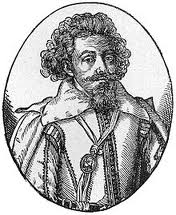 Praetorius was born in February 5th of 1571 in Creuzburg, Thuringia (other sources state his birthday as February 15th of that year). At the time, Germany’s musical culture was rather underdeveloped. There was a not a single significant German composer, whereas in Italy the late 16th century was considered late Renaissance: Palestrina and Lasso were born half a century before Praetorius, while Giovanni Gabrieli and Carlo Gesualdo were a generation older. Praetorius had a local musical education, and the only early encounter with a significant foreign composer that we are aware of was with John Dowland, who was invited by Duke Heinrich Julius of Brunswick-Wolfenbütte to meet with his court composer. In this sense Praetorius was a singularly German composer. Extremely prolific (he composed twelve hundred chorales) Praetorius exerted much influence over many composers, starting with the young Heinrich Schütz and through him on a generation of German musicians, including Johann Sebastian Bach. Later in life, when he was living and working in the cosmopolitan Dresden, he became more familiar with and influenced by the contemporary Italians; some of Praetorius’s compositions of the time clearly anticipate the arrival of the Baroque. In 1619, two years before his untimely death, Praetorius published a set of choral works called Polyhymnia Caduceatrix et Panegyrica. Here’s a wonderful chorale from that set, Puer natus in Bethlehem. It’s performed by the Gabrieli Consort.
Francesco Cavalli was born February 14th
of 1602, just some 30 years after Praetorius, but he belonged to a completely different musical world. Renaissance music, with its polyphony was a thing of the past; Claudio Monteverdi composed L’Orfeo, thus establishing the new musical form - opera. Cavalli, who was born in Lombardy, as a teenager moved to Venice where he was a singer at the St. Mark’s Basilica. Monteverdi was the music director there and became Cavalli’s teacher. Cavalli wrote his first opera in 1639 when he was already a mature composer (most of his early compositions were church music). He went on to write 41 operas, many of which survive to this day. Cavalli was instrumental in developing opera as a musical genre: when his started, opera was in its infancy, and by the time he wrote his last opera in 1673, it was a mature (and extremely popular) art. Here’s the aria Piante ombrose from his early opera, L'Amore Innamorato. Nuria Rial is the soprano. Christina Pluhar leads the ensemble L'Arpeggiata.
Another Italian, Arcangelo Corelli was born fifty years later, on February 17th of 1653. He grew up in the musical environment of flourishing Baroque. At the age of 13 Arcangelo moved to Bologna, one of the music centers of Italy, famous for a major school of violin playing. At the age of seventeen, already a fine violinist, Corelli became a member of the Accademia Filarmonica. He moved to Rome around 1675, where he found patrons in Queen Christina and, later, Cardinal Pietro Ottoboni. He performed, composed and taught: many of his pupils, such as Francesco Geminiani and Pietro Locatelli became famous as composers and violinist. Here’s Corelli’s Concerto Grosso, Op. 6 no.4 performed by I Musici.
We’ll skip Luigi Boccherini, a wonderful Italian composer of the classical era and jump straight into the 20th century. György Kurtág was born on February 19th of 1926. Together with his good friend György Ligeti, Kurtág is one of the most interesting contemporary composers. Here’s his Stele, performed by the Berlin Philharmonic under the direction of Claudio Abbado.
Read more...Francesco Cavalli - Piante ombrose, from L'Amore Innamorato
Nuria Rial (Soprano)
L'Arpeggiata (Ensemble)
Christina Pluhar (Conductor)
Michael Praetorius - Puer Natus in Bethelehem, from Polyhymnia Caduceatrix et Panegyrica
Gabrieli Consort & Players (Ensemble)
Paul McCreesh (Conductor)
Johannes Brahms - Cello Sonata No. 2 in F Major, Op. 99
Oliver Herbert (Cello)
Renana Gutman (Piano)
Béla Bartók - Selections from 44 Duos, Sz. 98
Jasmine Lin (Violin)
Anthony Devroye (Viola)