
Leopoldo Miguez - Nocturno in F-Sharp Major, Op.10
Victor Cayres (Piano)
Hugo Wolf 2017
March 13, 2017. Hugo Wolf, a wonderful composer of the German Lied, was born today in 1860. He lived a short life, dying of syphilis in 1903; he mentally deteriorated much earlier: his last song was written in 1898. What a scourge it was, 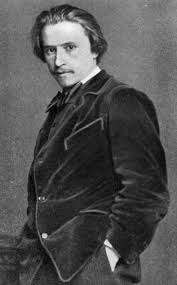 syphilis, before the invention of penicillin! Schubert died of it at the age of 31, and so did Schumann, just 46. It is thought that Beethoven’s deafness was brought on by syphilis. Gaetano Donizetti died suffering terribly, Frederick Delius went blind and became paralyzed, and Niccolò Paganini lost his voice, probably of the mercury treatment, which back then was considered a treatment for the terrible disease. The notion of a great composer suffering from syphilis was so common that Thomas Mann made it central in his great novel, Doktor Faustus, but with a literary twist: he had the protagonist, the composer Adrian Leverkühn, strike a bargain with the Devil, the disease as payment for being a genius. Mann studied Wolf’s biography and used some episodes to describe Leverkühn descending into madness.
Wolf was born in Duchy of Styria, then part of the Austrian Empire, now in Slovenia. A child prodigy, he started studying two instruments, the piano and the violin, at the age of four. When he was 11 he was sent to a boarding school at the Benedictine abbey of St. Paul in Lavanttal, Carinthia. There he played the organ, performed in a piano trio and studied operas by the Italian bel canto masters and Gounod. In 1875 he moved to Vienna to study at the conservatory. There he composed his first songs and made many friends, one of whom was Gustav Mahler (they were born just three months apart). While in Vienna, Wolf became an avid opera-goer; in 1875 he heard Tannhäuser and Lohengrin, declaring himself a Wagnerian in the aftermath. He met Wagner in December of that year and showed him several compositions; Wagner was supportive but suggested that Wolf write more substantive pieces. His early compositions were noticed in Viennese musical circles and he found several benefactors, which allowed him to compose without having to seek additional income. That was fortunate as Wolf’s temperament made him ill-suited for teaching. As fate would have it, it was one of his patrons, a wealthy but minor composer Adalbert von Goldschmidt, who took Wolf to a brothel for a “sexual initiation”; it’s there that Wolf most likely contracted syphilis. Financial support being tenuous, Wolf tried to earn money as a professional musician, playing violin in an orchestra. That didn’t work out, so eventually he turned to musical criticism. He became known as a passionate writer who could be very hard on some composers (Anton Rubinstein, the author of the opera Demon, was one of his victims).
In 1888 Wolf dropped musical criticism and moved to Perchtoldsdorf, a suburb of Vienna, to a vacation home of a friend. There he immersed himself in composing. Thus commenced the most productive period of Wolf’s life: in 1888 alone he composed more than 90 songs. The two songs that we’ll hear are from that period. Both are performed by the soprano Elisabeth Schwarzkopf, one of the finest interpreters of Wolf’s songs. Here’s Kennst du das Land (Do you know the land), based on Manon’s song from Goethe’s Wilhelm Meister, and here – Nachtzauber, after a poem by the German poet Joseph Freiherr von Eichendorff. Gerald Moore is on the piano in both recordings. Wolf continued composing feverishly till 1891, when his habitual depression set in, probably aggravated by the early onset of syphilis. While he stopped composing, his fame grew, especially in Germany. Even Brahms, whom Wolf severely criticized in some of his articles, and therefore was not a big supporter, acknowledged Wolf’s talent. In the following years, Wolf composed an opera, Der Corregidor, based on The three-cornered Hat by Alarcón. It was staged in 1896 with some initial success but soon was dropped, not to be revived to this day. He started another opera, also after Alarcón. called Manuel Venegas but abandoned it after writing just several scenes. By 1898 his madness was obvious. He insisted that he was the music director of the Vienna Opera (Mahler actually was), attempted suicide, after which he was placed into an asylum for the insane. He died there on February 22nd of 1903.
Read more...Hugo Wolf - Nachtzauber
Elisabeth Schwarzkopf (Soprano)
Gerald Moore (Piano)
Hugo Wolf - Kennst du das Land
Elisabeth Schwarzkopf (Soprano)
Gerald Moore (Piano)
Ravel, C.P.E. Bach 2017
March 6 2017. Ravel and more. The ever popular Maurice Ravel was born on March 7th of 1875. He’s a favorite both with performers (in our library we have about 150 recordings) and with listeners (for the different interpretations of La Valse more so than for any other of 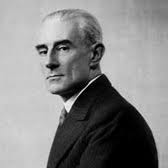 Ravel’s compositions). He started as a younger contemporary of Debussy, 13 years his senior, and lived into the era dominated by Stravinsky and Schoenberg. One of Ravel’s first serious pieces was Pavane pour une infante défunte (Pavane for a dead princess), a piano composition written in 1899 while he was still studying at the Paris Conservatory (his composition teacher was Gabriel Fauré). Here it is, played by the American pianist Bill-John Newbrough. In 1910 Ravel created an orchestral version, which can be heard as often as the original piano work. One of the Ravel’s last compositions was a song cycle Don Quichotte à Dulcinée, from 1932-33. It was written on the texts by the writer Paul Morand. Morand, born in 1888, was a good friend of Marcel Proust. Proust was half-Jewish, some of his friend were Jewish but some – anti-Dreyfusards and anti-Semites; unfortunately, Morand belonged to the latter group. In the late 1930s Morand became close to the anti-Semitic Action française, and later, during the War, to the Vichy government. Speaking of Proust, it’s interesting that he admired Debussy (he heard Pelléas et Mélisande several times on his Théâtrophone, an ingenious device that allowed the owner to listen to live opera or theatrical performances over the phone) but practically never mentioned Ravel. One explanation may be that Reynaldo Hahn, a noted composer and one of Proust’s closest friends, was rather critical of Ravel’s work. Here’s Chanson Romanesque from Don Quichotte with Dietrich Fischer-Dieskau. Karl Engel is on the piano.
When Mozart said that "Bach is the father, we are the children,” he didn’t mean Johann Sebastian Bach, he meant his second son, Carl Philipp Emanuel Bach. It may be surprising to us, but during Mozart’s time, C.P.E. Bach’s reputation was held in higher esteem than his father’s. Carl Philipp Emanuel, whose second name came from his godfather, Georg Philipp Telemann, was born on March 8th of 1714 in Weimar, where his father served as the organist and Konzertmeister at the court of dukes of Saxe-Weimar. From 1738 and for the following 30 years, Emanuel, as he was known to his contemporaries, served in Berlin at the court of Crown Prince Frederick of Prussia, who in 1740 was crowned as King Frederick II (the Great). Emanuel was allowed to leave in 1768 to succeed his godfather Telemann as music director in Hamburg. In 1769 Emanuel wrote The Israelites in the Desert, an oratorio considered to be his masterpiece. Five years later he wrote another oratorio, Die Auferstehung und Himmelfahrt Jesu (The Resurrection and Ascension of Jesus). The libretto was by one Karl Wilhelm Ramler written in 1760, and that same year the prolific Telemann used it for an oratorio of his own. C.P.E. Bach’s oratorio is not well known, at least not as well as his Israelites, which is a pity, as it is a marvelous piece. Here are the first seven episodes of Part I, from the Introduction to the wonderful soprano aria “Wie bang hat dich mein Lied beweint!” (How anxiously my song mourned for you). The ensemble Rheinische Kantorei is directed by Hermann Max, Martina Lins is the soprano.
Don Carlo Gesualdo, the Czech composer Josef Mysliveček, who lived at approximately the same time as C.P.E. Bach, Samuel Barber and Arthur Honegger were also born this week. We’ll have to write about them another time.
Read more...Carl Philipp Emanuel Bach - Die Auferstehung und Himmelfahrt Jesu, excerpts
Rheinische Kantorei (Ensemble)
Hermann Max (Conductor)
Maurice Ravel - Chanson à boire, from Don Quichotte à Dulcinée
Dietrich Fischer-Dieskau (Baritone)
Karl Engel (Piano)
Maurice Ravel - Chanson épique, from Don Quichotte à Dulcinée
Dietrich Fischer-Dieskau (Baritone)
Karl Engel (Piano)
Maurice Ravel - Quixotic Song, from Don Quichotte à Dulcinée
Dietrich Fischer-Dieskau (Baritone)
Karl Engel (Piano)
Béla Bartók - Three Burlesques, Op. 8c
Victor Cayres (Piano)