
Gustav Mahler - Symphony no. 9, 1st movement, Andante comodo
The Chicago Symphony (Orchestra)
Pierre Boulez (Conductor)
January 6, 2016. Pierre Boulez, the great French composer and conductor, died last night in Baden-Baden, Germany. He was 90. Boulez burst on the European music scene in the aftermath of WWII as one of the leading composers of the Darmstadt School. In 1970 he founded IRCAM and in 1976, Ensemble InterContemporain. He started conducting in the 1960s and in 1971 was made the music director of the New York Philharmonic and the BBC Symphony Orchestra in London. Later he lead the Chicago Symphony and worked with the Concertgebouw and the Berlin Philharmonic. Even though his own musical sensibilities were very different, he became one of the greatest interpreters of the music of Mahler. Boulez wrote and talked about music more intelligently than most of the professional critics. We mourn the passing of this extraordinary figure.
Bach and Contemporaneity
01/27/2016 19:30, National House of Organ and Chamber Music of Ukraine
Music of J.S. Bach, O. Messiaen, A. Leonova etc.
Ivan Kucher - cello
Natalia Lavrenova - mezzo-soprano
Tatyana Voytech - piano
Iryna Harechko - organ
Giuseppe Sammartini, 2016
January 4, 2016. Giuseppe Sammartini. Giuseppe Sammartini, not to be confused with his younger brother Giovanni Battista Sammartini, was born on January 6th of 1695 in Milan. Their father, Alexis Saint-Martin, a Frenchman, was an oboist, and he taught the instrument to his children. Both brothers became 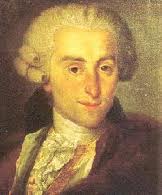 professional oboists playing in different professional orchestras, including that of the newly-opened Teatro Regio Ducal (this grand opera house burned down in 1776 and was replaced, in 1778, with the Nuovo Regio Ducal Teatro alla Scala, which we now know simply as Teatro alla Scala). Johann Joachim Quantz, a famous flutist and composer, considered Giuseppe the best oboe player in Italy. Sammartini probably also played the flute and the recorder: most oboists of the time played those instruments and Sammartini composed a large number of pieces for these instruments. One of his first compositions, an Oboe Concerto, was published in Amsterdam in 1717. In 1727 Sammartini moved to Brussels and then to London, where he was recognized as a supreme master of the oboe. He remained in England for the rest of his life. He became friendly with the composer Maurice Greene and played solos in the operas of Handel and Bononcini. In 1736 Sammartini accepted a lucrative position as a music teacher to the wife and the children of the Prince of Wales. He remained in this position till his death in 1750.
Sammartini, praised as “the greatest oboist that the world has ever known,” was said to have had a remarkable tone, which had the qualities of the human voice. He was also an influential teacher and helped to create the English oboe school. These days, though, he’s mostly remembered as a fine composer. During his lifetime he was known as a composer of chamber music, especially of flute sonatas and trios. Most of his concertos were published posthumously, but they are the ones that are most popular these days. Here’s his Concerto for the Recorder in F Major. It’s performed by Pamela Thorby, recorder, and the ensemble Sonnerie, Monica Huggett conducting. Sammartini wrote four keyboard concertos; here’s one of them, in A Major. Donatella Bianchi is on the harpsichord, ensemble I Musici Ambrosiani is conducted by Paolo Suppa, conductor. Finally, an Oboe Concerto, in this case, no. 12 in C Major, here. Franscesco Quaranta is playing oboe, also with I Musici Ambrosiani and Paolo Suppa.
Among many other birthdays this week are that of Francis Poulenc, who was born on January 7th of 1899 and Alexander Scriabin, born on January 6th of 1872. Here’s Scriabin’s Piano Sonata no. 10, his last piano sonata. It was composed in 1913, two years before the composer’s death. It’s performed by the American pianist Kathy Kim.
Read more...Giuseppe Sammartini - Oboe Concerto no. 12 in C Major
Franscesco Quaranta (Oboe)
I Musici Ambrosiani (Ensemble)
Paolo Suppa (Conductor)
Giuseppe Sammartini - Keyboard concerto in A Major
Donatella Bianchi (Harpsichord)
I Musici Ambrosiani (Ensemble)
Paolo Suppa (Conductor)
Giuseppe Sammartini - Recorder Concerto in F major
Pamela Thorby (Flute)
Sonnerie (Ensemble)
Monica Huggett (Conductor)
Loran Alan Davis - Judge Me Not (a.k.a. Retribution) Soundtrack Suite
loran alan davis (Orchestra)
Christmas 2015
December 28, 2015. Still in the Christmas mood. So much great music has been written for Christmas that we decided to continue our celebration for a little longer. Last week, when we wrote about Giovanni Gabrieli, we mentioned one of his students, Heinrich Schütz. Schütz was 24 when he went to Venice. Half a century later, in 1660, at the advanced age of 75 he composed Weihnachtshistorie, The 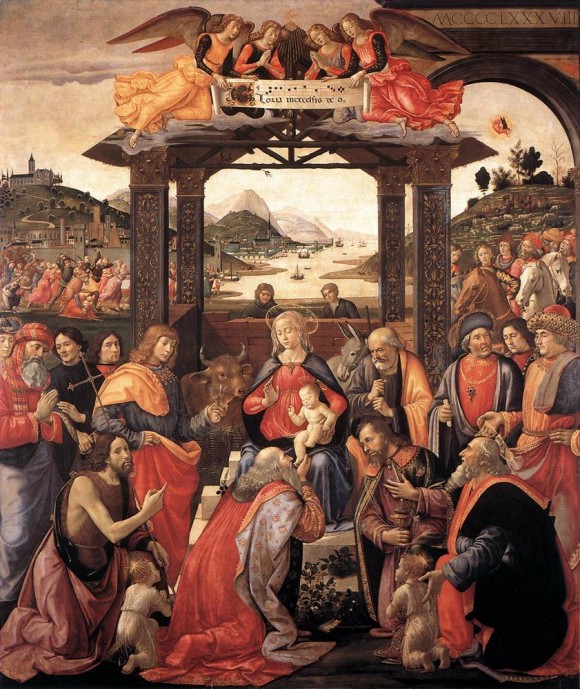 Christmas Story. By then he was an eminent composer, the “chief Kapellmeister” at the court of the Elector of Saxony. The Christmas Story is set to the text from the Gospels of Luke and Matthew as translated by Martin Luther. You can hear it in the performance by the Westfalische Kantorei under the direction of Wilhelm Ehmann.
About 30 years later, around 1690, Arcangelo Corelli composed Twelve Concerti Grossi, his opus 6 (it wasn’t published till 1714). The set was commissioned by Corelli’s then new patron, Cardinal Pietro Ottoboni. Concerto number 8 had an inscription, Fatto per la notte di Natale (Made for the night of Christmas) and became known as the “Christmas Concerto.” It’s performed here, in a somewhat old-fashioned manner, by the Berlin Philharmonic Orchestra, Herbert von Karajan conducting. Corelli had many pupils, one of them – Pietro Locatelli, composer and violinist. In 1721 Locatelli, then 26, also composed a set of 12 Concerti Grossi, and called the eighth “Christmas Concerto.” The last section of Corelli’s concert is marked as Largo. Pastorale ad libitum (that is, “at one’s pleasure”); the last section of Locatelli’s – Pastorale (Largo Andante). Not terribly original but lovely, it’s performed here by I Musici.
Let’s return to Germany. Here’s a wonderful hymn, Es ist ein' Ros' entsprungen, which Michael Praetorius included in his first published work, Musae Sioniae (The Muses of Zion) in 1609. The traditional translation of the hymn is “Lo, How a Rose E'er Blooming.” Even though Luther was strongly against the Catholic Marian cult, many of the older Catholic songs made it into the Lutheran liturgy, and Es ist ein' Ros' entsprungen is one of them: the text makes clear that the rosebud is “Mary, the pure.” The crystalline Monteverdi Choir is the performer. 125 years later, Johann Sebastian Bach wrote (and, to some extent, compiled) the great Christmas Oratorio. Consisting of six parts, the music was to be performed on Christmas and two following days, and also on New Year’s Day (the day of the circumcision of Jesus) and on the first Sunday of the new year. Here’s Sinfonia, the introductory part to the Second day service. John Elliot Gardiner conducts the English Baroque Soloists. The Adoration of the Magi, above, is by Domenico Ghirlandaio. It was painted around 1485.
Read more... « first ‹ previous … 305 306 307 308 309 310 311 312 313 … next › last »
Gustav Mahler - Symphony no. 9, 2nd movement, Im Tempo eines gemächlichen Ländlers
The Chicago Symphony (Orchestra)
Pierre Boulez (Conductor)