
Paul Hindemith - Kammermusik no. 1
Royal Concertgebouw Orchestra (Orchestra)
Riccardo Chailly (Conductor)
Ludwig van Beethoven - Piano Sonata Op.10 No.3 in D Major
Tal Walker (Piano)
Antonio Vivaldi - Inverno / Winter Concerto in f Op. 8 RV 297
Naoko Matsui alias Goryo Goryokaku (Violin)
Pedro Cortinas (Conductor)
Internationales Didaktisches Festival Cortinas Orchestra (Orchestra)
Felix Mendelssohn - Adagio in A from Doppelkonzert in d for Violin, Piano and Orchestra MWV 04
Naoko Matsui alias Goryo Goryokaku (Violin)
Mattias Nilsson (Piano)
Pedro Cortinas (Conductor)
Internationales Didaktisches Festival Cortinas Orchestra (Orchestra)
Handel’s Water Music and Music for the Royal Fireworks, 2015
November 2, 2015. Handel’s Water Music and Music for the Royal Fireworks. We’re publishing an essay by Joseph DuBose about what is probably the most popular orchestral music in all of 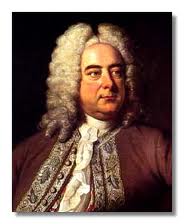 George Frideric Handel’s output. We illustrate it with the 1972 recordings made by Neville Marriner with his Academy of St Martin in the Fields. ♫
On July 17, 1717, King George I conducted a lavish affair upon the Thames River. As one rumor goes, it was an effort to outdo his own son, Prince George II, who was enjoying the limelight of British social circles. At eight o’clock that night, the King and his entourage boarded a royal barge at Whitehall Place and sailed up the Thames to Chelsea. An accompanying barge, provided by the City of London, held some fifty instrumentalists who performed music by Handel for the King’s entertainment. A great number of Londoners came out to witness the incredible spectacle—so many, in fact, that the Daily Courant newspaper reported there was “so great a Number of Boats, that the whole River in a manner was cover'd.”
Another rumor surrounding the event suggests that Handel’s music for the event was composed as a means to regain the King’s good graces. Before inheriting the British throne, George, as the Elector of Hanover, had employed Handel as Kapellmeister beginning in 1710. Yet, two years later, Handel decided to relocate to England where he received a yearly salary from Queen Anne. Handel’s abrupt departure from Germany purportedly caused some animosity between him and his employer. Once George ascended the British throne, Handel found himself suddenly in the position of needing to regain the King's favor. Supposedly, Handel was apprehensive in approaching King George, but saw the King's party as the perfect opportunity. On the other hand, an equally plausible explanation is both men knew that George would soon be King of Great Britain, and that he gave Handel his permission to venture on ahead of him to London. Regardless, the king was so impressed with the music that he ordered it repeated three times by the time he returned to Whitehall from Chelsea, suggesting that the musicians played continuously from 8 p.m. until well after midnight (with the exception of a break while King George I went ashore at Chelsea).
Though Handel’s music for the event was such a great success, there exists no reliable documentation that the music known today as Water Music was, in fact, the exact music performed on that occasion. While it is known that several of the numbers were quite popular in London, none of the music was initially published. Three movements—two minuets and the overture—appeared in 1720 and 1725, respectively. John Walsh published an eleven movement edition in 1733, and later followed up with an expanded nineteen movement arrangement for harpsichord. The first complete edition did not appear until 1788 and was published after extensive research by Samuel Arnold. This edition has become the authoritative Water Music, and was the basis for Friedrich Chrysander’s Gesellschaft edition published in 1886. Yet, despite an authoritative edition, some doubt remains even today around the exact ordering of the movements. Generally, however, Handel’s Water Music is arranged into three separate suites, HWV 348-50, based on the character and instrumentation of the movements. The first suite, by the far longest, contains nine movements in the keys of F major and D minor, and features horns with an orchestra of oboes, bassoon, and strings. The middle suite, in D major, adds trumpets; while the third, in G major, is more delicately scored with flutes. (Continue reading here)
Read more...George Frideric Handel - Music for the Royal Fireworks
Academy Of St. Martin in the Field (Orchestra)
Neville Marriner (Conductor)
George Frideric Handel - Water Music, suite no. 3 in G major
Academy Of St. Martin in the Fields (Orchestra)
Neville Marrine (Conductor)
George Frideric Handel - Water Music, suite no. 2 in D major
Academy Of St. Martin in the Fields (Orchestra)
Neville Marrine (Conductor)
George Frideric Handel - Water Music, suite no. 1 in F major
Academy Of St. Martin in the Fields (Orchestra)
Neville Marriner (Conductor)
François Couperin - Order XIII, from Book 3 of Pièces de Clavecin
Grigory Sokolov (Piano)