
Robert Schumann - Schumann Fantasy in C Major, Op. 17 (3)
Sophia Agranovich (Piano)
Robert Schumann - Schumann Fantasy in C Major, Op. 17 (1)
Sophia Agranovich (Piano)
Robert Schumann - Carnaval, Op. 9
Sophia Agranovich (Piano)
Brahms’s Intermezzi op. 117, 2015
July 27, 2015. Brahms’s Intermezzi op. 117. Enrique Granados and Hans Werner Henze were born this week, Granados on July 27th of 1867 and Henze – on August 1st of 1926. Both are very interesting, each in his own way, and we’ve commemorated them on previous occasions. Today, 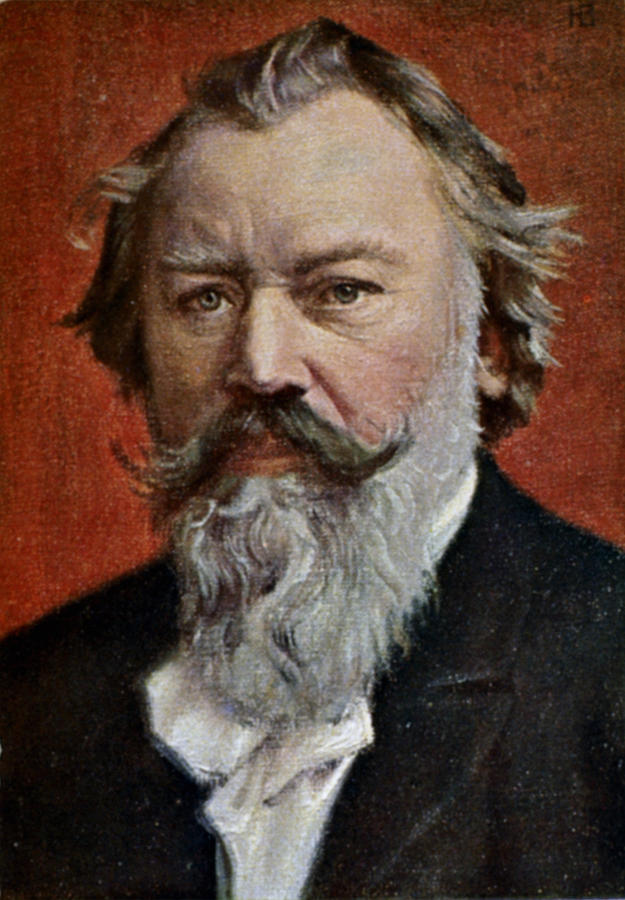 though, we’ll continue the traversal of the late piano works of Johannes Brahms, moving to his Intermezzi op. 117. We’ll illustrate them with the performances by thee young pianists: the Israeli Yael Kareth and two Americans, Lucille Chung and Evan Mitchell. ♫
In contrast to the neighboring opp. 116 and 118, Brahms comprised op. 117 of only three intermezzi. However, these three works are of an unmistakably greater import than the similar works of those two collections (excepting, of course, the grim E-flat minor Intermezzo). Despite their subdued tone, they carry a weight that could be hardly found within either op. 116 or op. 118, yet together form a fulfilling whole. The outer pieces span complete ternary forms, while the middle piece traces a terse, yet rich, sonata design. They also hearken back to the earlier Ballades in the weight and manner of their discourse, with the first taking its cue from an actual Scots lullaby.
The first of the triptych of intermezzi is in E-flat major (here). Heading this gentle Andante is the opening lines of “Lady Anne Bothwell’s Lament,” taken from Johann Herder’s German translation: “Schlaf sanft mein Kind, schlaf sanft und schön! Mich dauert’s sehr, dich weinen sehn” (“Sleep sweetly my child, sleep sweetly and beautifully! It grieves me much to see you weep”). The opening melody, presented in a middle voice and cradled between gently rocking octaves, could not be a more apt fit for Herder’s lyric. After an initial statement, Brahms begins to restate the melody. However, as the harmonies begin to change so does the melody. The cadence in the fourth measure is changed, passing briefly into the key of the dominant, before returning to the tonic of E-flat in the next. Instead of proceeding with the rest of the melody, Brahms presents a varied statement of the melody’s first four measures, which is now accompanied by gently syncopated chords in a 3/4 meter against the melody’s 6/8. Though the rhythmic disturbance evaporates in the next cadence, the music modulates without warning into the key of A-flat minor, and the opening phrase of the melody is the presented in austere octaves. This sudden melancholic passage serves as a transition into the doleful central episode. The minor key is maintained, yet the tempo slackens somewhat. Arpeggios in the low register of the piano accompany a melodic motif cleverly extracted from the second measure of the principal melody. During the course of the episode, the melody’s initial stepwise descent also returns against eerie harmonies that suggest a return to E-flat, but maintain the shadowy hues of the minor by the obstinate presence of D-flat. Four times this head motif returns of which the last once again ever so slightly disturbs the rhythmic feel of the music and inevitably brings about the reprise of the opening section. While the form of the opening is followed, the reprise is varied. The melody first appears in octaves and is passed between hands, as the accompanying chords pass from the resonant low register to the ethereal treble, but then later is embellished modestly with sixteenth notes. Interestingly, the rhythmic disturbance of contrasting meters is, in the reprise, nearly eliminated, appearing only in a single measure before a brief coda. In place of the austere minor statement that presaged the episode, the major key is maintained as Brahms makes use of the melody’s memorable cadential figure to bring the lullaby to a close. (Continue reading here).
Read more...Frédéric Chopin - Etude Op. 25, No. 11 in a minor
Ko-Eun Yi (Piano)
Frédéric Chopin - Scherzo No. 1 in b minor, Op. 20
Ko-Eun Yi (Piano)
Franz Liszt - Après une Lecture de Dante
Ko-Eun Yi (Piano)
Johann Sebastian Bach - French Overture in B minor, BWV 831
Ko-Eun Yi (Piano)
George Rochberg - Nach Bach
Ko-Eun Yi (Piano)
Marc Delmas - Fantaisie Italienne for Clarinet and Piano, Op. 110
Samuel Brandão Marques (Clarinet)
Garret Ross (Piano)