
Franz Joseph Haydn - Sonata in C major, Hob. XVI:48
Ko-Eun Yi (Piano)
Pietro Ottoboni, 2015
July 20, 2015. Pietro Ottoboni. In the late 17th – early 18th centuries Rome there were no Ministries of culture or National Endowments for the Art; nonetheless, the musical scene flourished, together with Venice and Naples, Rome was one of the three 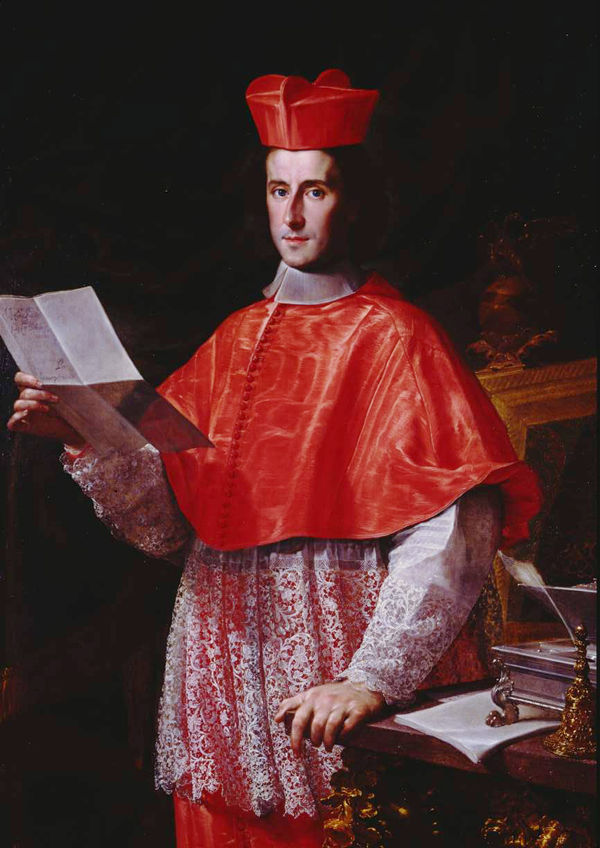 world music centers. It was partly a natural development, with the Baroque maturing and a new art of opera gaining popularity. Still, music would probably never have attained such an exceptional level and wide audience were it not for several extraordinary patrons. Queen Christina of Sweden was one, and after her death in 1689, Cardinal Pietro Ottoboni became the most important benefactor in Rome. Pietro Ottoboni was born in Venice on July 2nd of 1667 into a noble family. His granduncle, also Pietro Ottoboni, became Pope Alexander VIII in 1689. The Pope made his 22-year-old nephew cardinal and vice-chancellor of the Church. The role of the Chancellor was to collect money for the papal army, so one can imagine that the young cardinal came into a very lucrative position. Cardinal Ottoboni was also a cardinal-bishop of a number of places, and his annual income from different sources was estimated at 50,000 scudi, an enormous sum. A Roman scudo of the time contained approximately 3.3 grams of gold. If we convert it into the current price of gold, the cardinal’s income amounts to about six million dollars. But even that was not enough: Ottoboni was a musical fanatic and spend every penny and them some to satisfy his passion. He was constantly in debt, and when he died in 1740, his estate, with its great collection of paintings and a large music library, had to be liquidated.
Ottoboni resided in the Palazzo della Cancelleria; there he maintained the best singers in town and one of the finest orchestras. In 1689 he reopened the palace theater, which had stayed closed for the previous 15 years. Around 1710 Ottoboni’s court architect, Filippo Juvarra, rebuilt it into the most technically advanced opera theater in Rome, capable of staging lavish productions. This theater saw premiers of operas by Alessandro Scarlatti, Antonio Caldara and many other popular composers of the day. Ottoboni spread his patronage far and wide: he was also the major benefactor of Congregazione di S Cecilia (now the Accademia Nazionale di Santa Cecilia, Italy’s premier conservatory), and Accademia Filarmonica di Bologna. But even that was not all: the Cardinal was also a very prolific librettist. As a church hierarch he couldn’t publish them under his own name, especially considering that in 1701 Pope Clement XI banned all public opera performances, but many librettos, whether to operas or oratorios and cantatas, are attributed to him. Ottoboni was full of vigor, and if music was the main love of his life, it was definitely not the only one: he’s said to have fathered 60 or 70 children.
Many Italian composers benefited from Ottoboni’s generosity, among them Arcangelo Corelli, Alessandro Scarlatti, Antonio Vivaldi, Antonio Caldara and Tomaso Albinoni. The first three are very popular, so we’ll present the works of Caldara and Albinoni. Antonio Caldara was born in Venice in 1670. Here’s an aria from his opera Il Martirio di Santa Caterina , which was premiered in Ottoboni’s theater in 1708. Cecilia Bartoli is the mezzo, with Les Musiciens du Louvre; Marc Minkowski conducting. Albinoni, also a Venetian, was one year younger than Caldara. In his time he was also famous as an opera composer, but most of his operas were lost and are practically never performed today. “Albinoni’s Adagio in G minor” became a pop phenomenon, except that it is a fake, written by Remo Giazotto! Here is a real Albinoni: Trio sonata op. 1, no. 1. The cycle of 12 trio sonatas opus 1 was dedicated to Pietro Ottoboni. The performers in this recording are Parnassi Musici.
Read more...Concert in Organ Music Hall
07/27/2015 19:30, National House of Organ and Chamber Music
Composers:
Lyatoshynsky, Lysenko, Skoryk, A.Leonova
Performers:
M.Lysenko String Quartet
Anatolii Bazhenov - Violin
Ivan Kucher - Cello
Tomaso Albinoni - Trio sonata Op. 1, no. 1 in D minor
Parnassi Musici (Ensemble)
Antonio Caldara - Ahi quanto cieca... Come foco allo splendore, from Il Martirio di Santa Caterina
Cecilia Bartoli (Mezzo-soprano)
Les Musiciens du Louvre (Ensemble)
Marc Minkowski (Conductor)
Frédéric Chopin's Nocturnes, Part I, 2015
July 13, 2015. Chopin’s Nocturnes, part I. With a paucity of memorable anniversaries this week, we’ll turn again to one of our incidental longer articles, this time on Chopin’s 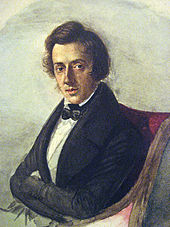 Nocturnes. Chopin wrote 21 of them; we’ll discuss ten here, and the rest in the follow-up article. As always, when we can, we illustrate the music with performances by the young artists in our library. Nocturne op. 9, no. 1 is performed by the young Russian pianist Anastasya Terenkova; no. 2 from the same opus – by the Mexican pianist Mariusz Carreño; and no. 3 – by Jingjing Wang (China). The Nocturne op. 15, no. 3 is played by the Serbian-American pianist Ivan Ilić. Nocturnes op. 27 are performed by the British pianist of Nigerian descent Sodi Braide (no. 1) and the Chinese pianist Ang Li (no. 2). Opus 32, no. 2 is played by the South-Korean pianist Angela Youngmi Choi. We had to “borrow” three performances: Maurizio Pollini plays the nocturne op. 15, no. 1, while Arthur Rubinstein performs the second piece from that opus. The nocturne op. 32, no. 1 is by Vladimir Ashkenazy. The 1835 watercolor portrait above is by Maria Wodzińska, who became engaged to Chopin in 1836. The engagement was dissolved a year later on the insistence of Maria’s father because of Chopin’s poor health. ♫
The French word “nocturne,” and its Italian equivalent “notturno,” mean “pertaining to the night.” The term itself is quite old. Since the Middle Ages it has pertained to divisions in the canonical hours of Matins. As the name of a type of musical composition, it is also older than popularly thought. It was first applied in the 18th century to compositions of a lighter character and in several movements to be performed at night, much in the same manner as the serenade. Examples of this type of piece include works by Haydn and the Serenata Notturno, K.239 by Mozart. The nocturne as a miniature for piano, however, did not appear until the early part of the following century when the Irish composer, John Field, first used the term in this sense and pioneered an entirely new genre of compositions. Field’s nocturnes featured an expressive, song-like melody over an accompaniment of broken chords. Their construction and expression was simple, and it would take a more profound genius to reveal the full potential of Field’s creation.
As a young man, Chopin greatly admired John Field, and was strongly influenced by the Irishman’s piano and composition techniques. Others perceived Field’s influence on Chopin. Friedrich Kalkbrenner even once inquired if Chopin was a pupil of Field. Indeed, the affinity between the two was enough that Field even began to be described as “Chopin-esque” (much to his chagrin as he once described Chopin as a “sickroom talent”).
Following in Field’s footsteps, Chopin wrote his first pair of nocturnes while still in Poland, though they were not published until well after his death. His first published essays in the genre were composed in the early years of the 1830s, surrounding his departure from his native Poland, brief stay in Vienna and ultimate voyage to Paris. As one might expect, these early essays owned much to Field, though already offered glimpses of Chopin’s burgeoning genius. During his lifetime, Chopin published eighteen nocturnes, the last appearing in 1846. Three more appeared after his death: the early E minor Nocturne, alluded to above, in 1855 as op. posth. 72, and two other works in 1870 that were not assigned opus numbers.
Like his waltzes and mazurkas, Chopin’s treatment of the nocturne progressed far beyond the conventional expectations of the form. With the dances, Chopin transformed them into compelling concert miniatures; with the nocturne, he raised it to a level of artistry far beyond the Fieldian prototype and wrung from it emotions of peaceful serenity and poignant melancholy. Chopin maintained the defining elements of the genre established by Field: a vocal-like melody, often finely ornamented, allotted to the right hand, an accompaniment of broken chords in the left, and frequent use of the pedal. To this model Chopin added the influences of Italian and French operatic arias, a freedom and complexity of rhythm taken from Classical models, and a keen use of counterpoint. (Continue reading here).
Read more...Frédéric Chopin - Nocturne in B major, op. 32, no. 1
Vladimir Ashkenazy (Piano)
Frédéric Chopin - Nocturne in F-sharp major, op. 15, no. 2
Arthur Rubinstein (Piano)
Frédéric Chopin - Nocturne in F major, op. 15, no. 1
Maurizio Pollini (Piano)
Frédéric Chopin - Mazurka in A minor, op. 59, no. 1
Ko-Eun Yi (Piano)