
Edvard Grieg - Solveig's Song, from Peer Gynt
Anna Netrebko (Soprano)
Prague Philharmonia (Orchestra)
Emmanuel Villaume (Conductor)
P. Kellach Waddle - I Dreamt of Long-Ago Passions and of The Final Dripping Candle : Sonata in One Movement for Viola and Piano
Sara Driver (Viola)
Sheryl Stack, Piano (Piano)
Sergey Akhunov - Imprint
Mikayel Zakaryan (Violin)
Izabela Iwanowska (Violin)
Valentine Ruffieux (Viola)
Lukas Raaflaub (Cello)
Béla Bartók - Chants populaires tristes, from Suite Paysanne Hongroise
Catherine Gregory (Flute)
Tyler Wottrich (Piano)
Gabriel Fauré - Morceau de Concours
Catherine Gregory (Flute)
Tyler Wottrich (Piano)
Anonymous (s. XVIII) - O, ce veste minunată - classical guitar
Adrian Danaila (Guitar)
Carl Philipp Emanuel Bach - Fantasie in F-Sharp minor, Wq. 67
Sookkyung Cho (Piano)
Schumann’s Dichterliebe, Part I
June 8, 2015. Schumann’s Dichterliebe. The great German composer Robert Schumann was born on this day in 1810. We write about him every year (for example, here and here in the past couple of 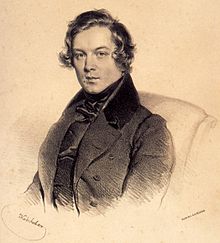 years), so this time we’ll do something different: publish an article on the first eight songs of Dichterliebe. Schumann wrote more than 300 songs, but A Poet’s Love cycle contains some of his greatest. There are so many wonderful recordings of Dichterliebe that it was difficult to decide which one to use to illustrate the cycle. Dietrich Fischer-Dieskau alone made four different recordings, two of them with remarkable pianists: Alfred Brendel in 1985 and, live, with Vladimir Horowitz, in 1976. Gérard Souzay, a wonderful French baritone, also recorded it several times, once with Afred Cortot (and there’s another recording with Cortot, in which he accompanies Charles Panzéra). Hermann Prey made a tremendous recording, and so did the great German soprano Lotte Lehmann. Out of all of these and many more, we decided on Fritz Wunderlich – the beauty of his crystalline voice, his perfect diction, the natural, unpretentious manner devoid of any affectations make his interpretation, in our opinion, extraordinary. The recording was made live on August 19th of 1965 during the Salzburg Festival. Hubert Giesen was at the piano. ♫
Schumann’s composed almost exclusively for his own instrument, the piano, during his early years as a composer. The 1830s saw the creation of some of his most well-known compositions, including Papillons, Kinderszenen, and the Fantasie in C. However, in 1840, with virtually no warning, Schumann composed no less than 138 songs. This remarkable creative outpouring has since become known as his “Liederjahr,” or “Year of Song.” Yet, this sudden change, nor the abundance of music written, was purely coincidental. Instead, it makes the culmination of his courtship of Clara Wieck, and their long-awaited and hard-won marriage.
Schumann and Clara first met in March 1828 at a musical evening in the home of Dr. Ernst Carus. Schumann was so impressed with Clara’s skill at the piano that he soon after began piano lessons with her father, Friedrich. During this time he lived in the Wieck’s household, and he and Clara quickly formed a close friendship. With time, their friendship blossomed into a romantic, although clandestine, relationship. On Clara’s 18th birthday, Schumann proposed to her, and she accepted. Friedrich, on the other hand, had less than a favorable opinion of Schumann, and refused to grant permission for Schumann to marry his daughter. This placed a great strain on their relationship, yet they remained devoted to each other by exchanging love letters and meeting in secret. For a moment’s glance of Clara as she left one of her concerts, Schumann would wait for hours in a café. The couple eventually sued Friedrich, and after a lengthy court battle, Clara was finally allowed to marry Schumann without her father’s consent. The wedding took place in 1840. (Continue reading here).
Read more...Robert Schumann - Im wunderschönen Monat Mai, from Dichterliebe, Op.48
Fritz Wunderlich (Tenor)
Hubert Giesen (Piano)
Charles Gounod - Serenade
Joan Sutherland (Soprano)
Richard Bonynge (Piano)