
Années de Pèlerinage: Troisième Année (2015)
June 1, 2015. Années de Pèlerinage: Troisième Année. In the last several months we published short articles about the first two volumes of Franz Liszt’s Années de pèlerinage: Year One, Switzerland (Première année: Suisse), here, and Year Two, Italy (Deuxième 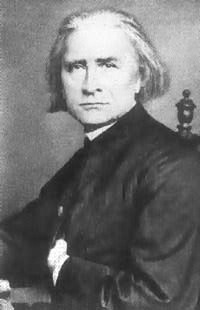 année: Italie) here. Today we’ll continue with the third year, (Troisième année). Probably not as popular, or at least not as often performed as the first two sections, it demonstrates the depth and unparalleled sonorities of Liszt’s late works. We will illustrate each of the seven pieces with performances by Aldo Ciccolini, recorded in 1961. Ciccolini died exactly four months ago, on February 1st, 2015; he was 89. Ciccolini, who was born in Naples into a titled family, became a French citizen in 1969. His was a famous interpreter of the music of his adopted country – Debussy, Ravel, Saint-Saëns, and especially Satie, but he also recorded all piano sonatas of Beethoven, music of Albeniz, Chopin, Bach, Scarlatti, – more than 50 LPs and CDs altogether. A brilliant virtuoso, he was a powerful but sensitive interpreter of Liszt’s music. For many years Ciccolini taught at the Paris Conservatory (Jean-Yves Thibaudet was a pupil). His last recording, featuring piano sonatas by Mozart and Muzio Clementi, was made when Ciccolini was 85. (The photo portrait of Liszt, above, was made in 1867). ♫
Années de Pèlerinage: Troisième Année
In 1883, three years before Liszt’s death, the third and final volume of Années de Pèlerinage was published. Unlike it companions, which were musical travelogues of Liszt’s journeys throughout Switzerland and Italy, the third volume bore no subtitle to reveal the source of its inspiration (though four of its pieces still drew their inspiration from landmarks in Italy). Instead, Troisième Année is strikingly different from the previous two volumes. While still remaining technically challenging, many of the pieces are far removed from the virtuosic showpieces Liszt produced in his youth. These pieces were intensely personal creations. Liszt was certainly aware of this fact, and even warned his publisher not to expect this third volume to be as commercially successful as its predecessors. On the whole, Liszt was correct and Troisième Année failed to impress audiences. Today, along with the rest of Années de pèlerinage, it is considered one of Liszt’s masterpieces. (Continue reading here)
Read more...P Kellach Waddle - The Lingering Ominous Clouds of Tenebrae;What Terrible Weather We Are Having For Easter : Sonata For Bass and Piano
Sidney King, (Double Bass)
Krista Wallace-Boaz (Piano)
Franz Liszt - Sursum corda, from Années de Pèlerinage: Troisième Année
Aldo Ciccolini (Piano)
Franz Liszt - Marche funèbre, from Années de Pèlerinage: Troisième Année
Aldo Ciccolini (Piano)
Franz Liszt - Sunt lacrymae rerum/En mode hongrois, from Années de Pèlerinage: Troisième Année
Aldo Ciccolini (Piano)
Franz Liszt - Les jeux d'eaux à la Villa d'Este, from Années de Pèlerinage: Troisième Année
Aldo Ciccolini (Piano)
Franz Liszt - Aux cyprès de la Villa d'Este II: Thrénodie, from Années de Pèlerinage: Troisième Année
Aldo Ciccolini (Piano)
Franz Liszt - Aux cyprès de la Villa d'Este I: Thrénodie, from Années de Pèlerinage: Troisième Année
Aldo Ciccolini (Piano)
Franz Liszt - Angélus! Prière aux anges gardiens, from Années de Pèlerinage: Troisième Année
Aldo Ciccolini (Piano)
P. Kellach Waddle - Pondering Betrayal At The Tennessee Moonrise: Sonata for Bass and Piano
Paul Sharpe (Double Bass)
Robert (Piano)