
Renaud Gagneux - Printemps 2
Nicolas Horvath (Piano)
Renaud Gagneux - Hiver 2
Nicolas Horvath (Piano)
Astor Piazzolla - Adios Nonino - Tango Rapsody para Piano
Yana Reznik (Piano)
Sergei Rachmaninov - Humoresque in G Major No.5, Op.10
Yana Reznik (Piano)
Sergei Rachmaninov - Prelude Op. 23 No. 5
Yana Reznik (Piano)
Pyotr Ilyich Tchaikovsky - The Nutcracker Suite
Yana Reznik (Piano)
Chopin’s Waltzes
May 25, 2015. Chopin’s Waltzes. With apologies to the devotees of the music of Isaac Albéniz, Erich Wolfgang Korngold and Marin Marais, all of whom were born this week, we’re publishing a longer piece by Joseph DuBose on waltzes by Frédéric Chopin. We’ll illustrate each of these concise gems with performances, some by the young artists 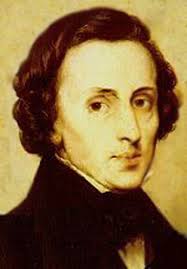 for whom Classical Connect serves as a virtual concert stage: Bill-John Newbrough, Anastasya Terenkova, Konstantyn Travinsky, Yury Shadrin; others – by the acknowledged masters. You’ll hear the 77 year-old Artur Rubinstein live in Moscow (you can hear him announcing the encore), Evgeny Kissin live in Carnegie Hall, Zoltan Kocsis, Philippe Entremont, the French pianist and conductor, Arturo Benedetti Michelangeli, Dinu Lipatti in a recording made in 1950, just months before his death at the age of 33; Vladimir Ashkenazy and Samson François in a 1963 recording. ♫
The waltz is inextricably connected to that great musical city of Vienna. Thus, when, as a budding composer and pianist, Frederic Chopin made his debut in the city in 1829 soon after his graduation from the Warsaw Conservatory, and again visited in 1830, it is no surprise that he tried to assimilate himself into its musical culture by performing and even composing waltzes. Yet, Chopin’s Polish roots ran too deep, and he was never able to fully master the distinctive waltz style. On his return from the Austrian capital, he admitted to a friend, “I have acquired nothing of that which is specially Viennese by nature, and accordingly I am still unable to play valses.”
Chopin’s earliest waltzes roughly date from the time of his first visit to Vienna. Yet, these early attempts remained unpublished during the composer’s lifetime. Indeed, his first waltz only appeared in print after he had left Vienna for Paris, where he would remain for the rest of his life. Currently, there are eighteen known waltzes that Chopin composed, though it is believed he wrote others. However, only the first fourteen are generally numbered. Of these fourteen, only eight were published during Chopin’s lifetime—opp. 18 and 42, and the two sets of three of opp. 34 and 64. Five more were issued in the decade following Chopin’s death and make up opp. 69 and 70. Finally, two others appeared during the remainder of the 19th century—the well-known E minor waltz in 1868 and another in E major in the early 1870s. (Continue reading here).
Read more...
Frédéric Chopin - Nocturne op. 9 no. 3
Anastasya Terenkova (Piano)
Frédéric Chopin - Valse Op. 70 No. 2 in F minor
Anastasya Terenkova (Piano)
Frédéric Chopin - Waltz in A-flat major, op. 42
Zoltan Kocsis (Piano)