
Niccolò Paganini - Caprice No. 17 in E-flat Major
David Oistrach (Violin)
On white...and black keys +
11/29/2014 19:00, Dietrich Keuning Haus
Details here: http://www.bandsintown.com/TeoMilea/start_tracking
On white...and black keys +
11/27/2014 19:00, Romanian Cultural Institute
Details here: http://www.bandsintown.com/TeoMilea/start_tracking
On white...and black keys +
11/18/2014 19:00, Boeme Cafe
Details here: http://www.bandsintown.com/TeoMilea/start_tracking
On white...and black keys +
11/16/2014 19:00, Godot Cafe-Teatre
Details here: http://www.bandsintown.com/TeoMilea/start_tracking
Franz Liszt - Après une Lecture de Dante
Angelo Rondello (Piano)
Franz Liszt - Bagatelle sans tonalité, S. 216a
Angelo Rondello (Piano)
Claude Debussy - Images, Book I
Angelo Rondello (Piano)
Franz Liszt, 2014
October 20, 2014. Franz Liszt. We’re marking the 113th birthday anniversary of the great Hungarian composer. Liszt was born on October 22nd of 1811 in a small village of Doborján (after the First World War that part of western Hungary was given to Austria; the town is now called 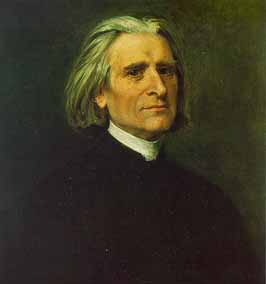 Raiding). He grew up to become the greatest pianist of his time (and some believe of all time) and one of the most important composers of the 19th century. To celebrate, we‘re publishing an article by Joseph DuBose on the first of the three Années de pèlerinage piano suites, Première année: Suisse. We illustrate each piece (there are nine altogether in Première année) with performances by two young English pianists, Ashley Wass and Sodi Braide, both recorded in concerts, and two great Lisztians, the Cuban-American Jorge Bolet (1914 – 1990) and the Russian pianist Lazar Berman (1930 – 2005). The article follows. ♫
In early June 1835, Franz Liszt traveled from Paris to Switzerland. There, in Geneva, he met his mistress, Marie d’Agoult, who had recently left her husband and family for him. Over the next four years, they lived and journeyed throughout Switzerland and Italy. Inspired by the wondrous scenery of Switzerland and the rich cultural heritage of Italy, Liszt composed during these years a suite of piano pieces entitled Album d’un voyageur, a title which he likely adapted from that of a letter from George Sand: Lettre d’un voyageur. The suite was later published in 1842, after his relationship with d’Agoult had ended and he had returned to the life a touring virtuoso. However, Album would prove to be only the genesis of a much more significant collection of pieces. Between 1848 and 1854, Liszt revised several of its constituent pieces to form the first volume (Première année: Suisse) of his Années de pèlerinage (Years of Pilgrimage)—indeed, only two emerged relatively unaltered. Besides being personal reflections of Liszt’s travels, the pieces that ultimately became part of Première année were imbued with a keen sense of the Romantic literature of his time. The title of Années de pèlerinage itself is a certain reference to Goethe’s famous novel Wilhelm Meisters Lehrjahr, but mostly significantly, its sequel Wilhelm Meisters Wanderjahr, which in is first French translation was translated as “Years of Wanderings.” Furthermore, each piece was headed by quotations from Schiller, Byron, and Senancour, leading figures of the burgeoning Romantic Movement. The final result, Première Année: Suisse, was published in 1855. (Continue reading here.)
Read more... « first ‹ previous … 385 386 387 388 389 390 391 392 393 … next › last »
Niccolò Paganini - Caprice no. 13
Jascha Heifetz (Violin)
Brooks Smith (Piano)