
Karol Szymanowski - Mazurka no. 1, Sostenuto - Molto rubato, from 20 Mazurkas, Op. 50
Amber Yiu-Hsuan Liao (Piano)
Jialiang Wu, Piano
11/26/2014 12:15, Preston Bradley Hall
Keyboard Sonata in E Major, Hob. XVI:31 -- Joseph Haydn
Selections from Fantasiestücke, Op. 12 -- Robert Schumann
I. Des Abends (In the Evening)
II. Aufschwung (Soaring)
III. Warum? (Why?)
IV. Grillen (Whims)
Trois mouvements de Petrouchka -- Igor Stravinsky
I. Danse russe (Russian Dance)
II. Chez Pétrouchka (Petrushka's Room)
III. La semaine grasse (The Shrovetide Fair)
Alessandro Deljavan, Piano
11/19/2014 12:15, Preston Bradley Hall
Abegg Variations, Op. 1 -- Robert Schumann
Etudes, Op. 10 -- Frédéric Chopin
I. Etude in C Major
II. Etude in A minor
III. Etude in E Major
IV. Etude in C-Sharp minor
V. Etude in G-flat Major
VI. Etude in E-flat minor
VII. Etude in C Major
VIII. Etude in F Major
IX. Etude in F minor
X. Etude in A-flat Major
XI. Etude in E-flat Major
XII. Etude in C minor 'Revolutionary'
Pavel Kolesnikov, Piano
11/12/2014 12:15, Preston Bradley Hall
Piano Sonata No. 4, Op. 30 -- Alexander Scriabin
Vers la flamme ('Toward the flame'), Op. 72 -- Alexander Scriabin
Piano Sonata No. 32 in C minor, Op. 111 -- Ludwig van Beethoven
Années de Pèlerinage, Deuxième Année: Italie - 2014
November 3, 2014. Années de Pèlerinage, Deuxième Année: Italie. Even though today is the birthday of Vincenzo Bellini (he was born in 1801 in Catania, Sicily, and we’ve written about him extensively in the past, here and here), we’ll continue the traversal of Franz Liszt’s Années de Pèlerinage. This time it’s the second year of the pilgrimage, and we’re in Italy. As always, we’ll illustrate every piece with performances by pianists young and renowned: the Canadian Jason Cutmore plays Sposalizio and Canzonetta del Salvator Rosa, the great Alfred Brendel plays Penseroso, Lazar Berman plays the first two of the three Sonetto del Petrarca, Sonetto.47 and Sonetto 104, and the legendary Russian pianist Vladimir Sofronitsky – Sonetto 123, in a 1952 recording. Finally, the young Swiss pianist Beatrice Berrut plays what Liszt called “Fantasia Quasi Sonata” Après une Lecture de Dante. Here’s the article by Joseph DuBose.
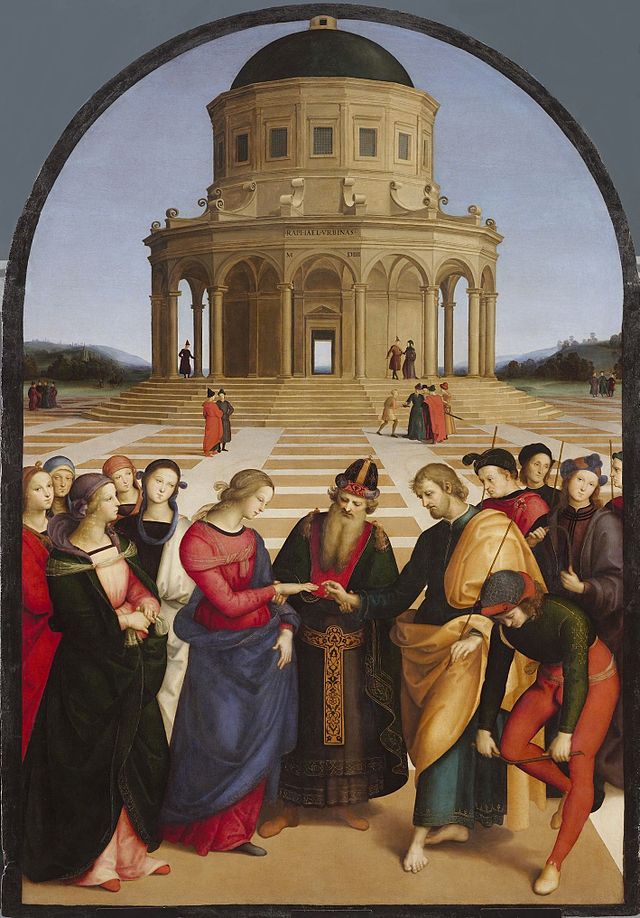 The second volume of Années de Pèlerinage is a catalogue of Liszt’s travels through Italy. Unlike its predecessor, however, it does convey depictions of Italy’s landscapes and cities, but instead impressions of its rich artistic heritage. As Liszt traveled the Italian Peninsula, he traversed its centuries of artistic excellence, from the immortal writings of Dante and Petrarch, to the paintings of Raphael, the sculptures of Michelangelo, and even the music of Bononcini, whose death preceded Liszt’s travels by roughly only a century. Like the preceding volume, the pieces of Deuxième Année are revisions of those Liszt originally composed during the time of his pilgrimage, some quite extensively and amounting, in essence, to full-fledged rewritings, such as with the three Petrarch sonnets. The volume was published 1858, three years after the first.
Deuxième Année opens with Liszt’s musical portrayal of Raphael’s The Marriage of the Virgin in “Sposalizio” (here). The innocence and reverence of the subject matter is displayed in the simple pentatonic melody of the opening measures, stated without any further adornment, and answered by an expectant motif tucked within the inner tones of contrasting chords. Repeated incessantly, the pentatonic theme drives the first section of the piece, through wide-ranging harmonies, to a fortissimo conclusion in E major. A brief passage, combining the fragments of the theme with the answering motif, then leads the listener into the piece’s second main theme. A pious wedding march in G major, this new theme, given in a rich, chordal texture, is accompanied by the pentatonic theme. At first, its appearance is only occasional. However, following a modulation back into the tonic key of E major and the recommencement of the wedding march, the pentatonic theme becomes a permanent fixture of the accompaniment. Against the wedding march, it creates a glistening accompaniment of almost Impressionistic colors, and an continuous flow of energy that climaxes in the expectant motif of the beginning. From thence, the music recedes, with the pentatonic theme still heard above echoes of the wedding march, into the final, quiet tonic chords. (Continue).
Read more...Franz Liszt - Sonetto 123 del Petrarca, from Années de pèlerinage: Italie
Vladimir Sofronitsky (Piano)
Franz Liszt - Sonetto 104 del Petrarca, from Années de pèlerinage: Italie
Lazar Berman (Piano)
Franz Liszt - Sonetto 47 del Petrarca, from Années de pèlerinage: Italie
Lazar Berman (Piano)
Franz Liszt - Il Penseroso, from Années de pèlerinage: Italie
Lafred Brendel (Piano)
Karol Szymanowski - Mazurka no. 2, Allegramente - Poco vivace, from 20 Mazurkas, Op. 50
Amber Yiu-Hsuan Liao (Piano)