
Pyotr Ilyich Tchaikovsky - Valse In A Flat Major, Op. 40 No. 8
Anna Shelest (Piano)
Pyotr Ilyich Tchaikovsky - Russian Dance, from 12 Pieces, Op. 40, No. 10
Dinara Nadzhafova (Piano)
Debussy 2012
August 20, 2012. Claude Debussy. This week we celebrate a major event: the 150th anniversary of one of the greatest composers of the late 19th – early-20th century, Claude-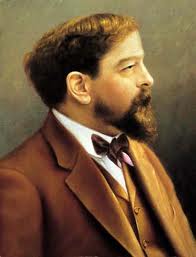 Achille Debussy. He was born in Saint-Germain-en-Laye, a wealthy suburb of Paris (his family was not). He started his musical studies at the age of eight, in Nice, where his mother, then pregnant again, fled during the Prussian occupation of Paris in 1870. At the age of ten he entered the Paris conservatory and studied there for 11 years. In 1884 he won the Prix de Rome and moved to the French Academy in Rome for a four-year residence. He didn’t like it there, neither his companions nor the food. He submitted several pieces, one of which was a symphonic cantata La damoiselle élue. A pretty but rather straightforward piece with just a hint of the kind of harmonies that Debussy was to develop later, it was still labeled by the Academy as “bizarre.” In 1888 he visited Bayreuth to see Wagner’s Parsifal and Die Meistersinger and, deeply impressed, made a return a year later for Tristan und Isolde. 1889. As different as Wagner and Debussy are, it’s not surprising that the shimmering sonorities of Wagner’s orchestra affected the young Debussy. He later disavowed both the influence and Wagner’s music in general. Still, it seems that Wagner’s influence is discernable, and not only on Debussy’s only opera, Pelléas et Mélisande.
By about 1890, Debussy had fully developed his own musical language. One of the first compositions to clearly manifest the new style was Suite bergamasque for piano (you can listen to it here, in the performance by the young Chinese pianist Xiang Zou). During that period Debussy was spending a lot of time in Stéphane Mallarmé symbolist salon. Four years later, influenced by a poem by Stéphane Mallarmé, Debussy wrote a symphonic poem Prélude à l'après-midi d'un faune. The poem was later made into a famous ballet, choreographed by Vaslav Nijinsky. His only completed opera, Pelléas et Mélisande premiered in 1902. We had to borrow from YouTube to bring you an excerpt. It is here; Pierre Boulez conducts the Orchestra of the Royal Opera House, Donald McIntyre is Golaud, George Shirley – a Pelléas, Elisabeth Söderström is Mélisande. One of Debussy’s most popular compositions, three symphonic "sketches" titled La mer was written in 1903. A large number of piano compositions followed: Estampes, also in 1903, Children's Corner Suite in 1908, the first book of Préludes in1910 (the second book was written in 1913 and differs in style rather considerably). Debussy’s works were becoming more angular, with a larger number of unresolved dissonances, such as in this Etude No.11 "Pour les arpèges composes," (1915) performed here by the pianist Jiyeon Shin. And then in 1917 he wrote the violin sonata, which had much simpler harmonics (it is performed here by the Japanese violinist Mari Lee with Ieva Jokubaviciute on the piano). We don’t know if there was a general shift in Debussy’s compositional style: he wanted to write six sonatas but completed just three, for violin, for cello, and for flute, viola and harp (you can find all of them in our library). He died of cancer on March 25, 1918, while Paris was being heavily bombarded by the Germans. He was buried at the Père Lachaise with no public ceremony. The following year Debussy was re-interred at Passy, a small pretty cemetery behind the Trocadéro, in the 16th arrondissement.
Read more...Piano Recital by Ji-Young Jeoung
08/26/2012 15:00, Zionsville Presbyterian Church, Indiana
Bach" Prelude and Fugue in b minor from Well Tempered Clavier Book II"
Haydn "f minor variations"
Reed "Waltz for Bill"
Chopin "24 Preludes"
Frédéric Chopin - 4 mazurche
Gianluca Di Donato (Piano)
Ismail Belrhiti - Nour & Dilal (Light and Shadows)
Orchestre symphonique (Orchestra)
Ismail Belrhiti - Rabi Omr (Spring of life)
Belrhiti Ismail and RTM (Orchestra)
Belrhiti Ismail and RTM (Violin)
Ismail Belrhiti - Zohor (Flowers)
RTM and Ismail Belrhiti (Orchestra)
Mid-August 2012, part 2
August 13, 2012. More mid-August birthdays. This week is full of anniversaries, even if most of them are of minor composers. Still, we think they should be noted. Sorabji (Kaikhosru Shapurji Sorabji), bor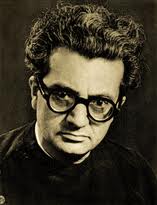 n on August 14, 1892, was an English composer of Parsi descent. He was quite controversial in his time and still is – among the people who’ve actually heard his music: some of Sorabji’s pieces are of extreme length. His piano sonata no. 5 runs for about five hours, and that’s not even his longest composition. Some critics think of him as one of the most interesting composers of the 20th century, while others, like The Guardian’s Andrew Clements, feel that Sorabji’s talent never matched his musical ambition. We have a piece by Sorabji, Pastiche on Habanera, but it is not very representative, so here is the first movement of his piano sonata no. 1 played by Marc-André Hamelin (courtesy of YouTube). If Hamelin though it worth studying and performing, that probably means that the sonata is not musically insignificant.
A totally different composer, the delightful Jacques Ibert, was born on August 15, 1890. He studied at the Paris conservatory, and took private composition and instrumentation lessons with André Gedalge; his fellow students were Arthur Honegger and Darius Milhaud, both influential members of Les Six. Ibert, though friendly with both, never joined the group. Ibert wrote operas, a ballet, several concertos, and a good deal of instrumental music. His songs are among the best in his output. Here’s Chanson à Dulcinée, from Chanson de Don Quichotte. It’s performed by the bass Liam Moran; Renate Rohlfing is on the piano.
Two other French composers were also born this week: Gabriel Pierné and Benjamin Godard, Pierné was born on August 16, 1863, Godard on August 18, 1849. Like Ibert, Godard studied at the Paris Conservatory, and like him, also won the prestigious Prix de Rome. He wrote operas, ballets and instrumental music, but not much of it is performed these days. But here is the first movement of his Sonata op.36 for violin and piano, and it sounds very nice. It’s played by the French violinist Elsa Grether; Eliane Reyes is on the piano. Benjamin Godard also studied at the Paris conservatory, and wrote an enormous number of compositions during his rather brief life (he died at the age of 45). There are recordings of his music on the market, but they’re few and far between. Here is a charming little morsel, Abandon. It’s performed by Albert Markov, violin, his son Alexander Markov, violin, with Dmitry Cogan on the piano.
And finally, from a totally different era, Antonio Salieri. He was born on August 18, 1750 in Legnano, Italy but spent most of his productive years in Vienna. Some day we’ll dedicate a whole piece to Salieri, but right now you can listen to part of his 26 Variations on the theme of La Folia. It’s performed by the London Mozart Players, Matthias Bamert, conductor (here, courtesy of YouTube).
Read more... « first ‹ previous … 642 643 644 645 646 647 648 649 650 … next › last »
Pyotr Ilyich Tchaikovsky - Valse In F Sharp Minor, Op. 40 No. 9
Anna Shelest (Piano)