
François Couperin - L'Art de toucher le Clavecin
Striped Gazelle (Harpsichord)
Berg, Arrau and more 2023
This Week in Classical Music: February 6, 2023. Berg, Arrau and more. It so happened that for the last month, we’ve been preoccupied with Austro-German composers, first with the mostly 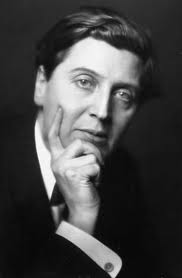 Jewish, and now mostly forgotten, composers who flourished early in the 20th century, then with Mozart and Quantz. This week brings another name, which would firmly fit into the same category – that of Alban Berg, who was born in Vienna on February 9th of 1885. Fortunately, we’ve written about Berg many times, so, in addition to the recent posts, we can refer you, for example to theseentries. In the meantime, we’ll turn to performers whom we’ve neglected in our recent posts. Arthur Rubinstein and John Ogdon were born in late January, the former on the 28th in the year 1887, and the latter on the 27th, exactly 50 years later, in 1937. Rubinstein lived a wonderfully long life, almost 96 years, and performed well into his 80s (he gave his last concert in London in 1975, when he was 89). On the other hand, Ogdon’s career was brief: at the age of 36 he experienced a mental breakdown, and from that time till his death in 1989 at the age of 52, he gave just a few concerts.
Two wonderful cellists were also born in late January: Jacqueline du Pré, on the 26th in 1945, and Lynn Harrell, on the 30th in 1944. Here we have a similar story: Harrell performed till the ripe age of 76 (he died, suddenly, in 2020). The du Pré tragedy is widely known, it was portrayed in books and film: a tremendously talented musician, she was struck by multiple sclerosis in 1971, when she was only 26 (she died on 19th of October 1987 at the age of 42). Let’s listen to both cellists in the same Cello concerto by Antonin Dvořák. Here Jacqueline du Pré performs the first movement of the concerto. This recording was made live in Stockholm in 1967 with the Swedish Radio Symphony Orchestra, Sergiu Celibidache conducting. And here Lynn Harrell plays the second movement. This recording was made in 1982 in London with Vladimir Ashkenazy 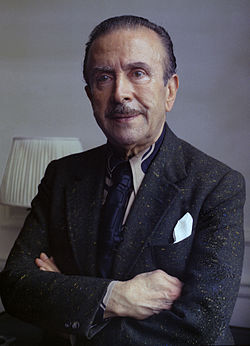 conducting the Philharmonia Orchestra.
This week we commemorate the anniversary of the great Chilean pianist Claudio Arrau, who was born on this day in 1903. A child prodigy, he gave his first public concert at the age of five. At the age of 11, he played all of Liszt’s Transcendental Etudes; that was also the year when he gave his first concert in Berlin, where he would live and teach from 1924 to 1940. In 1935 he gave 12 concerts playing all of Bach’s keyboard compositions. In 1941 he settled in New York. He played several complete cycles of Beethoven’s sonatas, both in the US and in Europe, and continued to perform into his 80s. Arrau had an enormous repertoire. It was said that he could play 76 different recitals without repeating a single piece, not counting the piano concertos. We can think of only Sviatoslav Richter having a broader range. Considering that much of Arrau’s repertoire was recorded, it’s difficult to pick one piece to demonstrate his talent. So, we’ll give you two Beethoven sonatas: first, Piano Sonata No. 21 "Waldstein" in C major, op. 53, recorded in 1963, and then, Piano Sonata No. 17 “Tempest” in D minor, Op. 31, No. 2, recorded in 1965. The tempos are slow but the results are profound.
Read more...Ludwig van Beethoven - Piano Sonata No. 17 in D minor, Op. 31, No. 2 “Tempest”
Claudio Arrau (Piano)
Ludwig van Beethoven - Piano Sonata No. 21 "Waldstein" in C major, op. 53
Claudio Arrau (Piano)
Antonin Dvořák - Cello Concerto, mov. 2, Adagio, ma non troppo
Lynn Harrell (Cello)
Philharmonia Orchestra (Orchestra)
Vladimir Ashkenazy (Conductor)
Antonin Dvořák - Cello Concerto, mov. 1 Allegro
Jacqueline du Pré (Cello)
Swedish Radio Symphony Orchestra (Orchestra)
Sergiu Celibidache (Conductor)
Johannes Brahms - Intermezzo op. 117 no. 3
Kathy Kim (Piano)
Brahms - Intermezzo op.117 no.2
Kathy Kim (Piano)
Johann Joachim Quantz 2023
This Week in Classical Music: January 30, 2023. Quantz, not an obvious choice. Two - maybe three great composers were born this week and, in addition to that, several more of the lower rung: Franz Schubert, on January 31st of 1797, Felix Mendelssohn, on February 3rd of 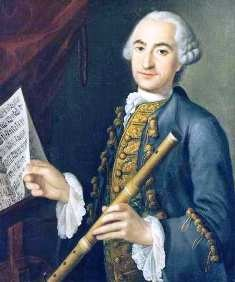 1809, and, possibly, Giovanni Pierluigi da Palestrina, on February 3rd of 1525, although the latter is far from certain. Of the “lesser ones,” Alessandro Marcello, the Italian composer who wrote the Oboe Concerto which Bach transformed into the famous concerto for the keyboard (D minor, BWV 974), was born in Venice on February 1st of 1673. And then there was Johann Joachim Quantz. What caught our eye (and ear) was not as much his music but his patron. Just the last week we wrote about Mozart and Emperor Joseph II, Mozart’s most important benefactor. Joseph, one of the enlightened monarchs of the 18th century, was very musical: he played the keyboard (we know that not just from the movie Amadeus, where he’s presented playing very poorly, almost comically, but also from paintings in which he’s portrayed sitting by the instrument with scores around). He also played the violin and cello and, according to his contemporaries, sang well. Joseph supported the creation of the German-language opera (what was then called “National Singspiel") and while he preferred the lighter opera buffa to opera seria, he commissioned Mozart for two operas: The Abduction from the Seraglio and The Impresario. Quantz’s patron, on the other hand, was Joseph’s contemporary and rival, the King of Prussia Frederick II the Great. Frederick was involved with music even more so than Joseph. In his youth, music was his main interest, much more than military affairs which were supposed to be most important to the young king. He played the flute and was a prolific composer, writing more than 120 flute sonatas. He supported many composers, for example, C.P.E. Bach and Franz Benda. In 1747 Frederick met Johann Sebastian Bach, after which Bach used a tune composed by the emperor as the theme for his collection of keyboard pieces called The Musical Offering. But compared to the other composers, Quantz spent more time at Frederick’s court than anybody else.
Johann Joachim Qauntz was born on January 30th of 1697 near Göttingen. He studied music as a boy and eventually became a virtuoso flutist. In his early 20s, he traveled Europe, meeting Alessandro Scarlatti in Naples and Handel in London (Handel recommended Quantz to stay there, advice he didn’t take). In 1728, in Dresden, Quantz met the young Frederick, then still the Crown Prince and they played music together. Soon after, though, Quantz settled in Dresden at the court of August II, the Elector of Saxony, and stayed there for years. In 1740, after his father’s death, Frederick, now King of Prussia, invited Quantz to come to Berlin. Quantz accepted; his position was that of a composer, flute teacher, and flute maker. He stayed at the court till his death in 1773.
Most of Quantz’s music is for the flute, his patron’s favorite instrument. He wrote around 200 sonatas and 300 concertos for it. We’ll listen to several movements from Quantz’s concertos. Here’s the 1st movement from his Flute Concerto in G minor (QV 5:196); here -- the 2nd movement for the Flute Concerto in G minor; here – the 3rd (final) movement from the Flute Concerto in A minor (QV 5:236); and here – the 1st movement from Concerto for Two Flutes (QV 6:8a). Click on the recordings’ links for details on the performances. We think the music is nice and not worse than, say, Gemignani’s music for the violin, which is much better known.
Read more... « first ‹ previous … 63 64 65 66 67 68 69 70 71 … next › last »
György Kurtág - ...quasi una fantasia..., Op. 27
Bahar Dördüncü (Piano)