
Telemann and Two Singers, 2023
This Week in Classical Music: March 13, 2023. Telemann and Two Singers. Georg Philipp Telemann, the prolific friend of Johann Sebastian Bach, was born on March 14th of 1681. We’ve 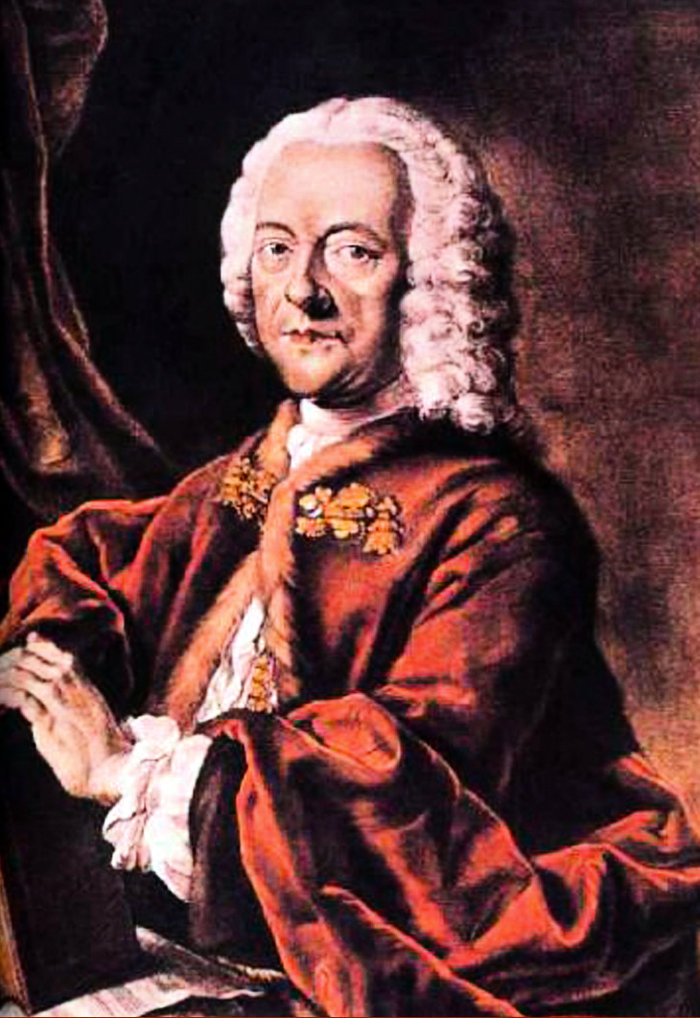 written about the “Telemann problem”: he was so abundant in his output as to make it practically impossible to account for all his compositions and to select – if not the best, then at least the most representative – pieces. Not just a wonderful composer, Telemann was also a very interesting person of apparently boundless energy: in addition to composing, he produced concerts, published music, taught, and wrote theoretical treaties. We’ll dedicate another entry to him, but this time we’ll just play some of his music – as it happens, an Orchestra suite La Bizarre (here). It’s performed by the Akademie Für Alte Musik Berlin.
Two great singers were also born this week, both mezzo-sopranos and both born on the same day, March 16th: the German mezzo Christa Ludwig, and the Spanish Teresa Berganza, five years later, in 1933. Teresa Berganza died less than a year ago, on May 13th of 2022. We paid a tribute to her that year. Christa Ludwig died a year earlier, on April 24th of 2021 at the age of 93. She was born in Berlin, studied with her mother, and debuted at the age of 18 in Johann Strauss’s Die Fledermaus. In 1954 she sang the role of Cherubino in Mozart’s The Marriage of Figaro at the Salzburg festival. In 1959 she made her American debut as Dorabella in Cosi fan Tutti at the Lyric opera in Chicago (Elisabeth Schwarzkopf was Fiordiligi). She would return to Chicago five more times,.jpg "Christa Ludwig (with Bernstein)") singing Cherubino in Le nozze di Figaro, Fricka in Die Walküre, and roles in Boito’s Mefistofele, Verdi’s La forza del destino, and Richard Strauss’s Der Rosenkavalier. She had a rich, very focused voice with no unnecessary vibrato. Her repertoire was large, from Monteverdi to Gluck, Mozart, Wagner, Verdi, and Berg. She was also a great lied singer and a wonderful Mahlerian, performing in his song cycles, such as Kindertotenlieder and Rückert-Lieder, and in Das Lied von der Erde and Symphony no. 3. She worked with the best conductors of her time, from Böhm and Klemperer to Bernstein, Solti, and Karajan.
singing Cherubino in Le nozze di Figaro, Fricka in Die Walküre, and roles in Boito’s Mefistofele, Verdi’s La forza del destino, and Richard Strauss’s Der Rosenkavalier. She had a rich, very focused voice with no unnecessary vibrato. Her repertoire was large, from Monteverdi to Gluck, Mozart, Wagner, Verdi, and Berg. She was also a great lied singer and a wonderful Mahlerian, performing in his song cycles, such as Kindertotenlieder and Rückert-Lieder, and in Das Lied von der Erde and Symphony no. 3. She worked with the best conductors of her time, from Böhm and Klemperer to Bernstein, Solti, and Karajan.
Here is her Dorabella in the aria È amore un ladroncello from Mozart’s Così fan tutte. Karl Böhm conducts the Philharmonia Orchestra in this 1962 recording. And here Christa Ludwig is in an exceptional recording of Gustav Mahler’s Rückert-Lieder. Herbert von Karajan conducts the Berlin Philharmonic Orchestra.
Read more...Wolfgang Amadeus Mozart - È amore un ladroncello, from Così fan tutte
Christa Ludwig (Mezzo-soprano)
Philharmonia Orchestra (Orchestra)
Karl Böhm (Conductor)
Georg Philipp Telemann - Orchestral Suite "La Bizarre" in G major
Akademie für Alte Musik Berlin (Ensemble)
Ludwig van Beethoven - Beethoven Piano Sonata Op. 53 in C major "Waldstein"
David-Michael Dunbar (Piano)
Johann Sebastian Bach - Sleepers Awake
Michael J. Miles (Harpsichord)
David Jennings (Percussion)
Bob Lizik (Bass)
Sue Demel (Soprano)
Arthur Honegger, 2023
This Week in Classical Music: March 6, 2023. Honegger. The always popular Maurice Ravel was born this week, on March 7th of 1875. And so were Carl Philipp Emanuel Bach, probably 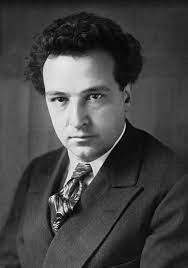 the most important composer among Johann Sebastian’s sons (on March 8th of 1714); Carlo Gesualdo, the brooding murderer and composer of huge talent (on the same day in 1566); Josef Mysliveček, a Czech friend of Mozart’s (on March 9th of 1737); and Samuel Barber, one of the most popular American composers of the 20th century (on March 9th of 1910). All of them we’ve written about on many occasions. One composer whom we’ve mentioned often but, quite undeservedly, only in passing, is Arthur Honegger, a Swiss and unusual member of Les Six.
Honegger was born on March 10th of 1892 in the French port city of Le Havre to Swiss parents (there was an old Swiss colony in the city). As a child, Honegger studied the violin and harmony in Le Havre and then, for two years, in Zurich. At the age of 18, while still living in Zurich, he enrolled in the Paris Conservatory; he commuted there by train twice weekly. In Paris Honegger studied with Charles-Marie Widor, the famous organist and composer, and Vincent d'Indy. In 1913 Honegger settled in Montmartre, where he lived for the rest of his life. While at the Conservatory, he met Germaine Tailleferre, Georges Auric, Darius Milhaud, all future members of Les Six (Milhaud became his closest friend), and Jacques Ibert, with whom he would later collaborate on two pieces. In 1926 Honegger married a fellow pianist Andrée Vaurabourg. Their married life was unusual: Honegger required solitude to compose, so Andrée resided with her mother, while Honegger visited her every day for lunch. They lived apart for the rest of their married life, except for a period following Vaurabourg’s car accident, when Honegger took care of her, and at the end of Honegger’s life. Despite this arrangement, they had a daughter who was born in 1932. Vaurabourg was Honegger’s most trusted musical advisor; an excellent pianist, she was also a prominent teacher: among her students was Pierre Boulez.
During WWII Honegger remained in Paris and taught at the Ecole Normale de Musique. Depressed during the war, he further suffered from heart problems (a heart attack in 1947 almost killed him). He was in poor health for the rest of his life and died in November of 1955, the first of the Les Six. And speaking of Les Six, it was never a unified group, and esthetically, a serious-minded Honegger, mostly interested in large-form compositions like operas and musical dramas, was an odd man out. What kept them all together was stimulating companionship and appreciation of each other’s talent.
A composition that brought Honegger international fame was a 27-movement incidental score to a biblical drama Le roi David. Among his most popular pieces is Pacific 231, inspired by the sounds of a steam locomotive (Honegger was a big train enthusiast, he also loved fast cars and rugby). Here’s his last symphony, no. 5, subtitled “Di tre re” (or Of the three Ds, “re” is note D in the French notation. This note is played at the end of each movement). The Danish National Radio Symphony Orchestra is conducted by Neeme Järvi.
Read more...Arthur Honegger - Symphony No. 5 'Di Tre Re'
Danish National Radio Symphony Orchestra (Orchestra)
Neeme Järvi (Conductor)
Kuss Quartett's Recital
03/07/2023 19:30, Festhalle Harmonie Heilborn
"Kuss Quartett" String Quartett
Armenian, ukrainian, russian and georgian miniatures.
K. Vardapet
A. LEONOVA ( "Die Metaphern": I."Die Ruinen" II. "Der Stille")
P.I. Tschaikovsky
S. Zinzadze
Igor Stravinsky
P. I. Tschaikovsky
L.V. Beethoven
Franz Schubert - Impromptu Op 90 / 3
Nico De Napoli (Piano)
Gustav Mahler - Rückert-Lieder
Christa Ludwig (Mezzo-soprano)
Berlin Philharmonic Orchestra (Orchestra)
Herbert von Karajan (Conductor)