
Giacomo Puccini - Nessun dorma, from Turandot
Beniamino Gigli (Tenor)
Philharmonia Orchestra (Orchestra)
Stanford Robinson (Conductor)
Ruggero Leoncavallo - Vesti la giubba, from Act 1 of I Pagliacci
Beniamino Gigli (Tenor)
La Scala Orchestra (Orchestra)
Franc Ghiene (Conductor)
Rachmaninov 150! 2023
This Week in Classical Music: March 27, 2023. Rachmaninov 150. One day of this week is very special: April 1st marks the 150th anniversary of the great Russian composer, pianist, and 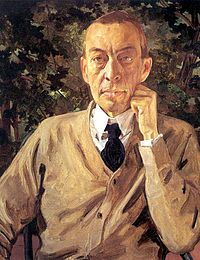 conductor, Sergei Rachmaninov (some outlets were celebrating his birthday on the 20th of March, as that was his birthdate according to the old Russian Julian calendar, but this is like observing the Russian Revolution on October 25th, rather than the conventional November 7th). We’re not going to trace Rachmaninov’s life; suffice it to say that it was divided into two irreconcilable parts, one, from his birth till the Russian Revolution, and then, from 1918, emigration and life in the United States. In terms of his creative output, these two parts are incomparable. The vast majority of his compositions were created while Rachmaninov lived in Russia: his piano pieces, such as the Études-Tableaux and the Preludes, the first three Piano concertos, two symphonies and Isle of the Dead, the Second piano sonata (the first one was a juvenile piece), the early operas, most of his songs, the choral works, such as The Bells and the All-Night Vigil – all of these were written in Russia. In America Rachmaninov had to earn his living by playing piano and conducting, with very little time left for composing. All he wrote while in America were (not counting several miscellaneous pieces) a not-very-successful Piano Concerto no. 4, Rhapsody on a Theme of Paganini, Symphony no. 3, Variations on a Theme of Corelli, and Symphonic Dances. We’ve always wondered if one could explain such a tremendous disparity just by Rachmaninov’s need to earn money by performing. We suspect there was more to it, but this is not the place to address this issue.
That Rachmaninov was one of the greatest pianists of the 20th century is accepted by practically everybody. But what about his compositions? He’s one of the most popular composers ever, if one judges by the number of his pieces being performed and broadcasted, the Piano concertos nos. 2 and 3 and Rhapsody on a Theme of Paganini in particular. But was he a great composer? Here opinions differ. Clearly, he wasn’t an innovator, but not all great composers were: we recently talked about Bach, whose music was considered outdated by many of his contemporaries. Eric Blom, a famous music critic and the editor of the 5th edition of Grove's Dictionary of Music, was one of the skeptics. He wrote that the composer “did not have the individuality of Taneyev or Medtner. Technically he was highly gifted, but also severely limited. His music is ... monotonous in texture ... The enormous popular success some few of Rakhmaninov's works had in his lifetime is not likely to last, and musicians never regarded it with much favour.” This seems to be both wrong and unfair, and Harold Schonberg, the chief music critic of the New York Times, responded (in his book on great composers) in kind: “It is one of the most outrageously snobbish and even stupid statements ever to be found in a work that is supposed to be an objective reference.” We have to confess that sometimes, listening to somewhat shallow, formulaic passages that appear quite often in many of Rachmaninov’s pieces, we have our doubts. But that’s not the way to judge any creative artist: it should be done by what he did best, and Rachmaninov did write brilliant music. That’s what will keep him in the pantheon of composers of the first half of the 20th century.
Let’s listen to some music. First, Sviatoslav Richter plays two of Rachmaninov’s Etudes-Tableaux op.33: no. 5 and no. 6, but from 1911. And here Richter again, in Prelude no. 10, from op. 32, composed a year earlier, in 1910. And finally, a sample of Rachmaninov’s late symphonic work: from 1940, his Symphonic Dances. Vladimir Ashkenazy leads the Royal Concertgebouw Orchestra.
Read more...Sergei Rachmaninov - Symphonic Dances, Op. 45
Royal Concertgebouw Orchestra (Orchestra)
Vladimir Ashkenazy (Conductor)
Sergei Rachmaninov - Prelude op.32, no. 10
Sviatoslav Richter (Piano)
Sergei Rachmaninov - Etudes-Tableaux op.33, no. 6
Sviatoslav Richter (Piano)
Sergei Rachmaninov - Etudes-Tableaux op.33, no. 5
Sviatoslav Richter (Piano)
Bach and Four Pianists, 2023
This Week in Classical Music: March 20, 2023. Bach and Four Pianists. Johann Sebastian Bach was born on March 21st of 1685 in Eisenach. Four pianists were also born this week; we’ll 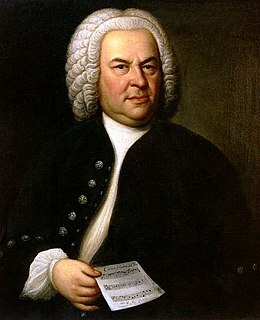 present them briefly and then have them play several of Bach’s works. A word on dating Bach’s compositions: even though we know a lot about his life, the dating of his output is very approximate, so sometimes it’s not clear where Bach was when he wrote some of the pieces. Different sources often provide different dates and estimate ranges.
Our pianists are: Sviatoslav Richter, born on March 20th of 1915 in Zhytomyr, then in the Russian Empire, now a city in independent Ukraine. Richter is acknowledged by many as one of the greatest pianists of the 20th century. His repertoire was enormous, he said that he could play eighty different programs, not counting chamber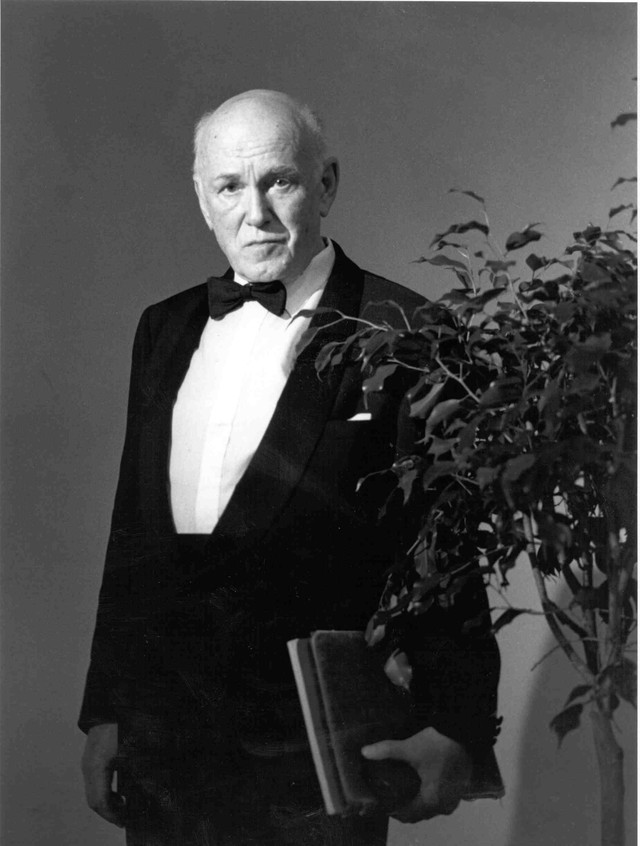 pieces. He continued adding to it even in his 70s.
Egon Petri, a German pianist of Dutch descent, was born on March 23rd of 1881 in Hanover. He was the favorite pupil and associate of Ferruccio Busoni. Petri had an illustrious international career and in 1923 became the first foreign pianist to perform in the Soviet Union. Like his teacher, much of Petri’s repertoire was concentrated on Bach, and like him, he became a famous pedagogue.
The American pianist Byron Janis will turn 95 on March 24th. He was born in McKeesport, PA into a Jewish family (the original family name was Yankelevitch). As a child, he studied with Josef and Rosina Lhévinne in New York. Vladimir Horowitz was in the audience when Janis, age 16, played Rachmaninov’s 2nd Piano Concerto and immediately took him as his first pupil. In 1960 Janis had a tremendously successful tour of the Soviet Union, just two years after Van Cliburn’s win of the First Tchaikovsky competition. Janis’s career was cut short in 1973 when he developed arthritis in both hands.
Wilhelm Backhaus, one of the most interesting German pianists of the 20th century, was born on March 26th of 1884 in Leipzig. An early protégé of Arthur Nikisch, he studied for a year with Eugene d’Albert but was mostly self-taught. In 1900, Backhaus toured England, and four years later he became a professor of music in Manchester. In 1912-1913 he toured the US, the first of his many highly successful tours of the country. In 1931 he became a Swiss citizen. His technique was legendary, and he maintained it well into his 80s. Backhaus was compromised by his association with the Nazis after their takeover in 1933. We’ll address this chapter of his life later.
So now to some Bach, as performed by our pianists. Here is an early (1948-1952) Sviatoslav Richter recording of Fantasia and Fugue in A minor, BWV 944. Bach wrote it sometime between 1707-1713/1714 when he was most likely in Weimar, where he was an organist and Konzertmeister at the ducal court.
And here is a much later work, Prelude, Fugue and Allegro in E-Flat Major, BWV 998, from 1740-1745, when Back was Thomaskantor in Leipzig. It’s performed by Egon Petri.
Here, 19-year-old Byron Janis plays Prelude and Fugue in A minor, BWV 543 as arranged by Liszt. The dating of this piece is all over the place: Grove Music says “after 1715,” Wikipedia – after 1730.
And finally, Wilhelm Backhaus plays the English Suite No. 6 in D minor, BWV 811 (here), composed sometime between 1720 and 1725. This is a bit problematic because in 1720 Bach was living in Köthen, serving as the Kapellmeister to the Prince of Anhalt-Köthen, while in 1725 he was already in Leipzig.
Read more...Johann Sebastian Bach - Suite No. 6 in D minor, BWV 811
Wilhelm Backhaus (Piano)
Giacomo Puccini - Nessun dorma, from Turandot
Franco Corelli (Tenor)
Orchestra del Teatro dell'Opera, Roma (Orchestra)
Francesco Molinari-Pradelli (Conductor)