
Eisler and Orff, 2023
This Week in Classical Music: July 10, 2023. Hanns Eisler and Carl Orff. Carl Orff was born on this day in 1895. Hanns Eisler’s anniversary was three days ago, he was born in 1898. 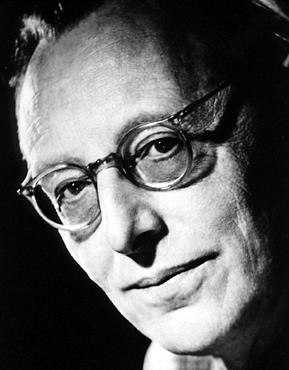 Last week we promised to write about these two composers: close contemporaries, they lived through the dreadful 12 years of Nazi rule. It’s interesting how differently their lives turned out. In a way, some of it was inevitable, given the antisemitism of the Nazi ideology: Eisler’s father was Jewish while Orff was a Bavarian whose father was an officer in the German Imperial Army. Still, many personal choices lead to their very different paths. (While this is the first time we’re writing about Hanns Eisler, we posted a detailed entry on Orff four years ago, you can read it here). Both Orff and Eisler served during the Great War, both were wounded (Orff severely, barely surviving). After the war, Orff moved to Munich, while Eisler returned to Vienna where he became Arnold Schoenberg’s student; five years later Eisler moved back to Germany and settled in Berlin. The cities, Berlin and Munich, were musical centers of Germany, though Berlin at the time was an epicenter of experimentation, while Munich’s musical establishment was more conservative.
 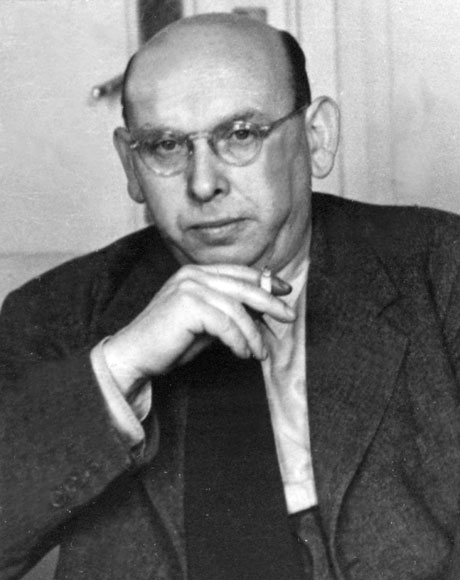 During the early years of the Weimar Republic, Orff and Eisler were adventuresome composers, though Eisler more so: he was the first of Schoenberg’s students to write music in the 12-tone system, while Orff was more inspired by Stravinsky. Both were profoundly influenced by the playwright and Marxist firebrand Bertolt Brecht, again Eisler more so than Orff – he maintained a relationship with Brech for the rest of his life, in Germany, then in the US, and later in the GDR.
In the mid-1920s their paths started to diverge: Orff got interested in musical education and in the music of early Italian opera composers, especially Monteverdi. Eisler in the meantime was turning more and more political. Here’s one of the songs from Eisler’s cycle Zeitungsausschnitt or Newspaper Clippings. It’s called Kriegslied eines Kindes (War Song of a Child). The soprano Anna Prohaska is accompanied by Eric Schneider. And here’s another wonderful song from the same cycle, Mariechen. This short “clipping” is performed by Irmgard Arnold (soprano) and Andre Asriel (piano). Also during those last years of the Weimer, Eisler wrote music to several of Brecht’s plays. Sometime around 1931, Eisler composed a then-famous (or in our opinion, infamous) song Solidaritätslied (Song of Solidarity) for the German Communist Party with the lyrics by Brecht. For all we know, with very little change in the lyrics it could’ve been a Nazi march, but as is, it was tremendously popular with the German Left before the Nazis took over. Here it is; Hannes Wader, a popular West German singer and a member of the German Communist Party, performs it to an appreciative audience sometime around 1977.
Things changed dramatically with the Nazi’s rise to power in 1933. Orff felt quite comfortable with the new regime, even though he never joined the Nazi party. In 1937 he composed his most famous work, Carmina Burana, a cantata based on the German Latin-language poems from the 11th-12th centuries. It became very popular in Germany and, after some hesitation, was embraced by the Nazi regime. It’s not clear why would the Nazi ideologues accepted this piece and its rather salty lyrics, but they did. But so did many liberal opponents of the regime, clearly there was no “fascist message” in the music itself. Unfortunately, Orff compromised himself on other occasions. For example, when the Nazis decided that Mendelssohn’s music to Midsummer Night’s Dream was no longer acceptable, because of its Jewish provenance, he answered their call and agreed to write a replacement. Here’s a scene from Ein Sommernachtstraum called Mondaufgang (Moonrise). The Academy of the Munich Radio Orchestra is conducted by Christian von Gehren. Our feeling is that were it performed more widely these days it would become very popular (as is, its story makes it a rather politically incorrect piece).
Eisler’s life after 1933 couldn’t have been more different. We’ll continue with it next week.
Read more...Hanns Eisler - Kriegslied eines Kindes
Anna Prohaska (Soprano)
Eric Schneider (Piano)
Carl Orff - Mondaufgang, from Ein Sommernachtstraum,
Academy of the Munich Radio Orchestra (Orchestra)
Christian von Gehren (Conductor)
Hanns Eisler - Solidaritätslied
Hannes Wader (Tenor)
Hanns Eisler - Mariechen
Irmgard Arnold (Soprano)
Andre Asriel (Piano)
NDR Kultur Foyerkonzert on tour
07/07/2023 18:00, Rittersaal, Celler Schloss
NDR Kultur Foyerkonzert on tour.
Performers: Kuss Quartett (Germany)
W.A. Mozart: Streichquintett B‑Dur KV 174 1. Satz
Birke Bertelsmeier „Krise“ (für Kuss Quartett, 2021)
W.A. Mozart Streichquintett C‑Dur KV 515 3. Satz
Sulkhan Tsintsadze: Bauerntanz
ANNA LEONOVA (Ukraine) — Ruinen (für Kuss Quartett, 2023)
Komitas Vardapet: Roter Schal & Festtagslied
W.A. Mozart: Streichquintett Es-Dur KV 614 4. Satz
TV-Ausstrahlung am 23.Juli, 18 Uhr
Mahler 2023
This Week in Classical Music: July 3, 2023. Mahler and more. Gustav Mahler was born on July 7th of 1860. With all the ebbs and flows in classical music tastes, he remains at the very top, acknowledged as one of the greatest European composers, beloved both by the regular listeners, judging by the number of “views” his symphonies receive on YouTube, and by music critics, based on their very subjectively compiled “best” lists. Here’s the finale (the fifth movement, Im Tempo des Scherzos) of his Symphony no. 2, Resurrection. The London Symphony Orchestra is conducted by Georg Solti. The Second Symphony was written between 1888 and 1894, while Mahler was moving from one city to another as an itinerant opera conductor. In 1888 he resigned from the Leipzig opera and went to Budapest, assuming the directorship of the Royal Hungarian Opera. He stayed there, rather unhappily, till 1891, when he was sacked, though by that time he was already negotiating a contract with the Stadttheater Hamburg, the city’s main opera house. Hired in Hamburg as the chief conductor, he later succeeded Hans von Bülow as director of the city's subscription concerts. It was also during the years in Hamburg that he established the pattern of composing during the summer months, first in Steinbach on Lake Attersee, then in Maiernigg on Lake Worthersee in Carinthia, and later in Toblach in South Tyrol. In Steinbach, the family stayed in an inn, but for his own purposes, Mahler built a tiny one-room house on the lake where he would retire to for hours and compose. It was in this hut that he completed the Second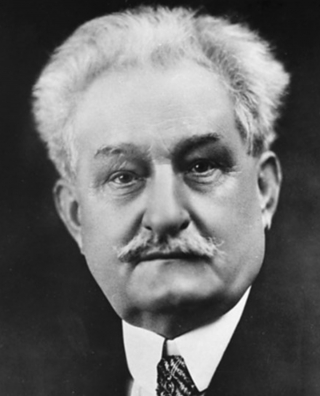 Symphony and wrote most of the Third.
Several interesting composers were born this week, all deserving their own entry. Leoš Janáček, a Czech composer, was born on July 3rd of 1854. Six years older than Mahler, he was born in the same country, Austria-Hungary: Mahler in Kaliště, Bohemia, Janáček in Hukvaldy, Moravia. Bohemia and Moravia are now parts of the Czech Republic but back then were ruled by the Austrian Emperor from Vienna. But of course, this is where the similarities end. Mahler, a Jew, eventually moved to Vienna, and assumed the leadership of the Hofoper, the main opera house of the Empire (in the antisemitic Vienna to get the post he had to convert to Christianity) and composed symphonies with universal appeal (and at times, almost universal rejection). Janáček, on the other hand, became a Czech nationalist, politically supported the independence of Czechia and is considered, together with Dvořák and Smetana, one of the most important Czech composers. One of Janáček’s best-known works is the opera Jenůfa, completed in 1902. Here’s the finale, with Gabriela Beňačková in the title role. In this 1992 live recording, James Conlon conducts the Metropolitan Opera orchestra.
Ottorino Respighi, one of the most important Italian composers of the early 20th century, was born on July 9th of 1879 in Rome. Some years ago, we wrote an entry about him, you can read it here. Also, an interesting composer with a fascinating biography, Hanns Eisler was born on July 6th of 1898. We’ll write about him next week, together with his contemporary and compatriot, Carl Orff.
Read more...Leoš Janáček - Jenufa, finale
Gabriela Beňačková (Soprano)
Metropolitan Opera Orchestra (Orchestra)
James Conlon (Conductor)
Georg Benda, 2023
This Week in Classical Music: June 26, 2023. Jiří Benda Jiří Antonin Benda, who is better known by his Germanized name, Georg Anton Benda, came from an illustrious family of 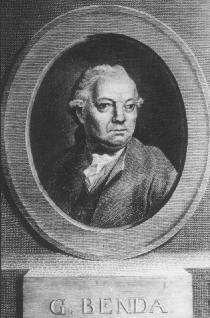 Bohemian musicians. His father, his mother’s family and four of his siblings were musicians. Jiří was born in Staré Benátky (now Benátky nad Jizerou), a village about 25 miles from Prague on June 30th of 1722. His older brother Franz (František) became a famous violinist and found employment with the Prussian Crown Prince Frederick who later became the King of Prussia Frederick II, known as the Great. In 1743 Franz helped his family move to Prussia where Jiříjoined his brother, the Kapellmeister, in the court orchestra. In 1750 Georg, as was by then his name, became Kapellmeister at the court of Duke Friedrich III of Saxe-Gotha. There he started composing cantatas and Italian operas. After several years at the court, the Duke allowed Benda to go to Italy and even provided him with the money for the trip. In Venice Benda met the famous opera composer Johann Adolph Hasse. He also visited Bologna, Florence and Rome, where he was introduced to the modern operas of Gluck, Galuppi and others. Upon returning from Italy in 1767, Benda composed several intermezzi (short comic operas) and one of a regular length. An important event happened in 1774: a famous theatrical troupe arrived in Gotha, and Abel Seyler, the director, commissioned Brenda a “melodrama,” a staged dramatic work somewhat similar to opera but with the text being spoken rather than sung. His first melodrama, Ariadne auf Naxos, was very successful. The second melodrama, Medea, followed shortly after. Benda then composed several operas, Romeo und Julie among them. He left Gotha in 1778 to live in Hamburg and Vienna, but after failing to receive important court appointments, he returned to Gotha a year later. He retired soon after and lived on a small pension in the village of Köstritz nearby but traveled once in a while, even going to Paris to stage Ariadne at the theater Comédie-Italienne. Benda died in Köstritz on November 6th of 1795.
As far as we can tell, Ariadne auf Naxos and Medea are the best pieces of music Benda has written. Mozart enjoyed Benda’s melodramas and in a letter to his father called them “very excellent,” adding “I like those two works of his so much that I carry them about with me.” The problem with them as a genre is that it doesn’t really work. Melodramas consist of short bursts of music, usually no longer than a minute, often of very high quality, interspersed with spoken text. The text breaks down the music’s development ark, and the text begs for a melody. No wonder it didn’t take long foropera to completely replaced the melodrama. Still, we think it’s very much worth a try. Here’s Ariadne auf Naxos. Some of the music is quite Mozartean – no wonder Wolfgang liked it. The Prague Chamber Orchestra is conducted by Christian Benda, the composer’s descendant. Ariadne is about 40 minutes long; if you want a shorter sample, even if the music is not on the same level, here’s a scene from Romeo und Julie. Michael Schneider leads La Stagione Frankfurt and the soloists in a four-minute excerpt from Act III of the opera.
Also, June 26th is the birthday of one of our favorite conductors, Claudio Abbado. He was born 90 years ago in Milan.
Read more... « first ‹ previous … 54 55 56 57 58 59 60 61 62 … next › last »
Carl Orff - Catulli Carmina
Münchner Rundfunkorchester (Orchestra)
Mozart-Chor, Linz (Chorale)
Franz Welser-Möst (Conductor)