
Chaminade and Jolivet, 2023
This Week in Classical Music: August 7, 2023. Chaminade and Jolivet. Two French composers were born this week, Cécile Chaminade, on August 8th of 1857, and André Jolivet, 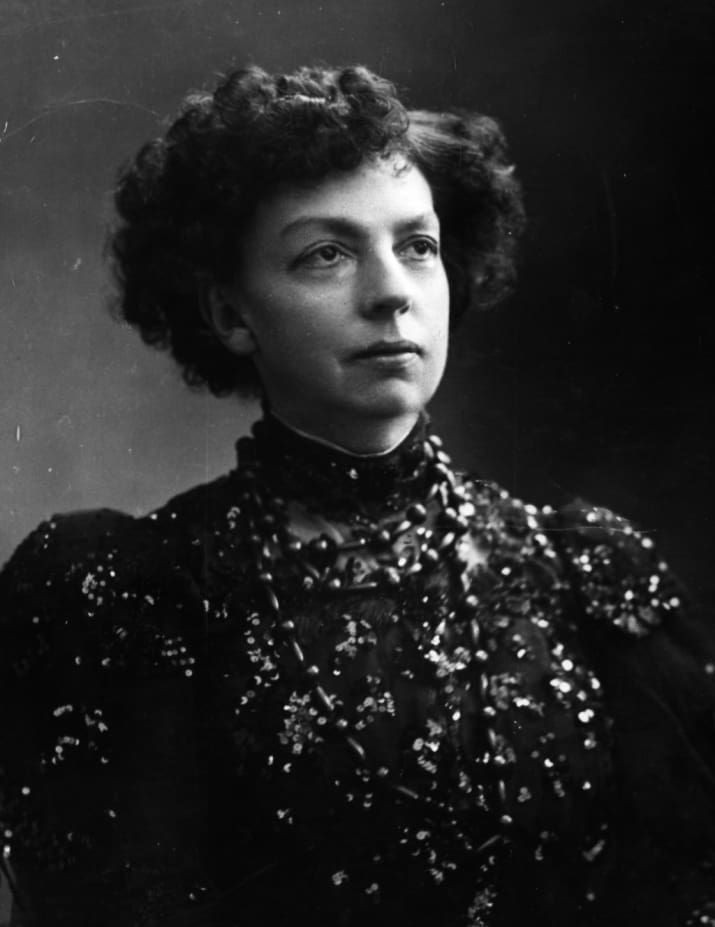 on the same day but in 1905. We suspect that in the last three years the music of Chaminade has been played more than throughout the previous 100: we live in the era of Wokeness when a composer’s gender (or race) is considered more important than his or her talent, and as there is a limited number of female composers, even the salon music of Chaminade becomes popular among presenters and performers, if not necessarily the listening public. This is not to say that in the past, women composers weren’t discriminated against: Chaminade, for example, was accused by her contemporary music critics of being both too feminine in her songs and lyrical piano pieces, and too masculine in the larger, more energetic pieces, such as the Konzertstück, (you can listen to it here). We don’t find anything excessively “masculine” in the piece, we’re not even sure what that term means when applied to music – it would’ve never been used by our contemporaries while discussing the music of Jennifer Higdon, Shulamit Ran, Libby Larsen, or Augusta Read Thomas. We just don’t find the Koncertstück very interesting – it has lots of trills in the style of the worst of Liszt and not much real musical material. (In this recording James Johnson plays the piano, the Royal Philharmonic Orchestra is conducted by Paul Freeman). Chaminade’s music became popular not only in her native France but also in England and the US in the 1890s, and that continued for another 20 years after which the interest in her music practically disappeared – her salon pieces clearly became obsolete. Chaminade lived till 1944, the last years in relative
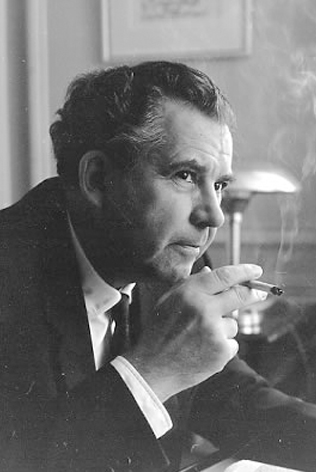 obscurity. She composed around 400 short piano pieces and songs, some of which are not without their charm. Here Anne Sofie von Otter sings her short song L'anneau d'argent. Bengt Forsberg is on the piano.
In the last three years, there has been no resurgence of interest in the music of André Jolivet, even if of the two, he is the more interesting, more inventive composer. We have several of his pieces in our library and have written about him more than once (for example, here). A prolific composer, Jolivet wrote several concertos. One of them was for the Ondes Martenot, an analog synthesizer invented in 1928 by Maurice Martenot; the sound of the Ondes (waves in French) is somewhat similar to that of a Theremin, another electronic instrument invented by the Russian researcher Leon Theremin around the same time). Jolivet also composed three symphonies, chamber and keyboard music, operas, and many songs. Here, from 1954, is Jolivet’s unusually scored Basson Concerto with the string orchestra, piano and harp (André Jolivet conducts the Jean-François Paillard Chamber Orchestra; Maurice Allard is the bassoonist).
And speaking of French music and musicians: the wonderful violinist Ginette Neveu was born on August 11th of 1919. You can read about her here.
Read more...André Jolivet - Concerto for Bassoon, Strings, Harp and Piano
Maurice Allard (Bassoon)
Jean-François Paillard Chamber Orchestra (Orchestra)
André Jolivet (Conductor)
Cécile Chaminade - L'anneau d'argent
Mr. Conductor (Violin)
Anne Sofie von Otter (Soprano)
Bengt Forsberg (Piano)
Cécile Chaminade - Konzertstück
James D. Johnson (Piano)
Royal Philharmonic Orchestra (Orchestra)
Paul Freeman (Conductor)
Refat Hasan Composer - In Heavens
Refat Hasan (Ensemble)
Catching up, July 2023
This Week in Classical Music: July 31, 2023. Catching up. For the last three weeks we’ve been preoccupied with two German composers, Carl Orff and Hanns Eisler, and with that, we  missed several notable anniversaries. We were going to write about Alfredo Casella who was born 140 years ago, on July 25th of 1883, in Turin. We’ll come back to him soon, in the meantime you can read our earlier entry. Eugène Ysaÿe was born 165 years ago, on July 16th of 1858. The wonderful Spanish composer Enrique Granados was born on July 27th of 1867. Hans Rott’s birthday is this week; he was born on August 1st of 1858. We have to admit our fascination with this underappreciated composer who predates Mahler in many ways.
Several outstanding pianists were born in the previous three weeks, all in July: Van Cliburn on the 12th in 1934, Leon Fleisher on the 23rd in 1928, also on the 23rd of July, but in 1944 – Maria João Pires, and Alexis Weissenberg, on the 26th, in 1929. The Portuguese pianist Maria João Pires is the only one still alive, and at the age of 79 is very active, performing about 50 concerts a year.
During this period we also could’ve celebrated three violinists: Pinchas Zukerman, born on the 16th, in 1948; Isaac Stern, on the 21st, in 1920, and Ruggiero Ricci, on the 24th, in 1918. Zukerman is alive and well, and, like Pires, is still very active.
We’ll turn to conductors: Igor Markevitch was born on July 27th of 1912. He was also a composer, but we’ve never had a chance to write about his creative (rather than interpretive) talents. Riccardo Muti just left, with great pomp and circumstance, the post of Music Director of the Chicago Symphony. He was born on July 28th of 1941. And Erich Kleiber, a wonderful conductor and the father of the even more famous Carlos Kleiber, will have his anniversary on August 5th; he was born in 1890.
And finally, the singers. They were especially bountiful, so we’ll list their names only. Every person in this unbelievable group had a birthday in the previous three weeks: Nicolai Gedda, Kirsten Flagstad, Carlo Bergonzi, Pauline Viardot, Susan Graham, Giuseppe Di Stefano, Sergei Lemeshev, Mario Del Monaco, and Peter Schreier. We’ve written about many of them, and if we’ve missed some, like Ms. Graham, we’ll get to it later.
Read more...Eisler and Orff, part III, 2023
This Week in Classical Music: July 24, 2023. Hanns Eisler and Carl Orff, Part III. In the previous two posts, we told the story of two German composers whose lives were upended by the 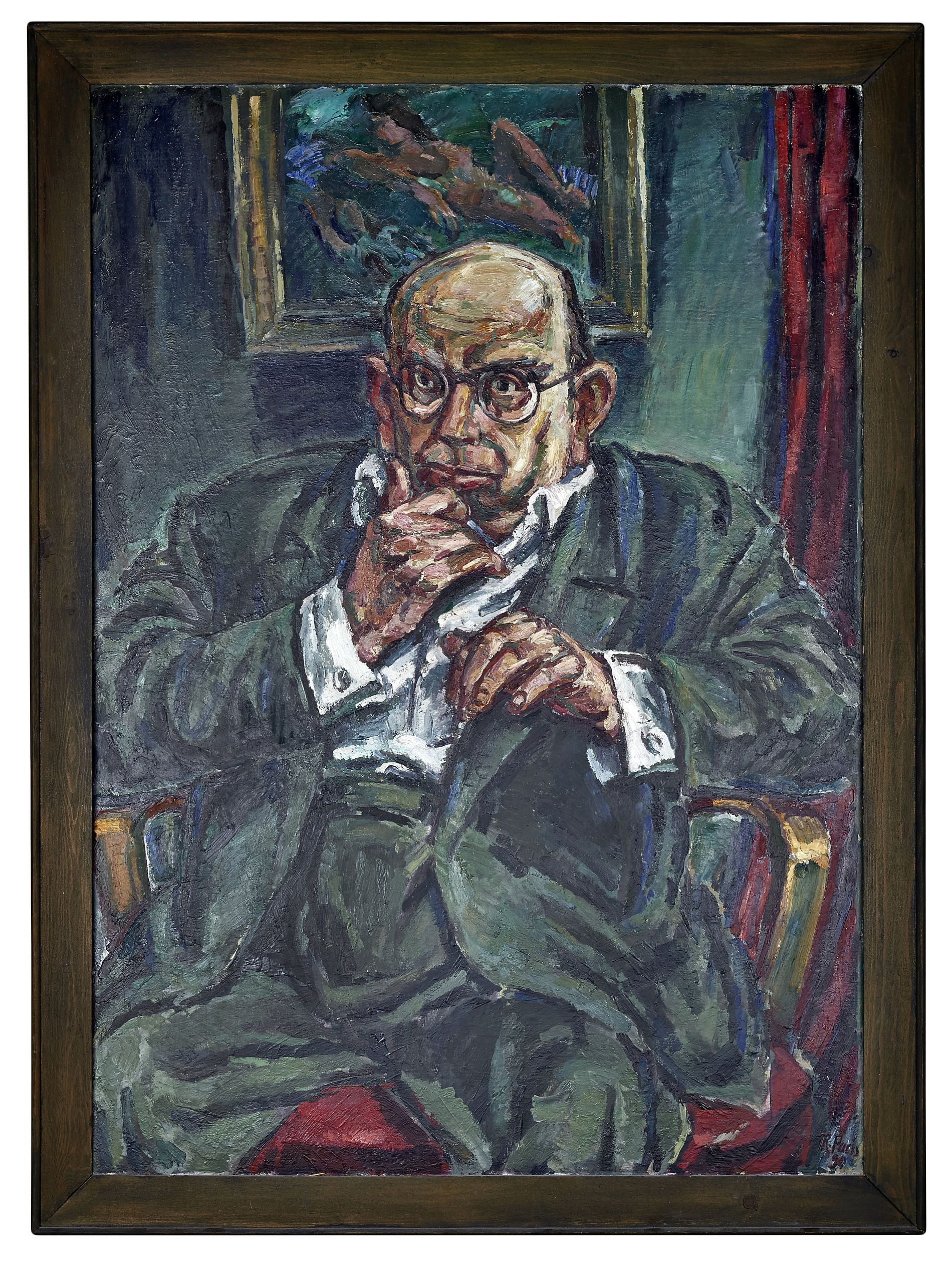 Nazi regime. So what are the legacies of Carl Orff and Hans Eisler? Eisler, as you may recall, spent his last years in East Germany, the Communist country subjugated by the Soviet Union, with an indoctrinated and controlled cultural life. Even though he was GDR’s most famous composer, who wrote the music to the national anthem, Eisler had to live and create according to the Party rules. His more “formalist” music was criticized and much of his output in the last years was populist by design: music for films and choruses and of course for the plays of his dear friend Brecht who was also living in East Germany. But we should remember that Eisler was a committed Marxist who had written propagandist music for years, so the atmosphere of the GDR fitted him better than it probably would any other creative artist. Eisler died in 1968, pretty much forgotten by the West. Then, in 1989, the Berlin Wall fell, the country reunited under the leadership of the Western, democratic part, and Eisler was “rediscovered,” if not with great enthusiasm. Eisler’s music isn’t performed often, even though some of his output is clearly of very high quality. Listen, for example, to his late collection of eight “Serious songs (Ernste Gesänge): it’s absolutely wonderful. (The baritone Günther Leib is accompanied by the
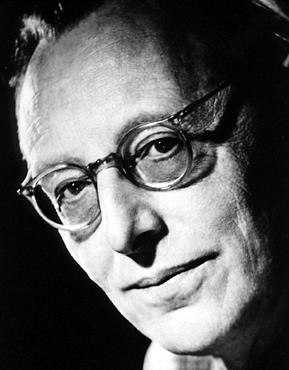 Rundfunk-Sinfonie-Orchester Berlin under the direction of Günther Herbig).
Carl Orff, who survived, and quite comfortably, the Nazi regime while not leaving Germany for a day, was investigated by the Americans in 1946 and underwent the denazification process. According to the musicologist Michael Kater, during the process Orff made up some facts, presenting himself in opposition to the Nazi regime. That helped him to receive the classification allowing a return to public life. In Orff’s defense, he never joined the Nazi Party and never held any leadership positions. He was in many respects a compromised figure (he fulfilled Nazi’s commissions by writing the music for the 1936 Olympic games and replacement music for the Midsummer Night’s Dream), but we cannot say that his music in itself was “fascist.” After the war, Orff taught at the Hochschule für Musik in Munich and received many awards. In 1951 he completed the cantata Trionfo di Afrodite, which, with Carmina Burana and Catulli Carmina formed a triptych called Trionfi. The first part of the triptych, Carmina Burana, remains not just Orff’s most popular composition, but one of the most popular music composed in the 20th century. It has been used in dozens of movies and advertisements. Orff is also remembered for his work in music education. His Schulwerk ("School Work") is some of the best music composed for children.
Here’s Catulli Carmina, composed by Orff in 1941-43. The Münchner Rundfunkorchester orchestra and the Mozart-Chor, Linz are conducted by Franz Welser-Möst.
Read more...Orff and Eisler, part II, 2023
This Week in Classical Music: July 17, 2023. Hanns Eisler and Carl Orff, Part II. We’ll continue with the story of the lives of two German composers, both talented, born at about the same time, but whose lives took very different turns during the Nazi era. Carl Orff became one of the Nazi establishment’s favorite composers; his Carmina Burana (1937) and Catulli Carmina (finished in 1943) were performed across Germany. Hanns Eisler, on the other hand, had it much harder. In 1933 his music was banned (as were the works of his friend Bertolt Brecht). Both emigrated the same year; Brecht settled in Denmark, while Eisler became peripatetic: he went to the US on a speech tour, then Vienna, France, Moscow, Mexico and Denmark. In some of these places he worked on film scores; while in Denmark he collaborated with Brecht, writing music for one of his plays. He visited Spain during the Civil War where he went to the front lines. During one of his subsequent visits to the US he taught composition at the New School for Social Research in New York. In 1940 he received a grant from the Rockefeller Foundation and moved to New York, and two years later to southern California where there was already a large German émigré community. Brecht moved there too (in 1941), and again Eisler joined him in writing music to Galileo and other plays. He also collaborated with the philosopher and musicologist Theodor Adorno, one of the many German emigres living in “Weimar on the Pacific,” on a book about music in films. And Eisler wasn’t just writing, he was also composing music for films, and many of them, thus making a decent living.
It all came to an end when Eisler, Brecht, and several other Hollywood personalities were brought before the Congress’ Committee on Un-American Activities. He was accused, among other things, of being a brother of a “communist spy” Gerhart Eisler, and was labeled "the Karl Marx of music" (his brother Gerhart very likely was a spy as for many years he worked for the Comintern as a liaison – not that this somehow excuses the actions of the HUAC). Eisler’s case became an international cause célèbre, and many artists came to his defense, Charlie Chaplin, Thomas Mann, Albert Einstein, Pablo Picasso, and Henri Matisse among them. Eisler was expelled from the US in 1948. He returned to Vienna but soon after moved to East Berlin, then the capital of the German Democratic Republic. There he wrote a song which became the national anthem of the GDR. He became a professor at the Berlin Hochschule für Musik and a member of the Academy of Arts. And while he was feted and living in a “workers’ paradise” consistent with his doctrinaire political beliefs, the reality of GDR wasn’t easy even for him. In 1953 he decided to write an opera about Faustus, but the libretto was criticized as “formalistic” – that was Eisler’s last attempt to write an opera. One big positive was that his good friend Brecht was also living in Berlin, and they continued to collaborate on many of his plays (Eisler’s brother Gerhart was also there: he escaped the US in 1948, moved to East Germany, and became a senior executive in the governing Socialist Unity Party). But in 1956 Brecht died and that scarred Eisler for the rest of his life. He continued to compose, mostly songs but also what he called Angewandte Musik (applied music)” music for film and plays. Eisler died in East Berlin in 1962.
We’ll finish our story and listen to some music by Orff and Eisner next week.
Read more...Hanns Eisler - Serious songs
Günther Leib (Baritone)
Rundfunk-Sinfonie-Orchester Berlin (Orchestra)
Günther Herbig (Conductor)
Lukas Foss - Thirteen Ways Of Looking At A Blackbird
RoseMarie Freni (Mezzo-soprano)
Yvar Mikhashof (Piano)