
Bortkiewicz, 2023
This Week in Classical Music: February 27, 2023. A mystery composer. Whom do you write about when you have Frédéric Chopin, Antonio Vivaldi, Gioachino Rossini, Bedřich Smetana, 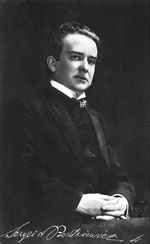 and Kurt Weill among the composers born this week, plus the pianist Issay Dobrowen, the violinist Gidon Kremer, the soprano Mirella Freni, and the conductor Bernard Haitink? The obvious answer is, you write about Sergei Bortkiewicz. Yes, we’re being facetious, but we’ve written about Chopin, Vivaldi, and Rossini many times (we haven’t had a chance to write about Dobrowen yet, a very interesting figure). Bortkiewicz, on the other hand, is a composer we knew only by name until recently when we heard his Symphony no. 1 and thought it was something from the late 19th century, maybe a very early Rachmaninov – but no, it turned out to be a piece composed in 1940. While conservatism is not the most admirable feature, Bortkiewicz is not alone in that regard: the above-mentioned Rachmaninov was also not the most adventuresome composer. Neither was Rimsky-Korsakov, not even Tchaikovsky, which didn’t preclude both of them from writing very interesting (and popular) music. Richard Strauss, for all his talent, was a follower of the Romantic tradition. Even Johann Sebastian Bach in his later years was well behind the prevailing trends of his time. Listen, for example, to two pieces written at about the same time: 1741-1742, Johann Sebastian’s wonderful, if somewhat archaic, Cantata Bekennen will ich seinen Namen BWV 200 (here), and then C.P.E.’s Symphony in G major, Wq. 173, written in the then “modern” style (here). They belong to different eras, even if the cantata is much better. We admire and love the pioneers like Mahler, Schoenberg, and Stravinsky, but as important as they are, there is a lot of space in the musical universe for the less daring composers. We’re not comparing the talent of Sergei Bortkiewicz with that of the “conservatives” mentioned above, but some of his music is pleasant and his life story is interesting.
Sergei Bortkiewicz was born in Kharkiv on February 28th of 1877. Back then Kharkiv was part of the Russian Empire; now it is a city in Ukraine being constantly attacked by Putin’s Russian army. He studied music first in his hometown, then in St.-Petersburg, where one of his teachers was Anatoly Lyadov. In 1900 he entered the Leipzig Conservatory, where he studied piano and composition for two years. From 1904 to 1914 he lived in Berlin. While there he wrote a very successful Piano Concerto no. 1. At the outbreak of WWI, he, as a Russian citizen and therefore an enemy, was deported from Germany. Bortkiewicz settled temporarily in St.-Petersburg and then moved back to Kharkiv. After the October Revolution, amid the chaos of the Civil War, he emigrated to Constantinople and then, in 1922, to Vienna, where he lived for the rest of his life (he died there in 1952). In 1930 he wrote his Piano Concerto no. 2 for the left hand; it was one of the pieces commissioned by Paul Wittgenstein, the pianist who lost his right hand during the Great War. Altogether Bortkiewicz composed three piano concertos, two symphonies, an opera and several other symphonic and chamber pieces, all in the late-Romantic Russian style. It was as if the music of the 20th century hadn’t existed.
Here's Bortkiewicz Piano Concerto no. 1. It’s performed by Ukrainian musicians: Olga Shadrina is at the piano; Mykola Sukach is conducting the Odessa Philharmonic Orchestra.
Read more...Carl Philipp Emanuel Bach - Symphony in G major, Wq. 173
Akademie für Alte Musik Berlin (Ensemble)
Johann Sebastian Bach - Cantata BWV 200, Bekennen will ich seinen Namen
Kammerorchester Pforzheim (Ensemble)
Fritz Werner (Conductor)
Sergei Bortkiewicz - Piano Concerto No. 1
Olga Shadrina (Piano)
Odessa Philharmonic Orchestra (Orchestra)
Mykola Sukach (Conductor)
Sergei Bortkiewicz - Piano Concerto No. 1, Mov. 1
Olga Shadrina (Piano)
Odessa Philharmonic Orchestra (Orchestra)
Mykola Sukach (Conductor)
Sergei Bortkiewicz - Piano Concerto No. 1, Mov. 2, 3
Olga Shadrina (Piano)
Odessa Philharmonic Orchestra (Orchestra)
Mykola Sukach (Conductor)
Enrico Caruso, 2023
This Week in Classical Music: February 20, 2023. Caruso. To our surprise, we realized that we’ve never written about Enrico Caruso, probably the greatest tenor of all time. (Come to think 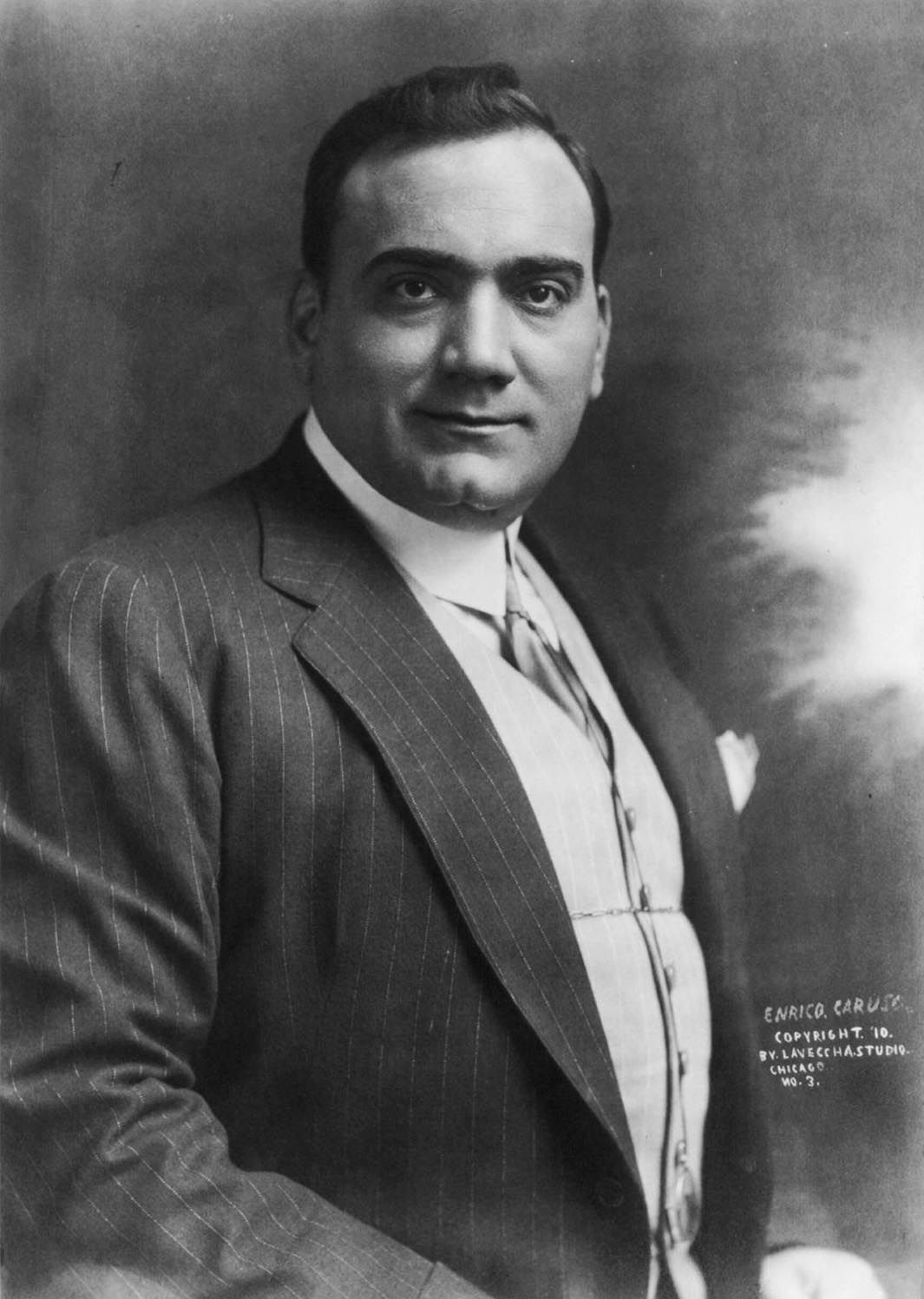 of it, we’ve never written about Beniamino Gigli either – we’ll certainly have to do it on his birthday, which comes in a month). Caruso was born in Naples on February 25th of 1873, so we’re celebrating not just any anniversary, but his 150th!
Caruso’s family was poor and had little formal education. As a boy, he had a nice but small voice, and one of his vocal teachers, upon first hearing him, pronounced that his voice was "too small and sounded like the wind whistling through the windows." Because he had little formal vocal training, his career had a bumpy start. Caruso had strained high notes and sounded more like a baritone than a tenor. His appearance at La Scala during the 1900–01 season in La bohème with Arturo Toscanini was not a success. Knowing how brilliant Caruso’s upper register was once he had fully developed his voice, it’s difficult to imagine his early struggles.
Caruso sang at several premieres: in 1897 in Milan, the title role in Francesco Cilea’s L'arlesiana, and in 1902 at the premiere of Adriana Lecouvreur, also by Cilea. It seems that somewhere around 1902 Caruso gained full control of his voice and from that point on went from one triumph to another, singing in Italy, then at the Convent Garden, and later at the Met. What used to be problematic had by then turned into an advantage: to quote Grove Music Dictionary, “the exceptional appeal of his voice was, in fact, based on the fusion of a baritone’s full, burnished timbre with a tenor’s smooth, silken finish, by turns brilliant and affecting.”
The Met became Caruso’s main stage: he sang 850 performances there and created 38 roles, some legendary, such as Canio in Leoncavallo’s I Pagliacci, Rodolfo in Puccini’s La bohème and Cavaradossi in Tosca, and Radames in Verdi’s Aida. A unique aspect of Caruso’s career was his relationship with the nascent recording industry. In 1903 he signed a contract with the Victor Talking Machine Company and later with the related Gramophone Company. During his time, all recordings were made acoustically, with the tenor singing into a metal horn (the electric recording was invented around 1925, after Caruso’s death). The records contained just 4 ½ minutes of music, which limited the repertoire Caruso could record (often music was edited to fit a record). And of course, these were not high-fidelity records, they distorted the timber of Caruso’s voice and lost some overtones. Still, they proved to be tremendously popular, helping both the industry and the singer. It was said that Caruso made the gramophone, and it made him.
During his career, Caruso partnered with the best singers of his generation, such as Nellie Melba, Amelita Galli-Curci, and Luisa Tetrazzini. He toured, triumphantly, across Europe and South America. Unfortunately, his career was short. In September of 1920, he fell ill with an undetermined internal pain; eventually got better but the December 11th performance of L'elisir d'amore had to be canceled after the first act, as Caruso suffered throat bleeding. It was later determined that he had pleurisy. His lungs were drained, and he started recuperating. Caruso returned to Naples in May of 1921, which probably was a mistake: his care there was inadequate, and he died on August 2nd of 1921.
With all the deficiencies of the old recording, we still can enjoy Caruso’s magnificent voice. Here are several of them. Se quel guerrier io fossi! Celeste Aida, from Act 1 of Verdi’s Aida; Una furtiva lagrima, from Act 2 of Donizetti’s L'elisir d'amore; La donna è mobile from Act 3 of Verdi’s Rigoletto; Ella mi fu Rapita...parmi veder le lagrime, from Act 2 of the same opera; Addio alla madre, from Mascagni’s Cavalleria Rusticana; and Vesti la giubba from Act 1 of I Pagliacci by Leoncavallo.
Read more...Ruggero Leoncavallo - Vesti la giubba from Act 1 of I Pagliacci
Enrico Caruso (Tenor)
Giuseppe Verdi - Se quel guerrier io fossi! Celeste Aida, from Act I of Aida
Enrico Caruso (Tenor)
Anna Leonova - Prelude for Violoncello solo
James Waldo (Cello)