
Robert Schumann, 2022
This Week in Classical Music: June 6, 2022. Schumann, Strauss, Albinoni. This is the sequence in a descending order of talent quality (or at least the way we perceive it): Schumann, one of the 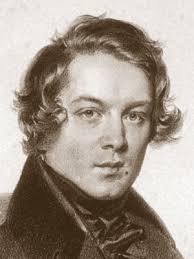 great geniuses of the 19th century music, Strauss, who in a self-deprecating manner said: "I may not be a first-rate composer, but I am a first-class second-rate composer" (we disagree: we think he’s absolutely first rate – and the more we listen to his music, the more we think so); and Albinoni, popular for his tuneful, rather repetitive pieces of limited imagination. Schumann was born in Zwickau on June 8th of 1810, Richard Strauss – on June 11th of 1864 in Munich, and Tomaso Albinoni – on June 8th of 1671 in Venice. Here’s Artur Rubinsten playing Schumann’s Carnaval op.9.
Two pianists (Zoltán Kocsis), 2022
This Week in Classical Music: May 30, 2022. Two Pianists. Zoltán Kocsis and Marth Argerich were born this week: Kocsis in Budapest, Hungary, on May 30th of 1952, Argerich in 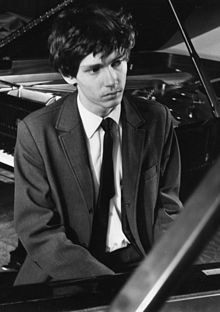 Buenos Aires, Argentina, on June 5th of 1941. Argerich is famous and widely considered one of the greatest pianists of her generation. She doesn’t need any introductions, especially considering that we’ve written about her on many occasions (for example, here). And, at the age of 81, she actively performs, often introducing new repertoire. Kocsis, on the other hand, as talented as he was, isn’t that well known, which is a pity. Kocsis studied at the Liszt Academy of Music in Budapest (György Kurtág was one of his teachers). At the age of 18 he caused a sensation, winning the Hungarian Radio Beethoven Competition. He was recognized as one of the outstanding musicians and at the age of 21 was awarded the Ferenc Liszt Prize, the highest musical award in Hungary. He soon developed an international career, touring the US in 1971 and playing in London and Salzburg a year later. His repertory was broad, from Bach (one of his favorites – he recorded all of Bach’s concertos) to Bartok and on to his contemporaries (he made several premier performances of his teacher, Kurtág). Kocsis was also a composer and worked with the avant-garde group the New Studio. Kocsis had a life-saving heart surgery in 2012; the surgery prolonged his life by four years. He died of heart decease in 2016.
We’ll present two very different samples of Kocsis’s art: first, recorded in December of 1984, his wonderful interpretation of Bela Bartók’s Piano Concerto no. 3 with the Budapest Festival Orchestra, Iván Fischer conducting (here). And 30 years later, in 2014, Kocsis conducted and played Bach’s Bach Keyboard Concerto no. 5, BWV 1056 (here).
A note: next two weeks we’ll be traveling, so our entries will be (mercifully) short.
Read more...Robert Schumann - Carnaval, Op. 9
Artur Rubinstein (Piano)
Johann Sebastian Bach - Keyboard Concerto no. 5, BWV 1056
Zoltán Kocsis (Piano)
Zoltán Kocsis (Conductor)
Béla Bartók - Piano Concerto No. 3
Zoltán Kocsis (Piano)
Budapest Festival Orchestra (Orchestra)
Iván Fischer (Conductor)
Four Composers and Teresa Stratas, 2022
This Week in Classical Music: May 23, 2022. Four Composers and Teresa Stratas. Jean Françaix, William Bolcom, Isaac Albéniz and Erich Wolfgang Korngold were all born this 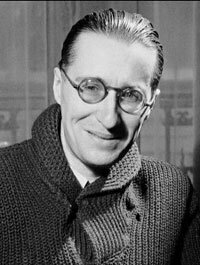 week – a Frenchman, an American, a Spaniard and an Austrian who emigrated to the US. There is a similarity between Françaix (born on May 23rd of 1912) and Bolcom (b. 5/26/1938), not necessarily in the style of their music but rather in the wonderful sense of humor and lightness (it may not be quite a coincidence, as Bolcom had studied with two French composer, Darius Milhaud at Mills College in California and with Milhaud and Olivier Messiaen at the Paris Conservatory). Here’s Françaix’s Trio for Oboe, Bassoon, and Piano and here – one of Bolcom’s Twelve New Etudes, Hymne a l'amour. The Trio is played by Julien Hardy (Bassoon), Frédéric Tardy (Oboe), Simon Zauoi (Piano). The pianist in the Bolcom is Marc-André Hamelin.
The biography of Erich Wolfgang Korngold is very unusual. Born on May 29th of 1897 in Vienna, he was a child prodigy, composing a piano sonata at the age of 11 (it was published and performed), a ballet Der Schneemann that same year and a large-form orchestral piece he called Sinfonietta (it runs for about 42 minutes) when he was 15. Korngold was Jewish and emigrated to the US in 1934, where he became one of the most influential movie composers of the time. We would have thought that Korngold had to change his compositional style to accommodate films, but this is not quite true: listen, for example, to the first movement of Sinfonietta and you’ll hear the echoes of the Korngold of The Adventures of Robin Hood. 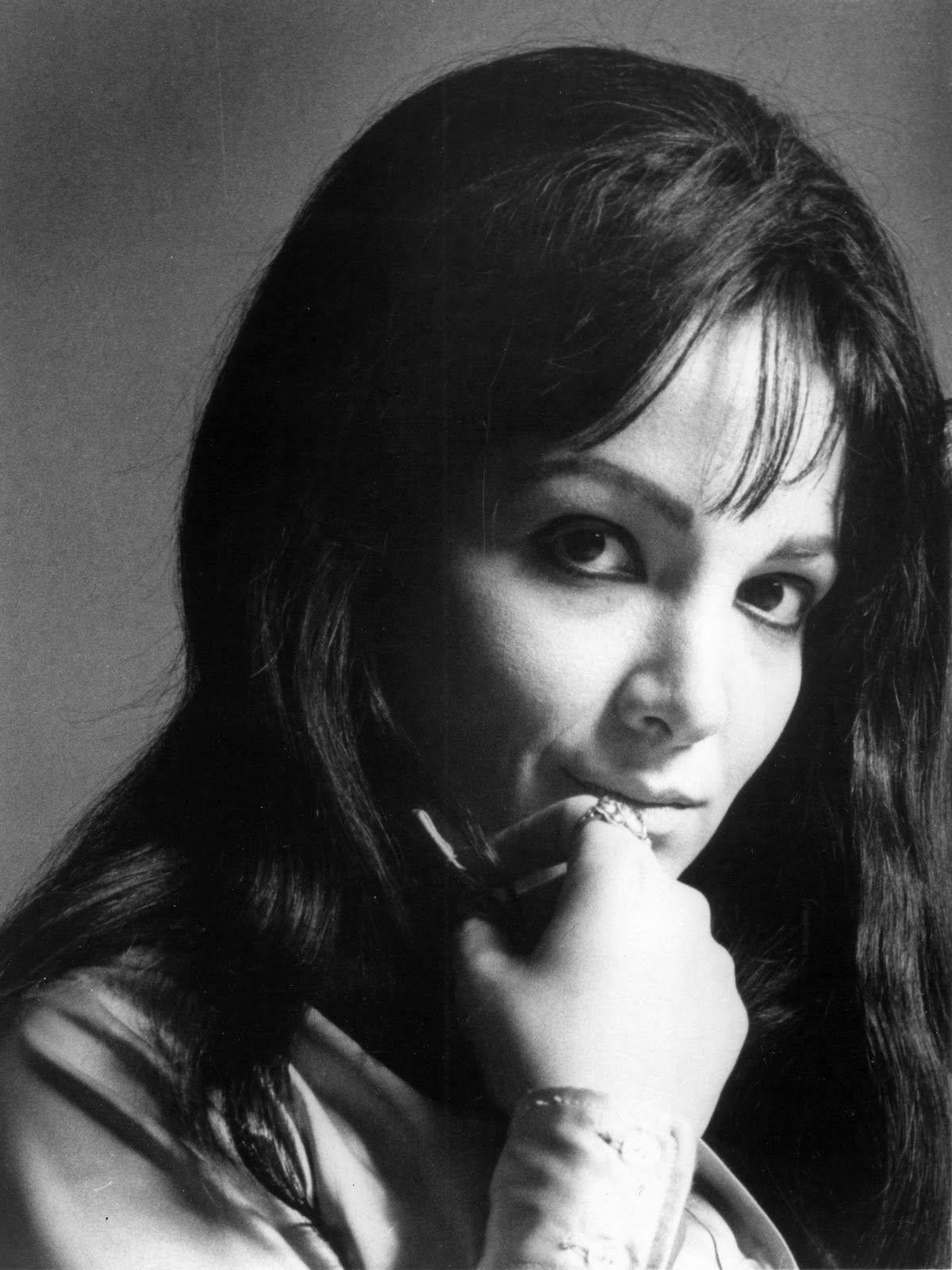
Teresa Stratas, the wonderful Canadian soprano of Greek descent, was born on May 26th of 1938 in Toronto. Stratas was famous for many contemporary roles, singing in the operas of Gian Carlo Menotti, Francis Poulenc, Kurt Weill, John Corigliano, and especially, the role of Lulu in the Berg eponymous opera’s first complete performance and recording (in 1979, with Pierre Boulez conducting). But Stratas didn’t limit herself to the 20th century repertoire, her range was actually very broad. She was wonderful as Zerlina in Don Giovanni, Despina in Così fan tutte, and sung two roles, Cherubino and Susanna in The Marriage of Figaro by Mozart. She performed in several Puccini’s operas, in Tchaikovsky’s Queen of Spades, Strauss operas and also Verdi’s. Here, from 1968, is her wonderful Susanna in the aria Deh vieni, non tarda, from Mozart’s Le Nozze di Figaro. This is a live recording with Zubin Mehta conducting the RAI Orchestra.
Read more...Wolfgang Amadeus Mozart - Deh vieni, non tardar, from Le Mozze di Figaro
Teresa Stratas (Soprano)
Orchestra della RAI (Conductor)
Zubin Mehta (Conductor)
Erich Wolfgang Korngold - Sinfoniette, mov. 1
BBC Philharmonic (Orchestra)
Matthias Bamert (Conductor)
William Bolcom - Hymne a l'amour, from Twelve New Etudes
Marc-André Hamelin (Piano)
Igor Stravinsky - Song Of The Nightingale
Seattle Symphony Orchestra (Orchestra)
Gerard Schwarz (Conductor)