
Seven composers
This Week in Classical Music: August 8, 2022. Seven composers. Yes, that many, all interesting, none of them great, at least in our opinion, and three of them French. Cécile Chaminade, one of the few women composers of the 19th century, and André Jolivet were born on August 8th and both in Paris, Chaminade in 1857, Jolivet in 1905. Reynaldo Hahn, a songwriter and Proust’s friend,was born on August 9th of 1874 in Caracas but spent his adult life 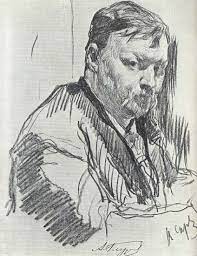 in France. You can read about all three here.
The Russian composer Alexander Glazunov was born on August 10th of 1865. He wrote a wonderful Violin concerto and a very popular ballet, Raymonda. He also wrote eight complete symphonies (he never finished his ninth), two piano concertos and much more. Outside of Russia very little of this music is performed or broadcast. But Glazonov was very important as a public cultural figure and a supporter of classical music in Russia and the early Soviet Union. He became the Director of the St-Petersburg’s Conservatory in 1905 and served in that position until 1928, one of the few administrators who wasn’t fired after the revolution of 1917, most likely because Glazunov was friends with Anatoly Lunacharsky, Soviet Union’s first minister of education and culture. In 1928 Glazunov was invited to Vienna to a composer’s competition, organized to commemorate the 100th anniversary of Schubert’s death. He was allowed to go (again thanks to Lunacharsky) and decided not to return to Russia. He eventually settled in Paris and died in 1936. Here’s a typical Glazunov’s piece, a symphonic poem Sten’ka Razin, which extensively uses the theme from the Song of the Volga Boatmen (actually, barge haulers, who pulled barges by a rope). In Russian this song is called Эй, ухнем, usually and inaccurately translated as Yo, heave-ho!. The song was made famously by the great Russian bass Feodor Shalyapin. The American bass Paul Robeson also had it in his repertoire and in 1941 Glenn Miller arranged the song for his orchestra – it became a hit. Here is Chaliapin’s recording with an unnamed orchestra from 1923 – the quality isn’t high, but Chaliapin’s voice comes through.
Heinrich Ignaz Biber, an Austrian-Bohemian composer, was born on August 12th of 1644. Read about him (and more on Jolivet) here. On the same day but 52 years later, in 1696, the English composer Maurice Greene was born in London. He’s the author of some of the most popular pieces of English church music, the anthems Hearken Unto Me, Ye Holy Children (here) and Lord, let me know mine end (here).
We have to admit that sometimes we do not understand the music of Kaikhosru Shapurji Sorabji, our seventh composer, especially his longer works. Sorabji, whose father was a Parsi from Bombay, was born on August 14th of 1892. We last wrote an entry about him nine years ago (here) and were reticent to come back to the topic. That said, his Piano Sonata no. 1, from 1919, is quite accessible, lasts only 22 minutes and has a reasonably developed form. Here it is, brilliantly performed by Marc-André Hamelin in a 1990 recording.
Read more...Seven composers
This Week in Classical Music: August 8, 2022. Seven composers. Yes, that many, all interesting, none of them great, at least in our opinion, and three of them French. Cécile Chaminade, one of the few women composers of the 19th century, and André Jolivet were born on August 8th and both in Paris, Chaminade in 1857, Jolivet in 1905. Reynaldo Hahn, a songwriter and Proust’s friend,was born on August 9th of 1874 in Caracas but spent his adult life 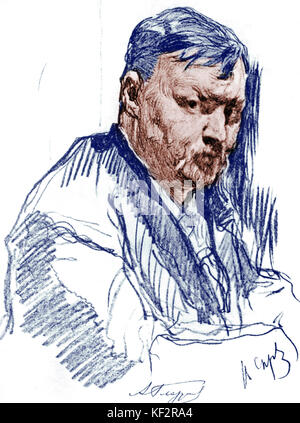 in France. You can read about all three here.
The Russian composer Alexander Glazunov was born on August 10th of 1865. He wrote a wonderful Violin concerto and a very popular ballet, Raymonda. He also wrote eight complete symphonies (he never finished his ninth), two piano concertos and much more. Outside of Russia very little of this music is performed or broadcast. But Glazonov was very important as a public cultural figure and a supporter of classical music in Russia and the early Soviet Union. He became the Director of the St-Petersburg’s Conservatory in 1905 and served in that position until 1928, one of the few administrators who wasn’t fired after the revolution of 1917, most likely because Glazunov was friends with Anatoly Lunacharsky, Soviet Union’s first minister of education and culture. In 1928 Glazunov was invited to Vienna to a composer’s competition, organized to commemorate the 100th anniversary of Schubert’s death. He was allowed to go (again thanks to Lunacharsky) and decided not to return to Russia. He eventually settled in Paris and died in 1936. Here’s a typical Glazunov’s piece, a symphonic poem Sten’ka Razin, which extensively uses the theme from the Song of the Volga Boatmen (actually, barge haulers, who pulled barges by a rope). In Russian this song is called Эй, ухнем, usually and inaccurately translated as Yo, heave-ho!. The song was made famously by the great Russian bass Feodor Shalyapin. The American bass Paul Robeson also had it in his repertoire and in 1941 Glenn Miller arranged the song for his orchestra – it became a hit. Here is Chaliapin’s recording with an unnamed orchestra from 1923 – the quality isn’t high, but Chaliapin’s voice comes through.
Heinrich Ignaz Biber, an Austrian-Bohemian composer, was born on August 12th of 1644. Read about him (and more on Jolivet) here. On the same day but 52 years later, in 1696, the English composer Maurice Greene was born in London. He’s the author of some of the most popular pieces of English church music, the anthems Hearken Unto Me, Ye Holy Children (here) and Lord, let me know mine end (here).
We have to admit that sometimes we do not understand the music of Kaikhosru Shapurji Sorabji, our seventh composer, especially his longer works. Sorabji, whose father was a Parsi from Bombay, was born on August 14th of 1892. We last wrote an entry about him nine years ago (here) and were reticent to come back to the topic. That said, his Piano Sonata no. 1, from 1919, is quite accessible, lasts only 22 minutes and has a reasonably developed form. Here it is, brilliantly performed by Marc-André Hamelin in a 1990 recording.
Read more...Kaikhosru Shapurji Sorabji - Piano Sonata no. 1
Marc-André Hamelin (Piano)
Folk Song - Song of the Volga Boatmen (Эй, ухнем)
Feodor Chaliapin (Bass)
Alexander Glazunov - Stenka Razin
Royal Scottish National Orchestra (Orchestra)
Neeme Järvi (Conductor)
Rott and Power, 2022
This Week in Classical Music: August 1, 2022. Hans Rott, Leonel Power. Today is the birthday of the Austrian composer Hans Rott; he was born in Braunhirschengrund, a suburb of 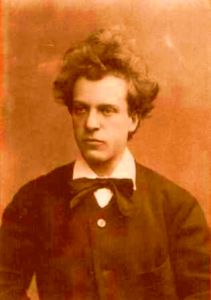 Vienna, in 1858. A composer of obvious talent who lived a short and tragic life, he in a way anticipated Mahler. Both Bruckner and Mahler recognized him as a major talent. We wrote an entry about Rott, you can read it here. It seems that we’re not the only ones fascinated by Rott: his Symphony no. 1, the only one he completed, and some of his other works are being recorded on a regular basis. In the past two years a two-volume CD set was issued by the Capriccio label; it features the Gürzenich Orchestra Cologne, one of the two major Cologne orchestras, under the direction of Christopher Ward and contains practically all of Rott’s symphonic music.
This week is also a putative anniversary of Guillaume Dufay, who, according to some research was born on August 5th of 1397. We’ve written about this very important composer on a number of occasions (for example, here about his extensive travels around Europe). We’ve also written about his contemporary, another Franco-Flemish composer, Gilles Binchois (Dufay and Binchois were born about 25 miles from each other, the former in Beersel, the latter in Mons, both in modern day Belgium). Antoine Busnois ,who was a generation younger, is usually considered the third of the most consequential Franco-Flemish composers of the mid-15th century. The Franco-Flemish school was one of the two dominant music schools of the time, the other being developed in England (notice the absence of the Italians). Two English composers overshadowed the rest in the flourishing music scene: John Dunstaple and Leonel Power. Up till now we were amiss in not addressing Power’s life and music. Power was older than either Dunstaple or Dufay: he was born sometime between 1370 and 1385. There are few records of his life. Power’s name is first mentioned on a list of clerks of the household chapel of Thomas, Duke of Clarence: he’s listed as an instructor of the choristers (Thomas was a brother of Henry V, the great warrior-king of England immortalized by Shakespeare). In 1423 Power was mentioned as being admitted to the fraternity of Christ Church, Canterbury (the Canterbury cathedral). In 1439 Power became master of the choir at the cathedral. Not much else is known about his life. He died at Canterbury on June 5th of 1445. About 40 pieces of music are attributed to Power, many of them represented in the Old Hall Manuscript, a unique document compiled in the first half of the 15th century. We know of about eight of his masses, although two of them could have been written by Dunstaple: the styles of the two composers were similar, what the French called Contenance angloise, or English manner. Power was one of the first composers to create a unified mass cycle. To demonstrate Power’s music, here are two mass sections: Gloria and Credo. Both are performed by the Hilliard Ensemble.
Read more...Leonel Power - Credo
The Hilliard Ensemble (Ensemble)
Leonel Power - Gloria
The Hilliard Ensemble (Ensemble)
Between works
08/14/2022 19:00, Chile
"Between works". Online Meeting 2022
YouTube broadcast
-14 August 7:00pm (Chilean time)
-15 August 1:00 am (GMT+2, European time)
Samuel Coleridge-Taylor - Hiawatha's Wedding Feast
Philharmonia Orchestra (Orchestra)
Royal Choral Society (Chorale)
Richard Lewis (Tenor)
Malcolm Sargent (Conductor)