
Arnold Schoenberg - Pierrot lunaire
Lucy Shelton (Soprano)
Da Capo Chamber Players (Ensemble)
Robert Schumann - Rasch und mit Feuer, from Fantasy Pieces Op. 73
Armando Vazquez (Clarinet)
Seth Schulthesis (Piano)
Robert Schumann - Lebhaft, leicht, from Fantasy Pieces Op. 73
Armando Vazquez (Clarinet)
Seth Schulthesis (Piano)
Robert Schumann - Zart und mit Ausdruck, from Fantasy Pieces Op. 73
Armando Vazquez (Clarinet)
Seth Schulthesis (Piano)
Robert Schumann - Fantasy Pieces Op. 73
Armando Vazquez (Clarinet)
Seth Schulthesis (Piano)
Arnold Schoenberg, part I, 2022
This Week in Classical Music: September 12, 2022. Schoenberg, Part I, the Early Years. Arnold Schoenberg, one of the most consequential composers of the 20th century, was born on 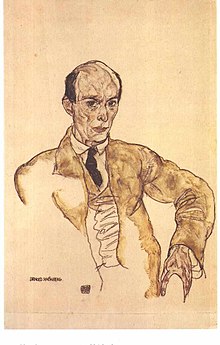 September 13th in 1874. It has been some time since we last attempted to write about him, and clearly, it’s impossible to describe the life and music of such a complex figure in one entry. We’ll try to sketch part of it here and will continue at a later date.
Schoenberg was born in Leopoldstadt, a heavily Jewish district of Vienna. His family was lower middle class, the father a shoe-shopkeeper, the mother a piano teacher. Musically, Schoenberg was mostly self-taught: he learned to play the cello himself, and the only lessons he took were from Alexander von Zemlinsky, a friend in whose amateur orchestra Schoenberg played, while working full time as a bank clerk. Even though Zemlinksy was by then an established composer, writing in a late-Romantic style, it’s not clear how much help he provided to his student: Zemlinksy said that they mostly exchanged scores and commented on each other’s work. In 1897 Schoenberg’s quartet, edited according to Zemlinksy’s suggestions, was performed in Vienna and was well received. The following piece, the string sextet Verklärte Nacht (Transfigured Night), submitted by Schoenberg in 1899, was rejected by the Vienna Music Society and premiered only three years later. The piece was tonal but heavily chromatic and wondering away from the home key (you can listen to it here, played by the young students of the Steans Institute). The performance created a scandal, which would become a constant in practically all premieres of Schoenberg’s work from that point on. In the meantime, he was earning a living conducting choral societies and orchestrating operettas, a popular entertainment in Germany and Austria-Hungary. He was also composing and in 1901 completed a large cantata, Gurre-Lieder. That same year he married Zemlinsky’s sister Mathilde; later that year the couple moved to Berlin. For a while Schoenberg worked as the music director of Überbrettl, a fashionable cabaret frequented by the literati and musicians. That job ended a year later but in a lucky break, Schoenberg met Richard Strauss and showed him two pieces, Gurre-Lieder and the new symphonic poem Pelleas und Melisande. Strauss was impressed and helped Schoenberg to obtain a stipend at the Stern Conservatory, a prestigious private school which is now part of Berlin University of the Arts. He returned to Vienna in 1903.
In Vienna Schoenberg joined Zemlinky in teaching several private music classes. Some of the attendees were students of one Guido Adler. Adler is now half-forgotten, but his role in the Austro-German music world is interesting. Adler, Jewish, like Schoenberg and Zemlinksy (and Mahler), was Mahler’s friend and Bruckner’s pupil at the Vienna Conservatory. Adler practically created musicology as the scientific field we know today. He taught at the University of Vienna and the German University of Prague. One of his students was Anton Webern, who joined Schoenberg’s class. Another young composer, Alban Berg soon also joined the group. The relationship between Schoenberg and his two students, Webern and Berg, is legendary, and became central in Schoenberg’s life, as of course it was for the younger composers.
Private teaching and composing weren’t bringing much money, so, to get some funding, Schoenberg, together with Zemlinsky, managed to create a music society. Moreover, they succeeded in appointing Mahler their honorary president (Mahler had heard Verklärte Nacht a year earlier and was very impressed). The society survived for one year only but managed to present, among other piece of new music, Schoenberg’s Pelleas und Melisande. Here it is, in the performance by the Staatskapelle Berlin, Daniel Barenboim conducting.
Read more...Arnold Schoenberg - Pelleas und Melisande
Staatskapelle Berlin (Orchestra)
Daniel Barenboim (Conductor)
Over-abundance, 2022
This Week in Classical Music: September 5, 2022. An overly-abundant week. Here are some of the composers born this week: one of the greatest English composers Henry Purcell; his compatriot William Boyce; Johann Christian Bach, or “the London Bach,” Johann Sebastian’s 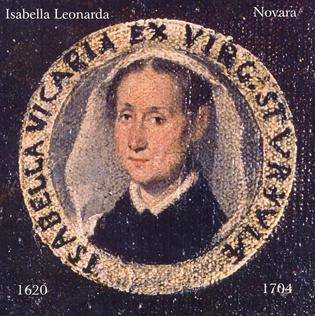 youngest son; Giacomo Meyerbeer, a Jewish-German composer who spent much of his time in France and, according to the musicologist Matthias Brzoska was “the most frequently performed opera composer during the 19th century, linking Mozart and Wagner”; Isabella Leonarda, an Italian nun and a prolific composer, a contemporary of Lully, Buxtehude, Corelli and Purcell (Purcell’s life was very short, just 36 years, whereas Leonarda lived for 84 years; she was born 39 years before Purcell and outlived him by almost nine years). Then, as we jump ahead more than a century, we meet the Czech composers Antonin Dvořák (probably the most famous of a rather small number of Czech classical composers) and soon after – the very popular Amy Beach, known as the first successful female composer of large-scale music, even though we think it’s her small-form pieces that are more interesting and inventive. Ms. Beach died in 1944, which brings us into the 20th century (Dvořák also died in the last century, 40 years earlier) and here we have one of the most unusual of avant-garde American composers, John Cage; and also Arvo Pärt, a very popular Estonian who will be 87 on September 11th.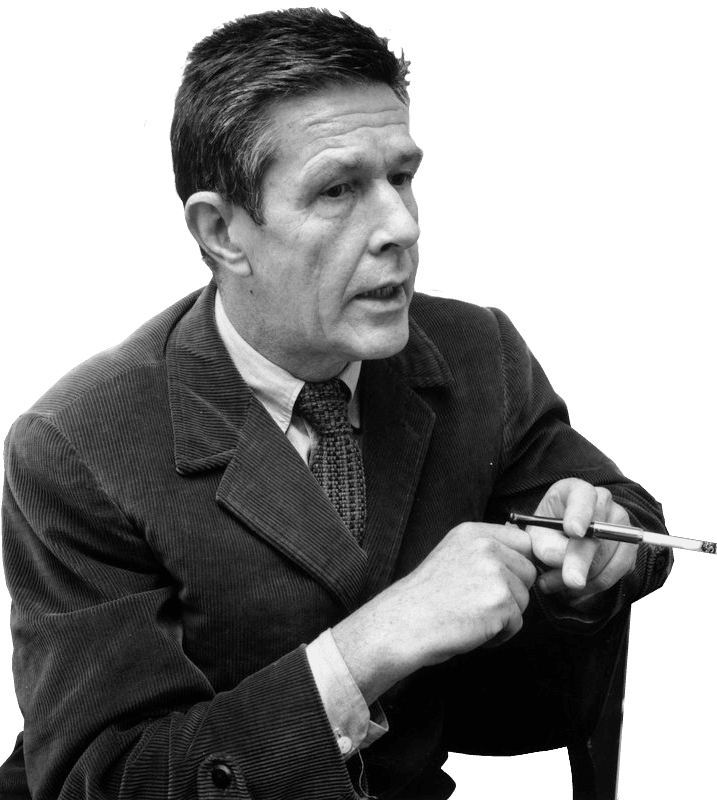
There are more, most not as famous as the ones listed above, and we’ll mention only two of them, Hernando de Cabezón, the son of more notable Antonio de Cabezón, a composer, music publisher and the organist to the Spanish King Philip II (Philip was also the most important patron of the great Italian painter Titian – the Prado museum in Madrid contains the greatest collection of Titians’ paintings). Also, the Danish composer Friedrich Kuhlau, familiar to many who had studied the piano and played his sonatinas.
We’d like to give you a couple of samples of the music of our composers taken from very different eras. First, Isabella Leonarda’s Magnificat, composed in 1696. It’s performed by the Italian ensemble Musica Laudantes (here). And here, from 1950, is John Cage’s String Quartet in Four Parts, recorded by the Adritti Quartet.
Two Russian pianists were also born this week, Maria Yudina and Lev Oborin, and so was the famous Hungarian violinist, Joseph Szigeti. And the mercurial soprano Angela Gheorghiu will turn 57 this week. Here is the great (and heartbreaking) final scene of Tosca with Gheorghiu and her then husband Roberto Alagna. Antonio Pappano leads the orchestra of the Covent Garden Opera in this recording from year 2000.
Read more...Giacomo Puccini - Tosca, finale
Angela Gheorghiu (Soprano)
Roberto Alagna (Tenor)
Orchestra Of The Royal Opera House (Orchestra)
Antonio Pappano (Conductor)
Arnold Schoenberg - String Quartet No. 2, Op. 10
David McCarroll (Violin)
Bella Hristova (Violin)
Luke Fleming (Viola)
Adi Tal (Cello)